Calystegia, Genus, ×, Hybrid, lucana, Species,
- Genus & species
- Hybrid
hybrid bindweed
Overview
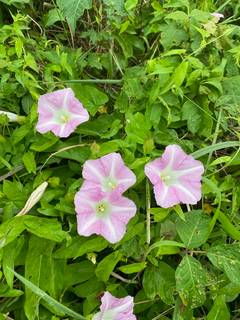
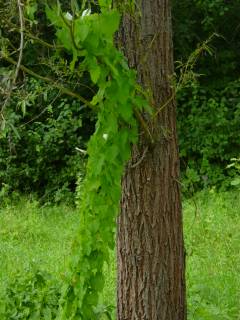
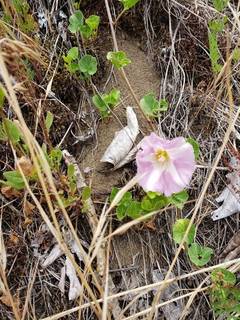
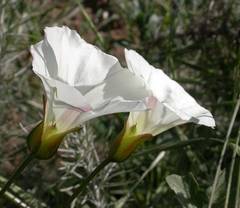
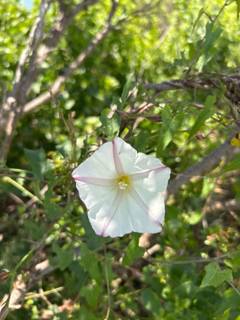
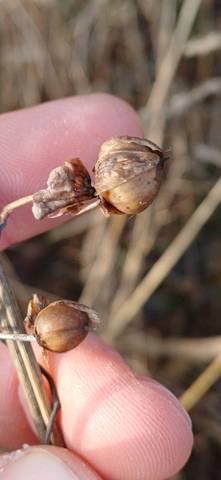
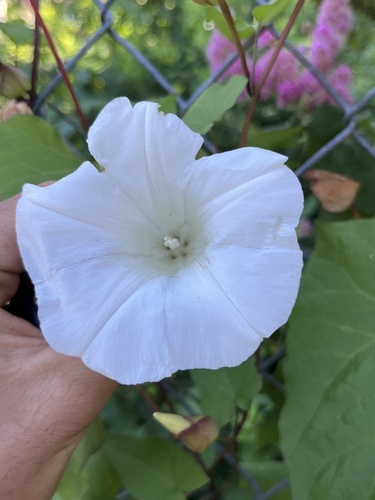
Calystegia × lucana is a vigorous, twining perennial of hybrid origin between C. sepium and C. silvatica, intermediate between its two large bindweed parents. The slender stems twist anticlockwise around supports and other plants, climbing 6–10 feet (1.8–3 m) in a season. The leaves are arrow-shaped, 2–6 inches (5–15 cm) long, with squared or angular basal lobes. From early summer into autumn it opens funnel-shaped white flowers, sometimes flushed pale pink, 1.5–3 inches (4–7 cm) across, each lasting about a day. Two large bracts wrap the base of the flower and partly enclose the sepals, a feature carried from both parents. The plant spreads by deep, brittle white rhizomes as well as by seed, and fragments left in the soil regrow into new plants. It grows in hedgerows, waste ground, and garden borders on most soils in sun or light shade. Once established the rhizomes are difficult to remove, and the twining stems can smother nearby plants, so it is treated as a persistent weed across much of its range.
Native Range
The hybrid arises where its parent species grow together across Europe, and both parents and the hybrid have spread to other temperate regions. It occurs in hedgerows, on fences, along riverbanks, and on disturbed ground.Suggested Uses
Rarely planted deliberately; it appears as a volunteer weed in gardens, hedges, and waste ground. Its dense twining cover and long bloom are sometimes tolerated on rough fences and banks where spread is not a concern.How to Identify
Appearance
Size & Dimensions
Height6' - 10'
Width/Spread2' - 6'
Bloom Information
Funnel-shaped white to pale-pink flowers open from early summer into autumn, roughly June through September. Each flower lasts about a day, opening in the morning, with a long succession over the season. Flowering continues until the first hard frost cuts back the top growth.
Detailed Descriptions
Flower Description
White to pale pinkFoliage Description
GreenGrowing Conditions
Sun Requirements
Requires 4-10 hours of direct sunlight daily
• Full Sun: 6+ hours of direct sunlight
• Partial Shade: 3-6 hours of direct sunlight
• Full Shade: Less than 3 hours of direct sunlight
Care & Maintenance
Care Guide
Grows in full sun to light shade on almost any soil, including poor and disturbed ground, across a wide pH range. Needs no care to persist and spreads quickly by deep rhizomes and seed. The brittle white rhizomes break easily, and every fragment can regrow, which makes removal slow and repeated. Top growth dies back with hard frost and returns from the roots each spring. In gardens the twining stems climb and smother neighbouring plants. It tolerates drought, mowing, and cutting, recovering from the rootstock.Pruning
Cutting the top growth repeatedly through the season weakens the rhizomes over time but does not remove established plants. Stems are pulled off supports and other plants before they set seed. Digging out the deep rhizomes is rarely complete, as fragments resprout.Pruning Schedule
Prune: June–August
summer