Calystegia, Genus, spp., Multiple species,
- Genus
- Multiple species
false bindweeds
Temperate and subtropical regions of both hemispheres
Overview
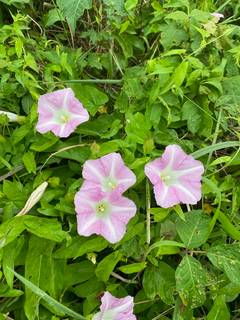
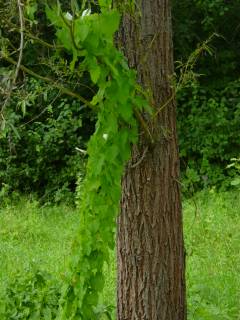
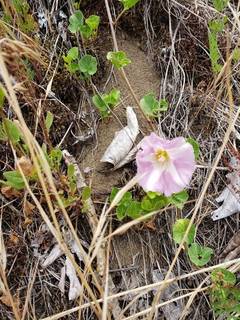
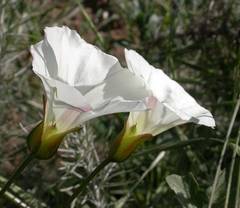
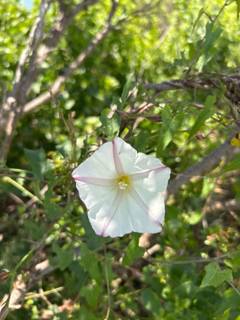
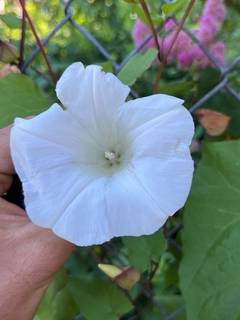
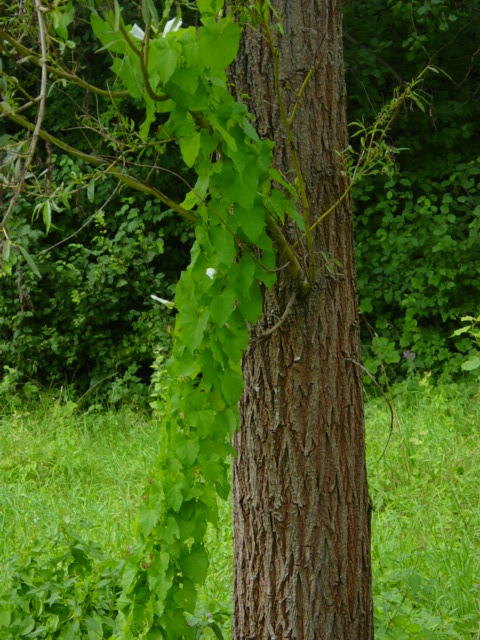
Calystegia is a genus of about 25 species of twining, mostly perennial vines in the morning-glory family, Convolvulaceae, known as false or hedge bindweeds. Slender stems twist counterclockwise over other plants and supports, climbing 3 to 12 feet (0.9 to 3.6 m) in a season from deep, spreading, white rhizomes, while a few coastal species trail along the ground. The alternate leaves are usually arrow- or spade-shaped with flaring basal lobes, 1 to 4 inches (2.5 to 10 cm) long. The flowers are large, funnel- to trumpet-shaped, and 1.5 to 3 inches (4 to 7.5 cm) across, opening white or pink and lasting a single day. A pair of large green bracts wraps the base of each flower, hiding the small sepals, which separates Calystegia from the closely related Convolvulus. Calystegia grows across temperate and subtropical regions worldwide in hedgerows, riverbanks, marshes, dunes, fields, and waste ground. Several species, especially hedge bindweed (C. sepium), spread aggressively by rhizome and are persistent weeds that regrow from small root fragments. The sea bindweeds are lower, mat-forming plants of coastal sand that spread less.
Native Range
Calystegia occurs across the temperate and subtropical regions of both hemispheres, with species native to North and South America, Europe, Asia, Africa, and Australasia, and a strong presence on coasts and in disturbed inland habitats. Plants grow in hedgerows, woodland edges, riverbanks, freshwater and coastal marshes, dunes, and cultivated or waste ground.Suggested Uses
Ornamental Calystegia such as double-flowered hedge bindweed and the silvery coastal sea bindweeds are grown on fences, trellises, and banks and as groundcover on sandy or difficult sites, set 18 to 36 inches (45 to 90 cm) apart where they have room to run. The large white flowers suit cottage and wild gardens. The climbing weedy species are managed rather than planted, as they spread far by rhizome.How to Identify
Appearance
Size & Dimensions
Height3' - 12'
Width/Spread2' - 6'
Bloom Information
Calystegia blooms over a long season from early summer into autumn, generally June through September, producing a steady succession of large funnel-shaped flowers. Each white or pink bloom lasts only one day, opening in the morning and closing by evening. Bees and other insects visit for nectar, and some species are also visited by night-flying moths. Flowering continues until frost cuts the top growth.
Detailed Descriptions
Foliage Description
greenGrowing Conditions
Sun Requirements
Requires 4-10 hours of direct sunlight daily
• Full Sun: 6+ hours of direct sunlight
• Partial Shade: 3-6 hours of direct sunlight
• Full Shade: Less than 3 hours of direct sunlight
Care & Maintenance
Care Guide
Calystegia grows in full sun to partial shade and a wide range of soils across a pH of 5.5 to 7.5, tolerating poor, wet, dry, and disturbed ground once the rhizomes are established. The climbing species are vigorous and need strong support, and they twine over and can smother nearby plants. Most are cold hardy to USDA zones 4 to 8 and die back to the rhizome each winter. Plants need little water or feeding and few pests affect them. The weedy species are difficult to remove because the brittle rhizomes resprout from any fragment left in the soil. Coastal and ornamental forms are slower and easier to keep in bounds.Pruning
Top growth of Calystegia is cut or pulled back through the season to keep the climbing species from smothering neighbors and to limit seeding. For the weedy bindweeds, repeated removal of the shoots over several seasons starves the rhizome, since digging tends to leave resprouting fragments. Coastal mat-forming species are trimmed only to keep them off paths.Pruning Schedule
Prune: June–August
summer