Callicarpa, Genus, bodinieri, Species, var., Variety, giraldii, Variety, 'Profusion', Cultivar,
- Genus & species
- Variety
- Cultivar
profusion beautyberry
Central and western China (Hubei, Sichuan, Guizhou, Shaanxi; scrubland, forest margins, rocky slopes)
Overview
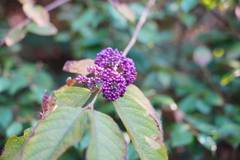
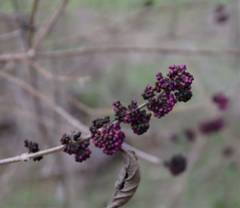
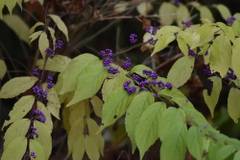
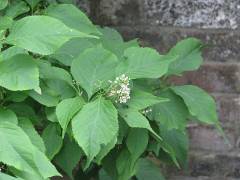
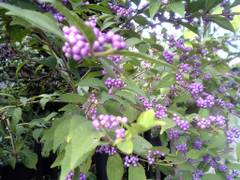
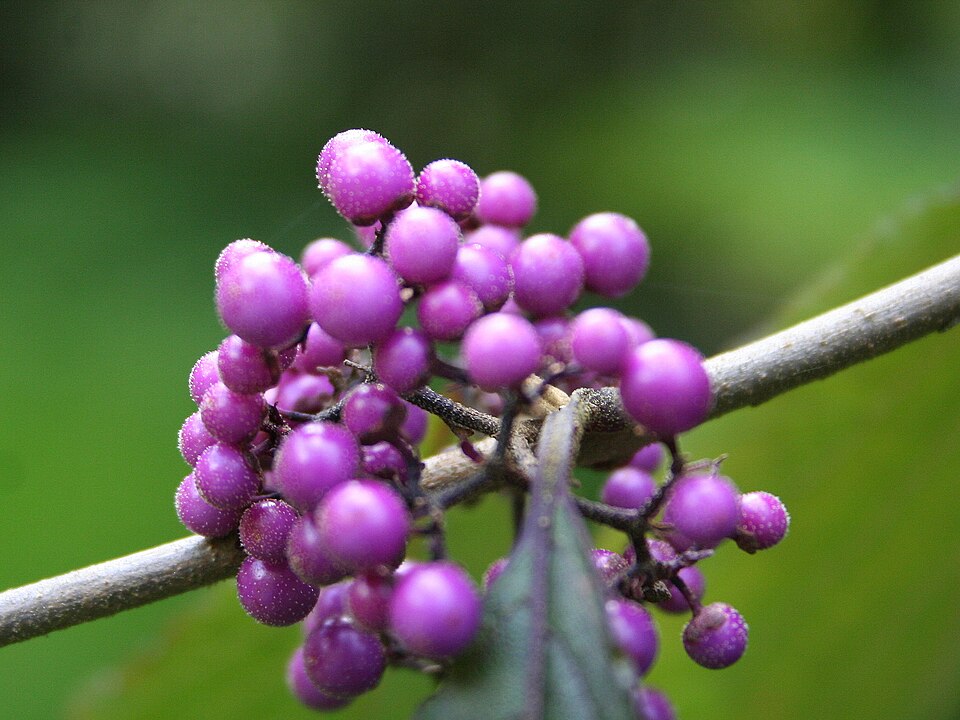
Callicarpa bodinieri var. giraldii 'Profusion' is a deciduous shrub in the mint family (Lamiaceae) reaching 72–96 inches (180–240 cm / 6–8 feet) tall with a spread of 60–84 inches (150–210 cm / 5–7 feet). The habit is upright with slightly arching stems. The species is native to central and western China, where it grows in scrubland and open forest margins, and the cultivar 'Profusion' was selected for a heavier berry crop than the species type. Medium green elliptic leaves 3–5 inches (7–13 cm) long are carried in opposite pairs along the stems; despite the mint-family placement, the foliage has no mint scent. Tiny lilac-pink flowers 0.15 inch (4 mm) across open in dense axillary clusters (cymes) along the stems in July–August and are followed in September–October by clusters of violet-purple berries 0.15 inch (4 mm) across that hold on the bare stems after leaf drop into early winter. The genus name Callicarpa combines Greek kallos ('beauty') with karpos ('fruit'), referring to the berry display, and the species honors Émile-Marie Bodinier (1842–1901), a French missionary and plant collector in China. Growth rate is fast at 12–24 inches (30–60 cm) per year. Hardy to zone 5. Cross-pollination between two or more specimens produces heavier berry crops than single plants.
Native Range
Callicarpa bodinieri is native to central and western China (Hubei, Sichuan, Guizhou, and Shaanxi provinces), where it grows in scrubland, on open forest margins, and on rocky slopes. The species honors Émile-Marie Bodinier (1842–1901), a French missionary and plant collector in China. Variety giraldii has more intensely colored fruit than the species type, and the cultivar 'Profusion' is a further selection for heavier berry production.Suggested Uses
Grown in mixed borders, at the back of perennial plantings, in shrub massings, and in wildlife-friendly gardens at 60–84 inch (150–210 cm) spacing. Plant two or more specimens for cross-pollination. The winter berry display combines with red-twig Cornus, yellow-twig Cornus sericea 'Flaviramea', and bare-stemmed deciduous trees in a mixed-color winter palette. Birds consume the berries through late winter. Container culture requires 10 gallon (38 L) or larger pots for a compact hard-pruned specimen. Heavy shade, wet soils, and climates colder than zone 5 produce poor results.How to Identify
Appearance
Size & Dimensions
Height6' - 8'
Width/Spread5' - 7'
Bloom Information
Tiny lilac-pink flowers 0.15 inch (4 mm) across open in dense axillary cymes along the stems in July–August over 2–3 weeks. Flowers are pollinated by bees and small flies. Berry clusters follow and ripen to violet-purple in September–October. Fruit holds on the bare stems through November and into December in most of the range; the bare-stem-with-purple-berries winter display is the primary ornamental feature, not the summer flowers.
Detailed Descriptions
Flower Description
Lilac-pink, tiny 0.15 inch in dense axillary cymes along the stemsFoliage Description
Medium green, elliptic, opposite, 3-5 inches with finely toothed margins; turns pale yellow to mauve-purple in fallGrowing Conditions
Sun Requirements
Requires 5-10 hours of direct sunlight daily
• Full Sun: 6+ hours of direct sunlight
• Partial Shade: 3-6 hours of direct sunlight
• Full Shade: Less than 3 hours of direct sunlight
Care & Maintenance
Care Guide
Grows in full sun in moist well-drained loam at pH 5.5–7.0. Hardy to zone 5. Full sun produces the heaviest berry crops; partial shade reduces fruit set. Planting two or more specimens within 15–25 feet (5–8 m) of each other increases cross-pollination and berry set. Fruits develop on new wood (current-season growth), so heavy spring pruning is tolerated and encourages a more compact 48–60 inch (120–150 cm) plant with a dense berry display. Drought-tolerant once established. Pest and disease problems are rare.Pruning
Prune in early spring (March) before new growth emerges. For a compact 48–60 inch (120–150 cm) plant with heavy berry set, cut all stems to 12–18 inches (30–45 cm) above ground. For a taller, more open 72–96 inch (180–240 cm) plant, remove only dead, damaged, or crossing stems. Fruits form on new wood, so spring cutting does not remove the current-year berry potential.Pruning Schedule
Prune: March
early spring
Container Growing
Suitable for container growing
Minimum container size: 10 gallons