Caladenia, Genus, tentaculata, Species,
- Genus & species
eastern mantis orchid
Overview
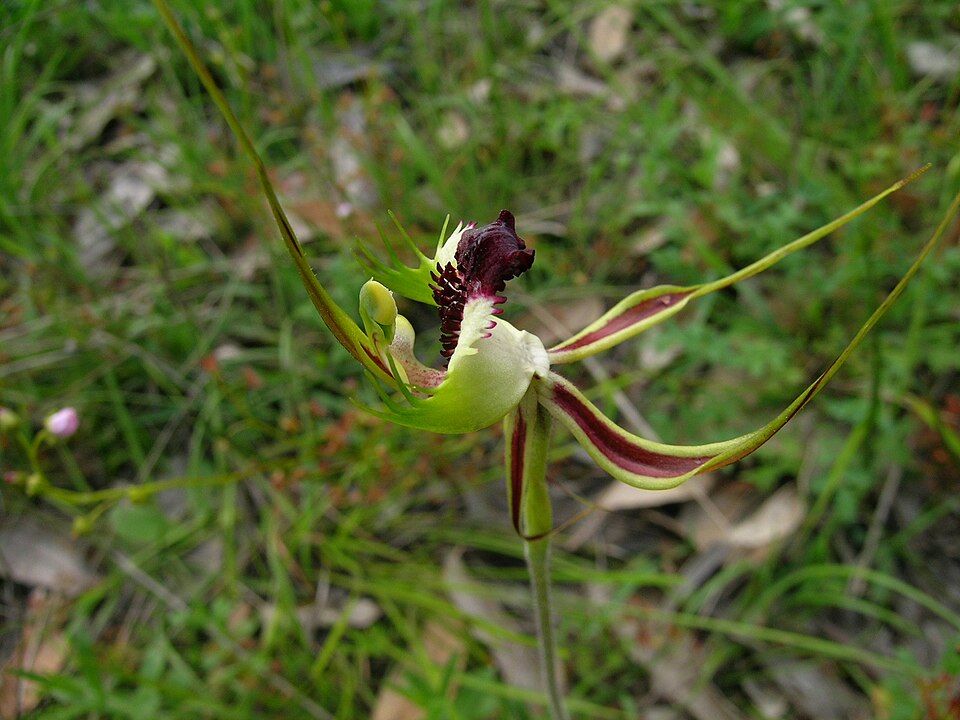
Caladenia tentaculata is a terrestrial, tuberous orchid growing 15-35 cm (6-14 in) tall from an underground tuber, producing a single narrow, hairy leaf each year. One or two spider-like flowers 6-10 cm (2.4-4 in) across are carried on a slender hairy stem. The sepals and petals are greenish-yellow with red markings and taper into long, thread-like points tipped with dark clubbed glands. The labellum is cream to green with maroon markings, edged with comb-like teeth and curling at a dark tip. Flowering occurs in spring, after which the plant dies back to the tuber for summer dormancy. The flowers draw male thynnine wasps, which attempt to mate with the labellum and so transfer pollen. It grows in dry sclerophyll forest, woodland, and heath in well-drained soils. Limitation: the plant is dormant for much of the year and depends on specific wasps and soil fungi, making it hard to cultivate or move.
Native Range
Southeastern Australia, mainly Victoria with populations in New South Wales and South Australia. It grows in dry sclerophyll forest, woodland, and heath on well-drained soils.Suggested Uses
Grown by terrestrial-orchid enthusiasts in pots under a summer-dry regime, and conserved in woodland and heath habitat. It suits undisturbed native bushland more than cultivated garden beds.How to Identify
Appearance
Size & Dimensions
Height6" - 1'2"
Width/Spread2" - 6"
Bloom Information
Spider-like flowers open in spring, mainly September to November. Each stem carries one or two flowers that last two to three weeks. Flowering is heaviest in seasons following good autumn and winter rain.
Detailed Descriptions
Flower Description
greenish-yellow with redFoliage Description
green, hairyGrowing Conditions
Sun Requirements
Requires 3-6 hours of direct sunlight daily
• Full Sun: 6+ hours of direct sunlight
• Partial Shade: 3-6 hours of direct sunlight
• Full Shade: Less than 3 hours of direct sunlight
Care & Maintenance
Care Guide
Grows in well-drained soils in dappled sun to light shade, with a moist winter-spring growing season and a dry summer dormancy. The tuber needs to dry out over summer and rots in wet soil. It depends on soil fungi and specific pollinating wasps, which makes it slow and hard to establish outside its habitat. Water is supplied by seasonal rain during growth and withheld in dormancy. Plants tolerate frost while dormant. The species is rarely cultivated and usually left undisturbed in the wild.Pruning
No pruning is needed. The single leaf and flowering stem wither after flowering as the plant enters summer dormancy. Spent stems can be removed once dry.Container Growing
Suitable for container growing
Minimum container size: 1 gallons