Caladenia, Genus, spp., Multiple species,
- Genus
- Multiple species
spider orchids
Australia, with a few species in New Zealand, New Caledonia, and Indonesia
Overview
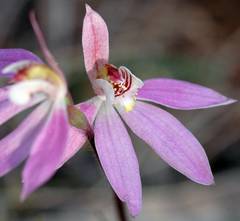
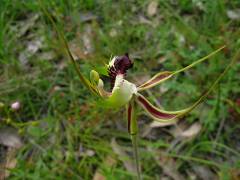
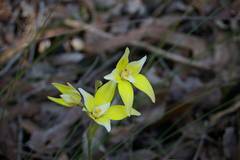
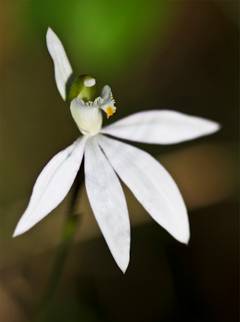
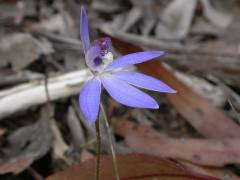
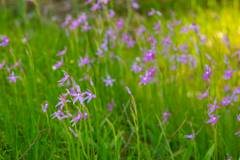
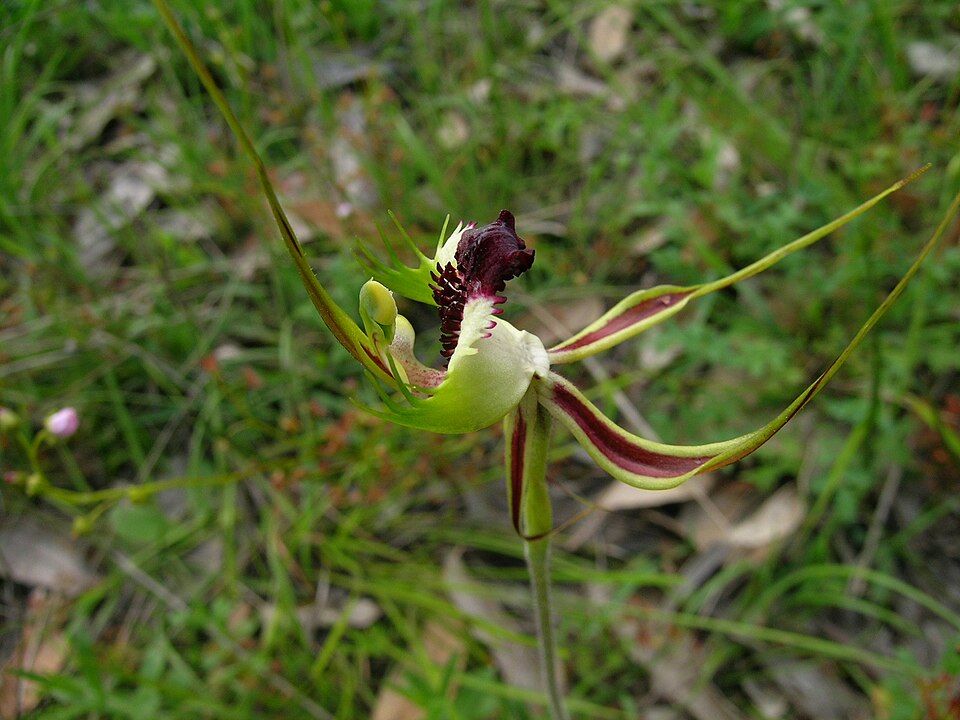
Caladenia is a genus of around 350 species of terrestrial orchids in the family Orchidaceae, found mainly in Australia, with a few species in New Zealand, New Caledonia, and Indonesia. Each plant grows from an underground tuber and produces a single, usually hairy leaf 1-12 inches (2.5-30 cm) long at ground level. From this rises a slender stem 4-24 inches (10-60 cm) tall bearing one to several flowers. The flowers are intricate, many with long, narrow, tapering sepals and petals that give the spider orchids their common name, in colors from white and pink to red, yellow, and green, often with a fringed or clubbed lip. Many species are pollinated by sexual deception, their flowers mimicking the scent and form of female wasps to lure males. Like nearly all terrestrial orchids, Caladenia depends on specific soil fungi to germinate and feed, and the plants die back to the tuber through the dry season. This close dependence on particular fungi and pollinators makes the genus difficult to cultivate and leaves many species rare or threatened in the wild. Plants appear above ground only in the cooler, wetter months and are often most numerous after summer fires.
Native Range
Caladenia is centered in southern Australia, with the greatest number of species in the southwest of Western Australia and in the southeast. A small number of species reach New Zealand, New Caledonia, and Indonesia.Suggested Uses
The genus is grown almost entirely by specialist orchid growers and in conservation collections rather than in general gardens. In the wild the orchids are studied for their pollination by sexual deception and their reliance on soil fungi. A few hardy species are cultivated in pots under controlled conditions.How to Identify
Appearance
Size & Dimensions
Height4" - 2'
Width/Spread2" - 6"
Bloom Information
Flowering occurs mainly in the southern hemisphere spring, broadly August to November, though desert and tropical species vary. Each stem holds its flowers for one to several weeks. Many species flower more abundantly in the season following a summer fire.
Detailed Descriptions
Flower Description
white, pink, red, yellow, or greenFoliage Description
greenGrowing Conditions
Sun Requirements
Requires 3-8 hours of direct sunlight daily
• Full Sun: 6+ hours of direct sunlight
• Partial Shade: 3-6 hours of direct sunlight
• Full Shade: Less than 3 hours of direct sunlight
Care & Maintenance
Care Guide
These orchids are tied to the specific soil fungi and pollinators of their native habitats and are among the hardest plants to grow outside the wild. They need a well-defined Mediterranean cycle of cool, moist winters when growth and flowering occur and warm, dry summers when the tuber rests underground. Soil must be sharply drained and low in nutrients, and the symbiotic fungus must be present for seedlings to establish. Specialist growers raise some species in pots using fungal inoculation and careful watering that follows the natural wet-and-dry rhythm. Most attempts at ordinary garden cultivation fail. Conservation of wild populations depends on protecting both the orchids and their fungal and insect partners.Pruning
No pruning is required, as each plant produces a single leaf and flower stem that dies back naturally to the tuber after flowering. Spent flower stems can be removed once seed is not wanted. The dormant tuber is left undisturbed through the dry season.Container Growing
Suitable for container growing
Minimum container size: 1 gallons