Image 1 of 10
1 / 10
© Louise Docker from sydney, Australia, some rights reserved (CC-BY) · Wikimedia Commons
Caladenia, Genus, catenata, Species,
- Genus & species
lady fingers
Overview
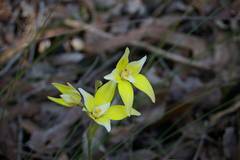
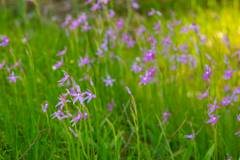
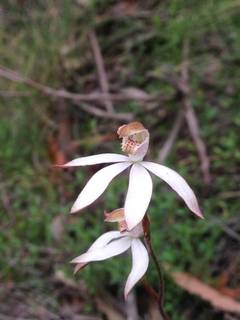
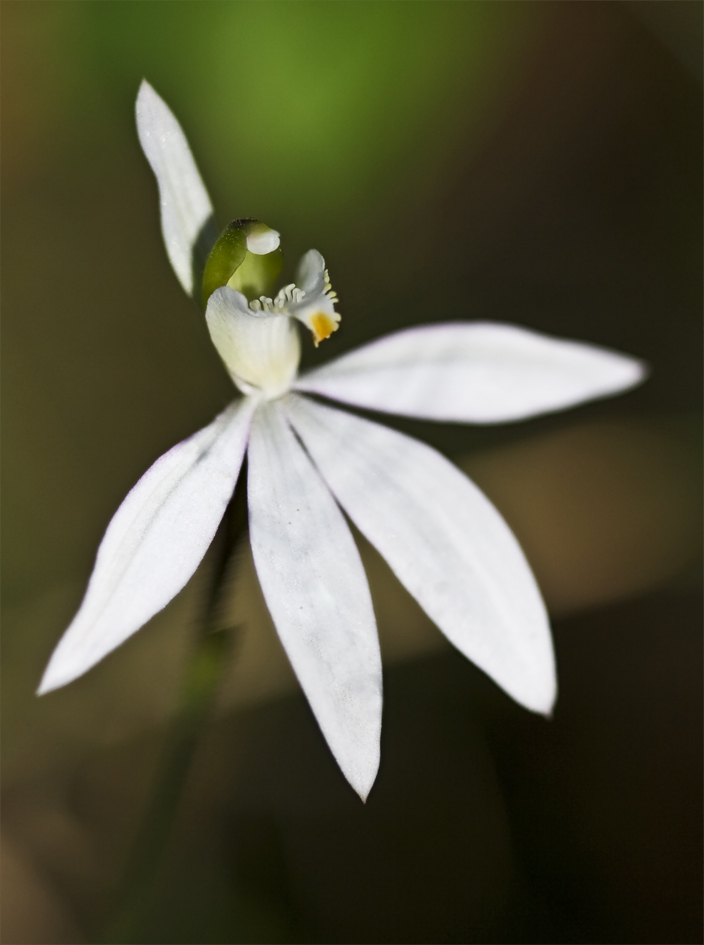
Caladenia catenata is a small deciduous terrestrial orchid 4-14 inches (10-35 cm) tall, growing from an underground tuber and often appearing in loose groups. A single narrow, hairy leaf 2-6 inches (5-15 cm) long rises from the base. One, occasionally two, white flowers 0.8-1.2 inches (2-3 cm) across are carried on a slender hairy stem, with narrow spreading sepals and petals that give a finger-like outline, sometimes flushed pink on the back. The central labellum is white with faint bars and a fringed margin. Flowering occurs in late winter and spring, after which the leaf withers and the tuber rests dormant through summer. Native to eastern Australia, it grows in open forest, woodland, and heath on sandy and loamy soils, and is pollinated by native bees drawn to the flower without a nectar reward. Like most terrestrial orchids, it depends on soil fungi and is difficult to move or grow outside its natural setting.
Native Range
Native to eastern Australia, from Queensland through New South Wales to Victoria, where it grows in open forest, woodland, and heath on sandy and loamy soils.Suggested Uses
Grown in terrestrial orchid collections, pots, and conservation plantings on its native soils. It suits enthusiasts of eastern Australian ground orchids and habitat restoration.How to Identify
Appearance
Size & Dimensions
Height4" - 1'2"
Width/Spread2" - 4"
Bloom Information
Detailed Descriptions
Flower Description
white, sometimes pink-flushedFoliage Description
greenGrowing Conditions
Sun Requirements
Requires 2-5 hours of direct sunlight daily
• Full Sun: 6+ hours of direct sunlight
• Partial Shade: 3-6 hours of direct sunlight
• Full Shade: Less than 3 hours of direct sunlight
Care & Maintenance
Care Guide
Grow Caladenia catenata in dappled shade to part sun in free-draining sandy or loamy soil with a litter layer. Water during the cool growing season from autumn to spring, then keep the dormant tuber dry through summer. It relies on specific soil fungi and is difficult to transplant from the wild, so plants raised in symbiotic culture establish more reliably. It is frost-tolerant during winter growth within its native range. Overwatering during summer dormancy rots the tuber. It is grown mainly by terrestrial orchid specialists and in conservation collections.Pruning
No pruning is required. The spent flower stem and withered leaf can be removed once the plant enters summer dormancy. Leaving the tuber undisturbed supports return growth the following season.Container Growing
Suitable for container growing
Minimum container size: 1 gallons