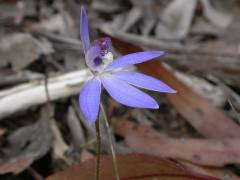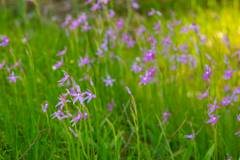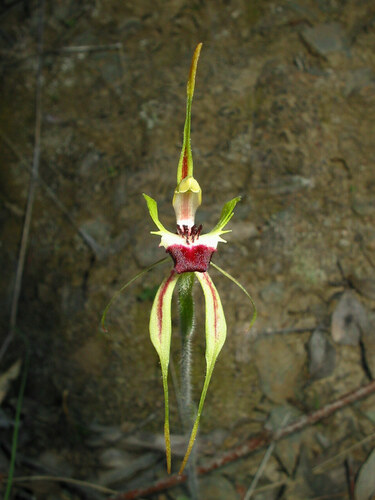
Caladenia, Genus, parva, Species,
- Genus & species
small spider-orchid
Overview
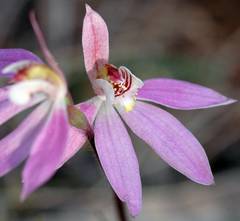
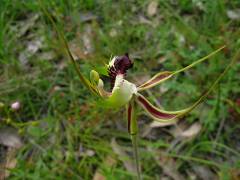
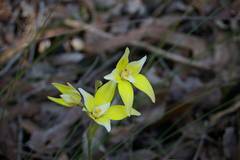
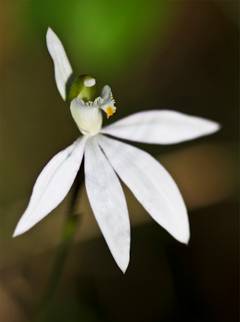
Caladenia parva is a terrestrial orchid growing from an underground tuber, producing a single erect leaf and a slender flower stem 4-10 inches (10-25 cm) tall. The leaf is narrow, 2-5 inches (5-12 cm) long, and covered with soft hairs. One or two flowers open at the top of the stem, each 1.5-2.5 inches (4-6 cm) across, with narrow spreading sepals and petals that taper to thread-like points, giving a spidery outline. The flowers are pale greenish-yellow to reddish, marked with red stripes, and the labellum is fringed and tipped with maroon. Flowering occurs in spring. The plant is dormant through summer and autumn, surviving as a tuber below ground, and reappears after autumn and winter rain. Like many Caladenia, it depends on a soil fungus for germination and on specific insects for pollination, which makes it slow to establish away from undisturbed habitat. It grows in well-drained soils in open forest and heath.
Native Range
Native to southeastern Australia, in Victoria, New South Wales, and Tasmania. Grows in well-drained sandy and loamy soils in open eucalypt forest, woodland, and heath, often among grasses and low shrubs, from near sea level to about 3,300 feet (1,000 m).Suggested Uses
Grown by specialist native-orchid enthusiasts and in undisturbed bushland and conservation plantings rather than general garden beds. Suited to terrestrial-orchid collections in deep pots of free-draining mix kept dry over summer. Its dependence on soil fungi limits use in conventional garden soils.How to Identify
Appearance
Size & Dimensions
Height4" - 10"
Width/Spread2" - 4"
Bloom Information
Flowers in spring, mainly September to November in its native range, with timing depending on rainfall and elevation. Each plant carries one or two flowers that last about two to three weeks. Flowering is more reliable in seasons with good autumn and winter rain.
Detailed Descriptions
Flower Description
greenish-yellow to reddish with maroonFoliage Description
greenGrowing Conditions
Sun Requirements
Requires 3-6 hours of direct sunlight daily
• Full Sun: 6+ hours of direct sunlight
• Partial Shade: 3-6 hours of direct sunlight
• Full Shade: Less than 3 hours of direct sunlight
Care & Maintenance
Care Guide
Grows in well-drained sandy or loamy soil in dappled to open light, with moisture through autumn, winter, and spring and a dry summer dormancy. The tuber rots if kept wet through its summer dormant period. It depends on a symbiotic soil fungus, so it is difficult to grow away from its natural soil and is rarely transplanted with success. Slugs and snails graze the leaf and flowers. Plants are slow to multiply, forming small clumps over many years. Plants persist where the ground is left undisturbed and the soil fungus is intact.Pruning
No pruning is applied; the single leaf dies back naturally as the plant enters summer dormancy. Spent flower stems can be left to set seed or removed once flowering finishes. The tuber regrows from below ground the following season.Container Growing
Suitable for container growing
Minimum container size: 1 gallons