Image 1 of 10
1 / 10
Public domainPublic domainfalsefalse This work has been released into the public domain by its author, Cygnis insignis. This applies worldwide.In some countries this may not be legally possible; if so:Cygnis insignis grants anyone the right to use this work for any purpose, without any conditions, unless such conditions are required by law., no rights reserved (CC0) · Wikimedia Commons
Caladenia, Genus, longicauda, Species,
- Genus & species
white spider orchid
Overview
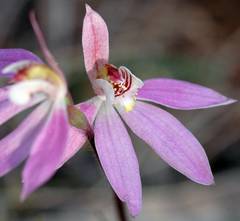
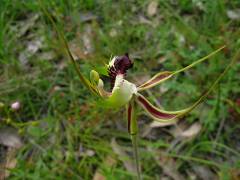
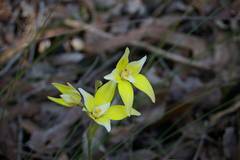
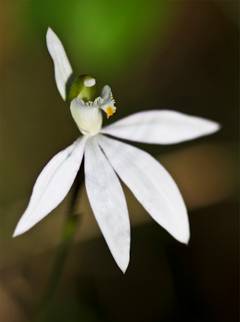
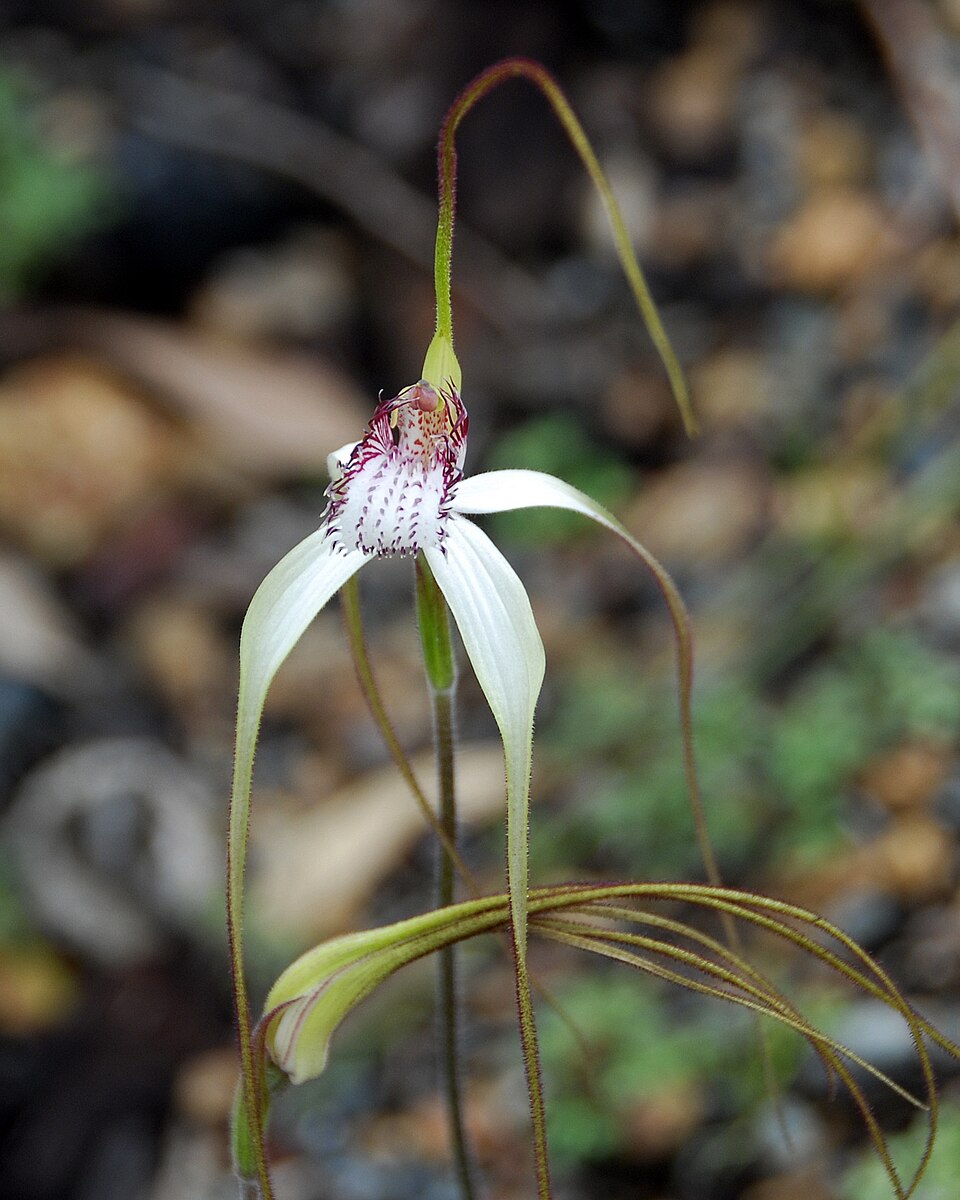
Caladenia longicauda is a deciduous terrestrial orchid growing from an underground tuber, producing flowering stems 8-24 inches (20-60 cm) tall. A single hairy leaf, 2-6 inches (5-15 cm) long and 0.2-0.4 inch (5-10 mm) wide, emerges from the base. Each stem carries one to three white flowers 3-5 inches (8-13 cm) across. The sepals and lateral petals taper into long, drooping, thread-like tips that can extend 2-4 inches (5-10 cm), creating a spider-like outline. The labellum is white with short marginal teeth and rows of stalked calli, edged with red or yellow markings in some forms. Flowering stems rise in spring after winter rains; the leaf and stem die back to the tuber over the dry summer. Plants reproduce by seed and form a single replacement tuber each year, so colonies increase slowly. Germination requires a symbiotic mycorrhizal fungus, which makes the species difficult to establish away from undisturbed native soil. Several subspecies and colour forms are recognized across its range, differing in flower size and labellum markings.
Native Range
Native to south-western Western Australia, from north of Perth south to Albany and east toward Esperance. Grows in jarrah, marri, and wandoo woodland and coastal heath in sandy and lateritic soils at 0-1,000 feet (0-300 m) elevation.Suggested Uses
Grown in pots and orchid beds by terrestrial-orchid growers. Suited to native plant collections in Mediterranean-climate regions with wet winters and dry summers. Not adapted to gardens with year-round irrigation or humid summers.How to Identify
Appearance
Size & Dimensions
Height8" - 2'
Width/Spread4" - 8"
Bloom Information
Flowers from August to November, with peak bloom from September to October. Each stem carries one to three flowers, and individual flowers last 2-3 weeks. Bloom is heavier in seasons with above-average winter rainfall; in dry years many plants produce a leaf but no flower stem.
Detailed Descriptions
Flower Description
white with red or yellow labellum markingsFoliage Description
greenGrowing Conditions
Sun Requirements
Requires 4-8 hours of direct sunlight daily
• Full Sun: 6+ hours of direct sunlight
• Partial Shade: 3-6 hours of direct sunlight
• Full Shade: Less than 3 hours of direct sunlight
Care & Maintenance
Care Guide
Grows in well-drained sandy soils that hold moisture through winter and dry out in summer. Establishment depends on compatible mycorrhizal fungi, so the species rarely persists in cultivated soil without inoculation. In specialist cultivation it is grown in deep pots of sandy loam, watered from autumn to late spring and kept dry during summer dormancy. The hairy leaf is grazed by slugs and snails in wet conditions, and tubers rot if kept moist over summer. Soil heating from summer bushfire stimulates heavier flowering the following season in wild populations.Pruning
No pruning is required. Dead flower stems and the withered leaf can be removed once the plant enters summer dormancy. Seed capsules can be left to ripen for propagation or removed to direct energy to the tuber.Container Growing
Suitable for container growing
Minimum container size: 1 gallons