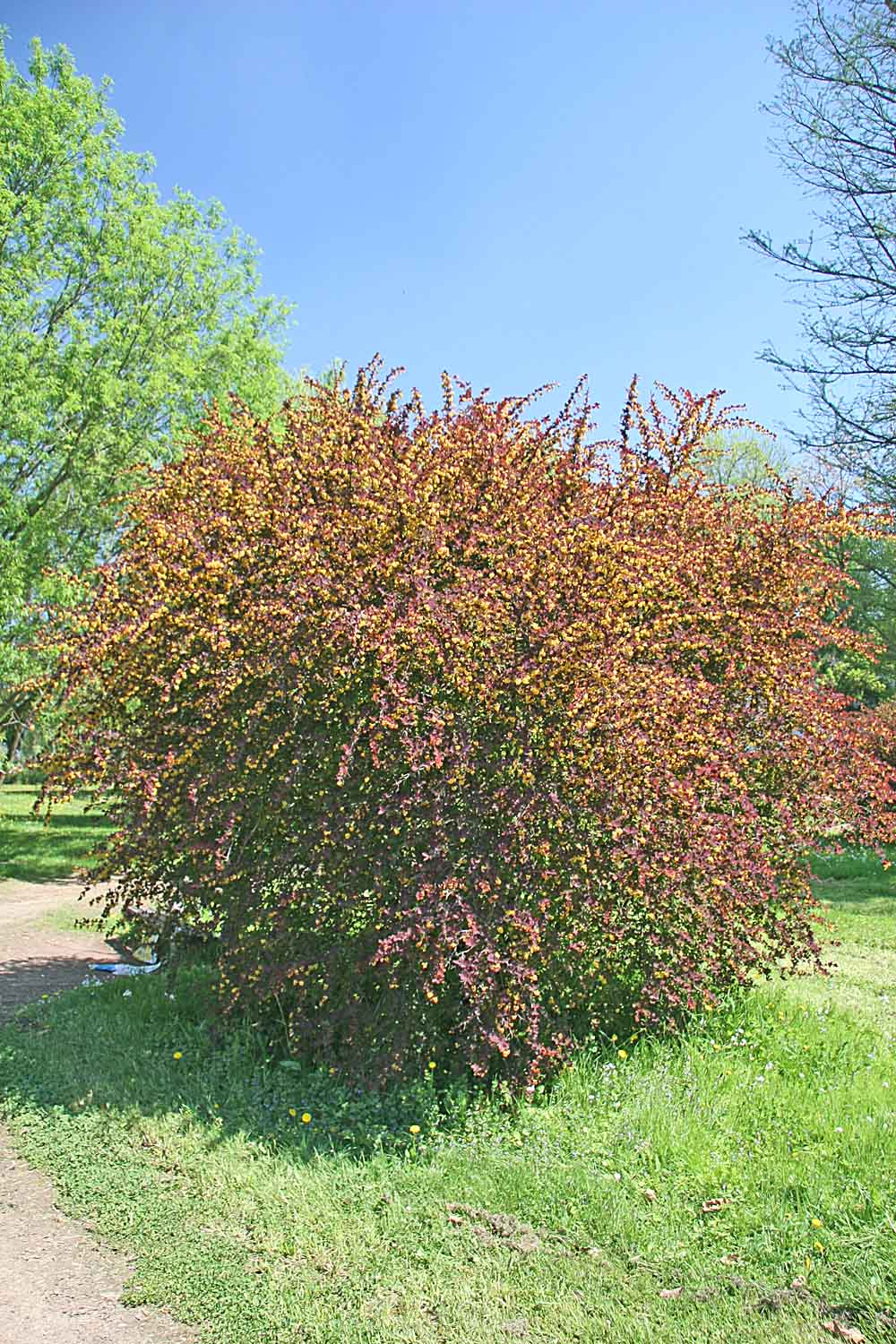
Berberis, Genus, thunbergii, Species, 'Atropurpurea', Cultivar,
- Genus & species
- Cultivar
Purple Japanese barberry
Japan (species); cultivar of garden origin
Overview
Berberis thunbergii 'Atropurpurea' is a cultivar of a deciduous, densely branched shrub in the family Berberidaceae; the species is native to Japan. Plants reach 4–6 feet (1.2–1.8 m) tall and 5–7 feet (1.5–2.1 m) wide, compared with 3–6 feet (0.9–1.8 m) for the green-leaved species, with a rounded, mounded habit and arching, angular stems. Leaves are obovate, 0.5–1.25 inches (1.2–3 cm) long, and reddish purple through the growing season, turning green-bronze in shade and red-orange in fall. Each node carries a single sharp spine 0.25–0.5 inch (6–12 mm) long. Flowers are pale yellow with red-tinged outer petals, 0.25 inch (6 mm) across, and borne singly or in clusters of two to four along the stems in April and May. Fruit is a bright red, oblong berry 0.3 inch (8 mm) long that persists into winter and is eaten by birds. Plants are hardy in USDA zones 4–8 and tolerate drought and a range of soil pH. The species is listed as invasive in New York, Pennsylvania, and several New England states, and some states restrict sale of the species and its cultivars, including this one. Dense stands have been associated with higher blacklegged tick abundance.
Native Range
The species B. thunbergii is native to Japan, where it grows on sunny slopes and in open woodland margins. The cultivar originated in cultivation and has naturalized with the species in the eastern United States and Canada.Suggested Uses
Used in low hedges, mass plantings, and foundation borders, spaced 3–4 feet (0.9–1.2 m) apart. Spines and dense branching make the shrub impenetrable to browsing deer. Listing as invasive and sale restrictions in several states limit use in the northeastern United States.How to Identify
Appearance
Size & Dimensions
Height4' - 6'
Width/Spread5' - 7'
Bloom Information
Flowers open in April and May, and individual flowers last 3–5 days. Flowers are 0.25 inch (6 mm) across and borne singly or in clusters of two to four along the stems. Fruit ripens by September and persists into winter. Flowers are visited by bees.
Detailed Descriptions
Flower Description
Pale yellow with red-tinged outer petalsFoliage Description
Reddish purpleGrowing Conditions
Sun Requirements
Requires 4-8 hours of direct sunlight daily
• Full Sun: 6+ hours of direct sunlight
• Partial Shade: 3-6 hours of direct sunlight
• Full Shade: Less than 3 hours of direct sunlight
Care & Maintenance
Care Guide
Leaf color is deepest reddish purple in full sun with 6 or more hours of direct light, and leaves turn green-bronze in shade. Soil is average, well-drained, pH 5.0–7.5, and plants tolerate clay, sand, and dry sites once established. Water is applied at 1 inch (2.5 cm) per week during the first growing season. Cold hardiness is USDA zones 4–8. Bacterial leaf spot and root rot occur in poorly drained soils, and berry seeds germinate in surrounding soil and natural areas.Pruning
Pruning is done in late winter or early spring before buds break. Removing one-third of the oldest stems at ground level every 2–3 years maintains density and leaf color. Plants tolerate shearing to 2–3 feet (0.6–0.9 m) for hedge use, and shearing is done in early summer after new growth hardens. Spines penetrate cloth gloves, and cut stems are removed from the site.Pruning Schedule
Prune: February–March
winterearly spring
Toxicity: Not assessed
UnknownRelated Berberis species
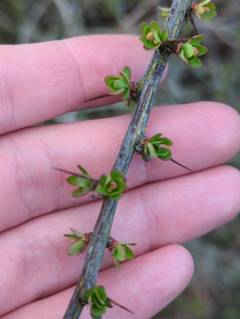 Japanese barberryBerberis thunbergii
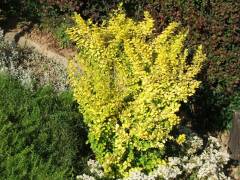 Golden Japanese barberryBerberis thunbergii 'Aurea'
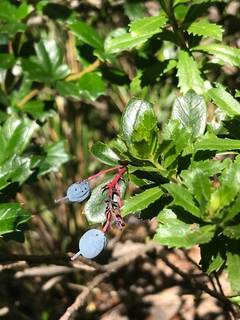 Darwin's barberryBerberis darwinii
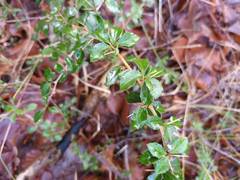 Warty barberryBerberis verruculosa
- Purpleleaf or redleaf Japanese barberryBerberis thunbergii f. atropurpurea
- Helmond Pillar Japanese barberryBerberis thunbergii f. atropurpurea 'Helmond Pillar'