Baccharis, Genus, salicifolia, Species,
- Genus & species
mule fat
Overview
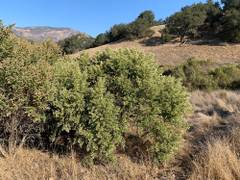
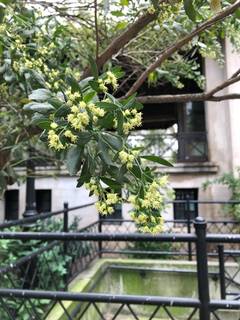
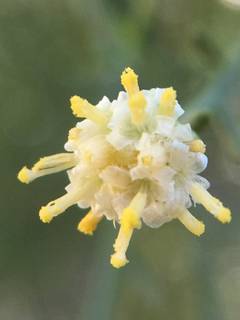
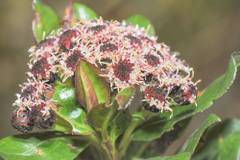
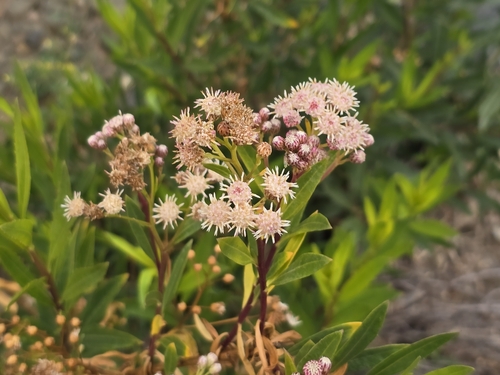
Baccharis salicifolia is an evergreen to semi-evergreen shrub of the daisy family, reaching 6-12 feet (1.8-3.7 m) tall and 6-10 feet (1.8-3 m) wide with many slender, upright green stems rising from the base. The willow-like leaves are 1-6 inches (2.5-15 cm) long, lance-shaped, sticky, and three-veined, giving rise to its other common name, seepwillow. Plants are dioecious, with male and female flowers on separate individuals; the small white to cream flower heads form flat-topped clusters at the stem tips. Female plants produce tufts of white, silky-haired seeds that drift on the wind in summer. It grows fast along streambanks, washes, and ditches, often forming thickets, and resprouts after fire or flooding. The shallow, fibrous roots bind soil and make it a frequent component of riparian restoration. It tolerates seasonal flooding, drought once established, and alkaline or saline soil, but is short-lived, often declining after 10-15 years, and can become weedy in irrigated ground.
Native Range
Native to the southwestern United States and Mexico, from California and Nevada east to Texas and south through Baja California and central Mexico, with populations extending into South America. It grows along watercourses in arid and semi-arid regions.Suggested Uses
Used in riparian and wetland restoration, erosion control along washes and detention basins, and informal screening in warm-climate gardens, spaced 6-8 feet (1.8-2.4 m) apart. It also serves as habitat and a nectar source in native and wildlife plantings.How to Identify
Appearance
Size & Dimensions
Height6' - 12'
Width/Spread6' - 10'
Bloom Information
Flowers over a long season, mainly from spring through fall and nearly year-round in mild areas. The white to cream flower heads draw a wide range of bees, butterflies, and other insects. Seed dispersal follows within a few weeks of flowering on female plants.
Detailed Descriptions
Flower Description
white to creamFoliage Description
greenGrowing Conditions
Sun Requirements
Requires 6-10 hours of direct sunlight daily
• Full Sun: 6+ hours of direct sunlight
• Partial Shade: 3-6 hours of direct sunlight
• Full Shade: Less than 3 hours of direct sunlight
Care & Maintenance
Care Guide
Grows in full sun to part shade on a wide range of soils, including sand, clay, and rocky alluvium, at a pH of 6.0-8.5. It needs reliable moisture while establishing but tolerates drought, periodic flooding, and salinity once the root system is set. Growth is rapid, and plants may need cutting back to stay dense. In cultivation it is grown from seed or cuttings, which root quickly in moist soil. Cold below about 15°F (-9°C) damages top growth, limiting it to zones 8-11. It is short-lived and tends to thin out after a decade unless renewed by hard pruning.Pruning
Cut back hard in late winter to renew dense growth and control the spreading habit, as plants tolerate severe pruning and resprout from the base. Remove dead or storm-damaged stems at any time. Shearing female plants before seed set reduces unwanted self-sowing.Pruning Schedule
Prune: February
winter