Baccharis, Genus, spp., Multiple species,
- Genus
- Multiple species
baccharis
Americas, from the United States to Argentina and Chile
SunFull Sun
Overview
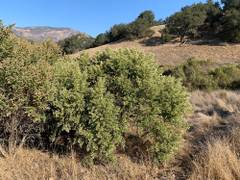
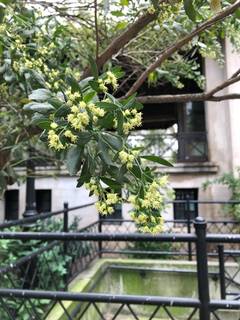
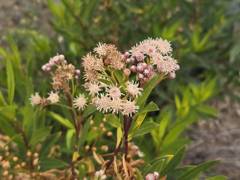
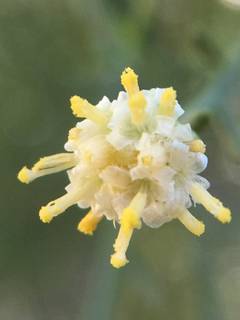
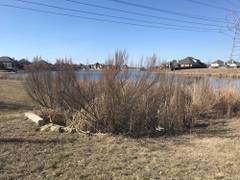
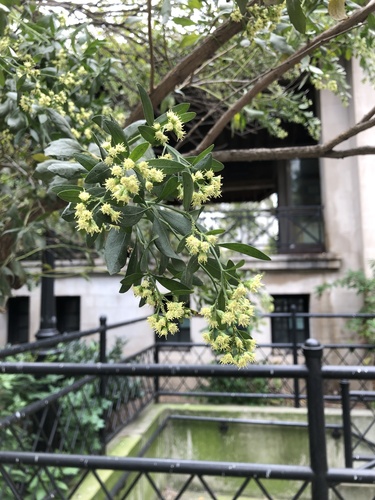
Baccharis is a genus of more than 400 species of shrubs and subshrubs in the family Asteraceae, native to the Americas from the United States south to Argentina and Chile. Plants range from low, spreading forms 12 inches (30 cm) high to upright shrubs 10 feet (3 m) tall, with green, often ridged or winged stems that carry out much of the photosynthesis. The alternate leaves are small, leathery, and sometimes toothed, or reduced and quickly shed in species adapted to dry sites. The genus is dioecious, with male and female flower heads on separate plants; the heads are small and lack ray florets, the males yellowish and the females white. Female plants produce masses of seed, each tipped with a tuft of white bristles that carries it on the wind, giving the plants a cottony look in autumn. B. pilularis is grown as an evergreen ground cover and bank stabilizer in western North America, while B. halimifolia forms a salt-tolerant shrub of eastern coastal areas. Several species colonize disturbed and saline ground, and a few have become invasive outside their native range. Foliage and seed contain compounds that are toxic to grazing livestock.
Native Range
Native to the Americas, from the United States through Mexico, Central America, and the Caribbean to Argentina and Chile, with the greatest diversity in South America. B. pilularis and B. halimifolia are North American.Suggested Uses
Planted for erosion control on banks and dunes, as a salt- and wind-tolerant screen in coastal gardens, and as low evergreen ground cover in the case of B. pilularis. The autumn seed heads are used in dried arrangements. The late flowers support bees, wasps, and butterflies when little else blooms.How to Identify
Appearance
Size & Dimensions
Height1' - 10'
Width/Spread2' - 8'
Colors
Foliage Colors
Bloom Information
Detailed Descriptions
Flower Description
yellowish in male plants, white in female plantsFoliage Description
green to grey-greenGrowing Conditions
Sun Requirements
Requires 6-12 hours of direct sunlight daily
• Full Sun: 6+ hours of direct sunlight
• Partial Shade: 3-6 hours of direct sunlight
• Full Shade: Less than 3 hours of direct sunlight
Water & Climate
Water Needs
Drought Tolerance
Drought tolerant when established
Care & Maintenance
Care Guide
Baccharis species grow in full sun on poor, sandy, rocky, or saline soils, tolerating salt spray, wind, and drought once established. They withstand coastal and disturbed sites that few shrubs accept and need little water after the first season. Soil pH from 6.0 to 8.0 is acceptable, including alkaline ground. B. pilularis responds to an annual hard cut in late winter, which keeps the ground-cover forms dense and low. Growth is fast, and self-sown seedlings can appear in large numbers near female plants.Pruning
An annual hard pruning in late winter keeps ground-cover species such as B. pilularis compact and renews tired growth. Taller shrubs are cut back after flowering to limit size and seeding. Removal of female plants, or of spent seed heads, reduces unwanted self-sowing.Pruning Schedule
Prune: February–March
winterearly spring