Overview
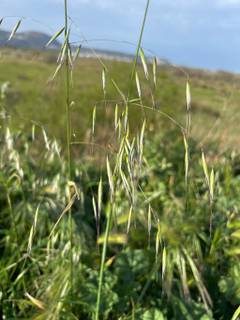
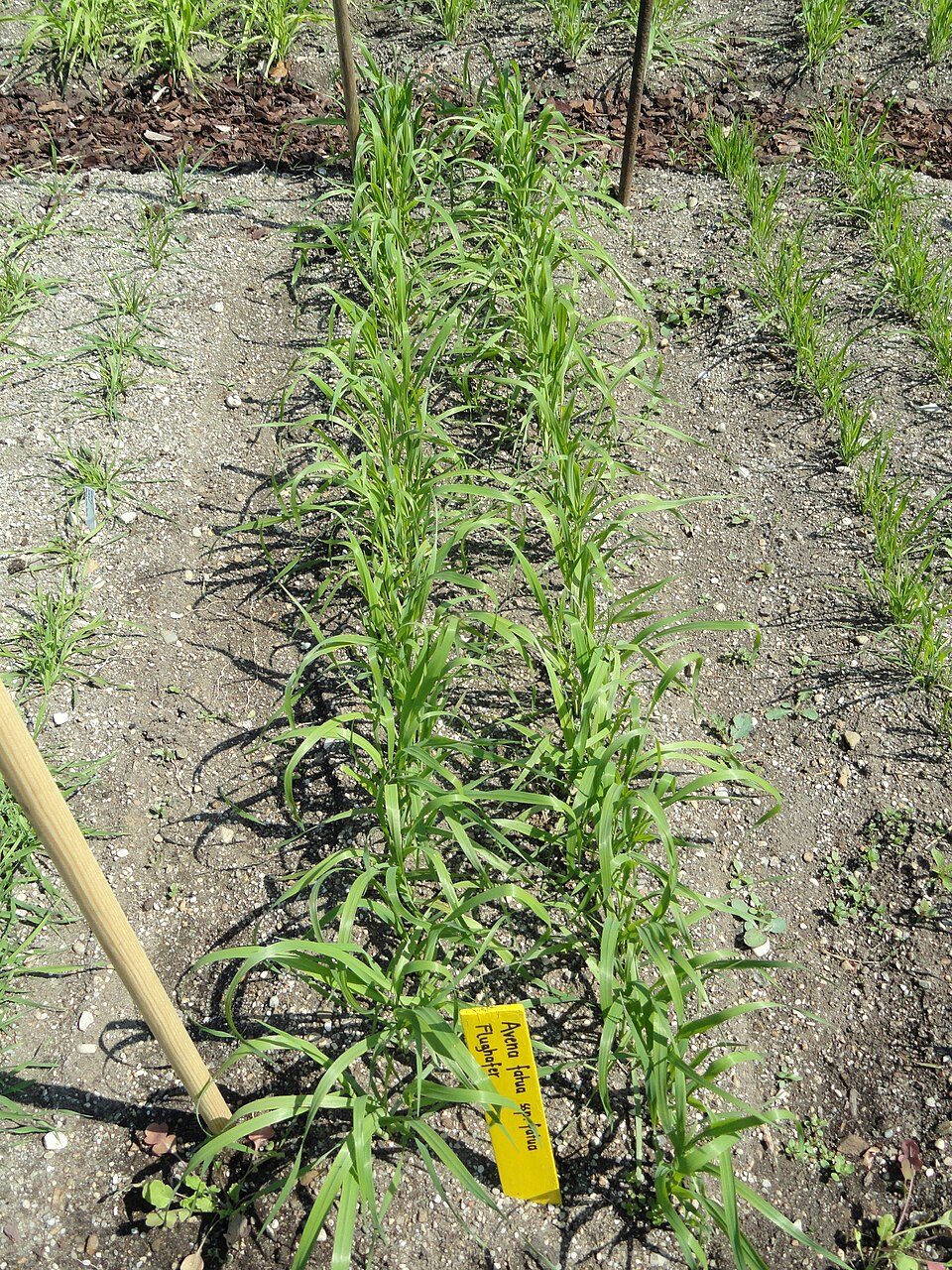
Avena fatua is an annual grass growing 1-4 feet (30-120 cm) tall, with hollow, erect stems and flat, rough-edged leaf blades 4-16 inches (10-40 cm) long and up to 0.6 inch (15 mm) wide. The open, spreading panicle carries nodding spikelets, each with two or three florets that bear long, bent and twisted awns 1-1.6 inch (25-40 mm) long. The base of each floret has a tuft of stiff brown hairs and a circular scar where it breaks away at maturity, scattering the seed. Bloom and seed set run from late spring into summer. It grows in cultivated fields, roadsides, and disturbed ground, completing its cycle in one season. Native to Eurasia, it is a widespread weed of cereal crops worldwide and competes strongly with grain. Seeds can stay dormant in soil for years, making established stands persistent. Dense crops and shade reduce its vigor.
Native Range
Avena fatua is native to Europe, North Africa, and western and central Asia. It has naturalized on every inhabited continent as a weed of cereal fields and disturbed ground. It grows in arable land, roadsides, waste places, and grassland margins.Suggested Uses
Rarely planted by choice, wild oat is mainly studied as a model weed and grown for forage trials and erosion cover on disturbed land. The seed heads are sometimes used in dried arrangements. The seed is taken by seed-eating birds and small mammals.How to Identify
Appearance
Size & Dimensions
Height1' - 4'
Width/Spread8" - 1'4"
Bloom Information
Detailed Descriptions
Flower Description
green to strawFoliage Description
greenGrowing Conditions
Sun Requirements
Requires 6-12 hours of direct sunlight daily
• Full Sun: 6+ hours of direct sunlight
• Partial Shade: 3-6 hours of direct sunlight
• Full Shade: Less than 3 hours of direct sunlight
Water & Climate
Water Needs
Care & Maintenance
Care Guide
Wild oat grows in full sun in a wide range of soils and a pH from 5.5 to 7.5, favoring fertile, disturbed ground. It germinates in cool, moist conditions in autumn or early spring and completes its cycle by midsummer. As an annual it depends entirely on seed, and buried seed remains viable for several years. In crops it competes for water, light, and nutrients and is managed as a weed rather than cultivated. It needs no care to persist where soil is regularly disturbed.Pruning
No pruning is practiced. Mowing or cutting before the seed sets is the main way to limit spread, since the plant reproduces only by seed. Removing plants before the awns ripen prevents seed from entering the soil bank.Toxicity
Non-toxicPlanting Guide
Planting Methods & Timing
Planting Method
direct sow
Days to Maturity
90–130 days
Plant Spacing
6 inches