Atriplex, Genus, nummularia, Species,
- Genus & species
Old man saltbush
Overview
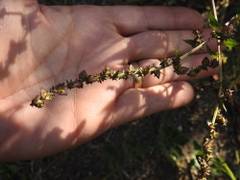
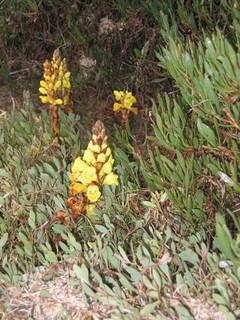
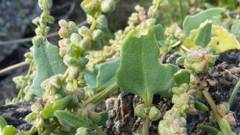
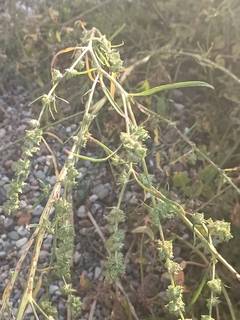
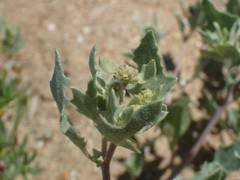
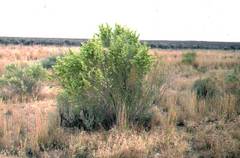
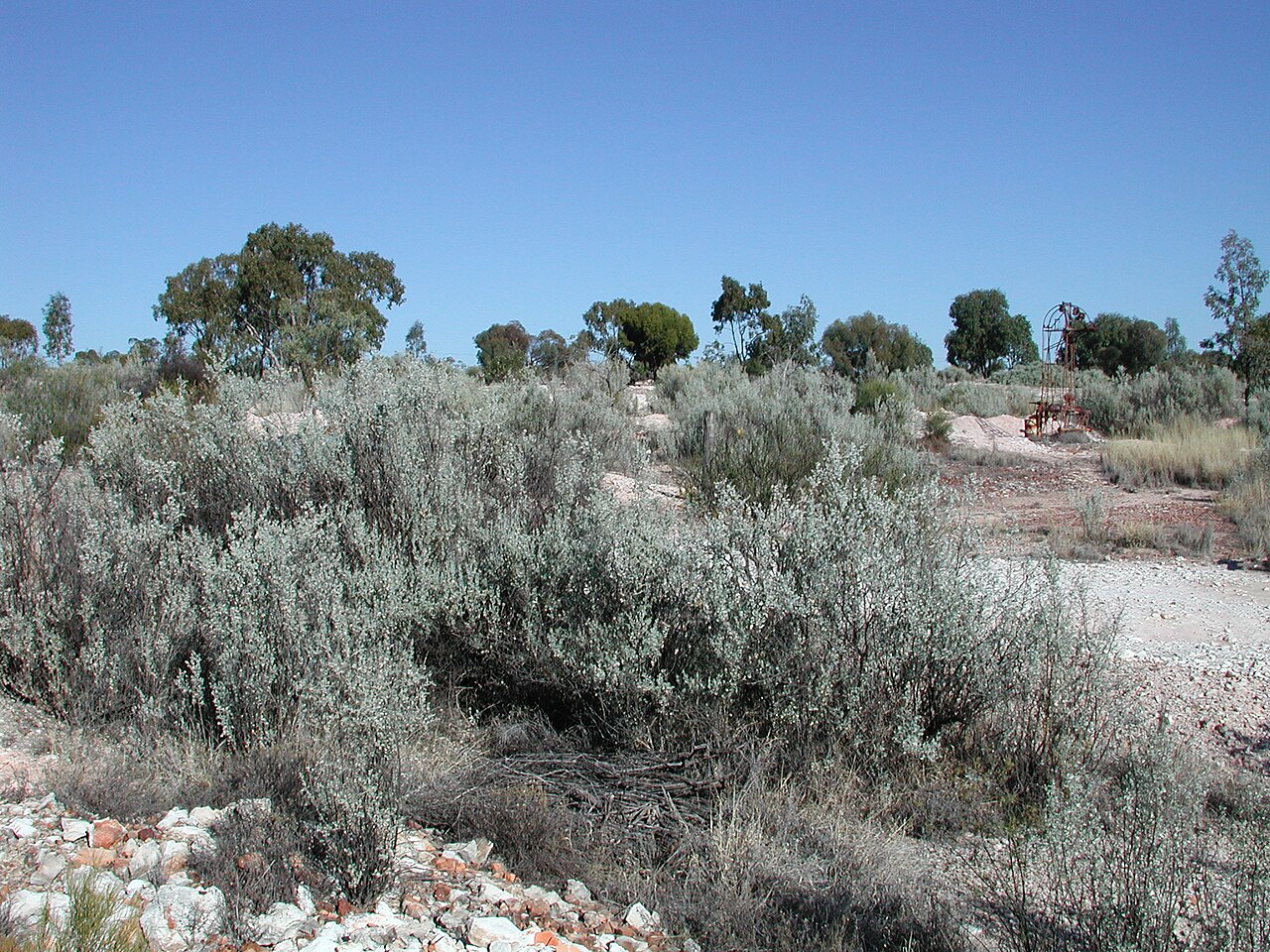
Atriplex nummularia is an evergreen shrub in the Amaranthaceae growing 3-10 feet (1-3 m) tall and 6-13 feet (2-4 m) wide, with woody lower stems and a spreading crown of soft upright branches. Leaves are alternate, roundish to ovate with a wavy or shallowly toothed margin, 0.4-1.6 inches (1-4 cm) long, coated on both surfaces with silvery bladder hairs that store salt and give the foliage a grey-white cast. Plants are dioecious: male and female flowers occur on separate individuals, both small, greenish-yellow and wind-pollinated, carried in branched spikes 2-8 inches (5-20 cm) long mainly from December to May. Female plants develop fan-shaped papery fruiting bracteoles 0.2-0.4 inches (5-10 mm) wide that turn straw-coloured and hold into winter. The species grows on saline, sodic and alkaline soils to pH 9.0 at salinity levels that exclude cereal crops, carries through 12 months without rain by shedding leaves, and regrows from the base after grazing or fire. Leaves are edible, grazed by livestock and harvested for culinary use. Limitations include heavy leaf litter that raises surface salt, a working life of 10-20 years under grazing, and free self-seeding from female plants.
Native Range
Atriplex nummularia is native to arid and semi-arid inland Australia, occurring across all mainland states on floodplains, clay pans, saline flats and the margins of salt lakes. It grows where annual rainfall runs 5-16 inches (125-400 mm), usually on heavy alkaline clays and sodic duplex soils. Three subspecies are recognised, and the species has been planted outside Australia for saline land reclamation and fodder in North Africa, the Middle East, South America and the south-western United States.Suggested Uses
Planted in fodder rows for grazing sheep and cattle through summer and drought, spaced 6-10 feet (2-3 m) apart within rows and 13-33 feet (4-10 m) between rows. Used for revegetating saline and sodic land, stabilising eroding soils and forming shelter belts in low-rainfall districts. Also grown in dry coastal and inland gardens as a grey-foliage screen, with leaves harvested for culinary use as a salted green.How to Identify
Appearance
Size & Dimensions
Height3' - 10'
Width/Spread6' - 13'
Bloom Information
Flowering runs mainly from December to May in inland Australia, with additional flushes at other times following rainfall of 1 inch (25 mm) or more. Flowers are greenish-yellow, under 0.1 inches (2 mm) across, wind-pollinated, and carried in branched spikes 2-8 inches (5-20 cm) long. Male plants shed pollen over 3-4 weeks, while female plants hold fruiting bracteoles for 6-9 months after flowering. Seedlings emerge after summer rain in the following season.
Detailed Descriptions
Foliage Description
Silver-greyGrowing Conditions
Sun Requirements
Requires 8-12 hours of direct sunlight daily
• Full Sun: 6+ hours of direct sunlight
• Partial Shade: 3-6 hours of direct sunlight
• Full Shade: Less than 3 hours of direct sunlight
Care & Maintenance
Care Guide
Atriplex nummularia grows in full sun with 8-12 hours of direct exposure and thins to bare stems under shade. It roots on clay, sodic duplex soils, loam and sand across pH 6.0-9.0, including soils too saline for cereal crops, and dies where water sits over the root crown for more than a few days. Seedlings take 1-2 gallons (4-8 litres) weekly for the first 8-12 weeks; established plants draw on a taproot reaching 10-16 feet (3-5 m) and take no irrigation in districts receiving 8 inches (200 mm) of annual rainfall. Established plants tolerate 18F (-8C). Fertiliser is not applied in fodder plantings, where nitrogen comes from interplanted legumes. Grazing is rotated so plants retain 12-20 inches (30-50 cm) of leafy stem, since repeated defoliation to the woody base kills plants within two seasons.Pruning
Cutting back by half in late winter produces dense leafy regrowth from the woody framework within 8-12 weeks. Plants tolerate mechanical slashing to 12-20 inches (30-50 cm) above ground on a two to three year cycle in fodder systems. Cuts made below the lowest leafy stems into old wood reshoot slowly or not at all. Ornamental plantings are trimmed once a year after the summer flowering to hold a rounded outline.Pruning Schedule
Prune: July–August
winter