Atriplex, Genus, laciniata, Species,
- Genus & species
frosted orache
Coasts of western and northern Europe
SunFull Sun
Overview
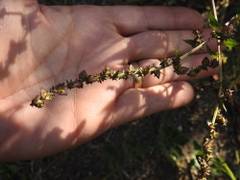
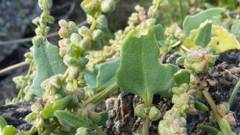
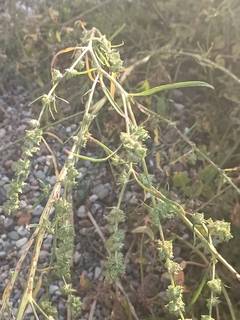
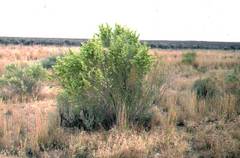
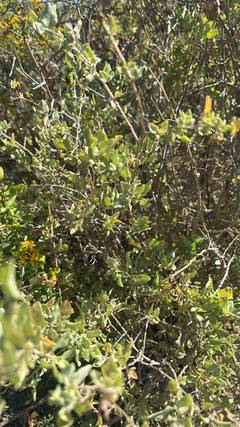
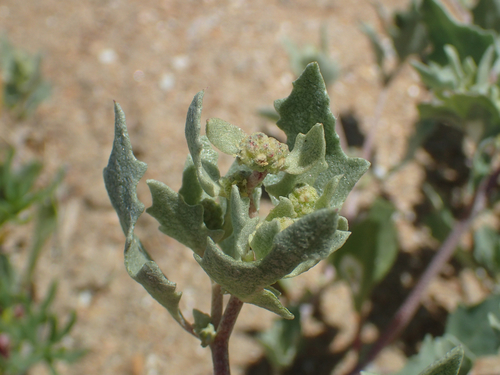
Atriplex laciniata is an annual of sandy seashores, forming low, spreading plants 4-12 inches (10-30 cm) tall and 8-24 inches (20-60 cm) across. Stems are prostrate to ascending, often reddish or yellow-tinged, and branch from the base. Leaves are triangular to diamond-shaped, 0.6-2 inches (1.5-5 cm) long, with toothed or shallowly lobed margins and a silvery-white mealy coating, heaviest on the underside, that gives the plant a frosted cast. Flowers are small, green, and petalless, in clusters in the leaf axils and at the stem tips from July to September, with separate male and female flowers on the same plant. Each female flower is enclosed by two triangular bracteoles 0.2-0.3 inch (4-8 mm) long that harden around the seed. Seeds are dark brown to black, 0.06-0.10 inch (1.5-2.5 mm) wide. The whole plant dies after seeding in autumn. It grows on loose sand at and just above the strand line, where decaying seaweed enriches the substrate and few other plants establish, and it does not persist on stable or vegetated ground.
Native Range
Native to the coasts of western and northern Europe, from Atlantic and Mediterranean shores north to Scandinavia and around the Baltic. Grows on sandy and gravelly beaches along the drift line, where buried decaying seaweed supplies nutrients. Naturalized on parts of the North American Atlantic coast.Suggested Uses
Grown only in coastal and dune restoration and in naturalistic seaside plantings on open sand. Stabilizes loose sand along the drift line where more permanent vegetation cannot establish. Not suited to general garden borders, containers, or fertile soils.How to Identify
Appearance
Size & Dimensions
Height4" - 1'
Width/Spread8" - 2'
Bloom Information
Detailed Descriptions
Foliage Description
silvery-white mealy over greenGrowing Conditions
Sun Requirements
Requires 6-12 hours of direct sunlight daily
• Full Sun: 6+ hours of direct sunlight
• Partial Shade: 3-6 hours of direct sunlight
• Full Shade: Less than 3 hours of direct sunlight
Water & Climate
Water Needs
Drought Tolerance
Drought tolerant when established
Care & Maintenance
Care Guide
Grows in full sun on loose, sharp-draining sand with high salt exposure, completing its life cycle in one season. Seed germinates in spring on open sand near the drift line, where buried decaying seaweed supplies nutrients. Tolerates salt spray, brief tidal inundation, and sand burial, but does not compete on stable, vegetated, or fertile soils. Needs no feeding or watering in its natural setting, depending instead on winter-deposited organic matter. Autumn frosts kill the plants once seed has set. It is rarely cultivated and persists mainly through self-sown seed on suitable open sand.Pruning
No pruning is practiced; the plant is an annual that dies after seeding. Removing spent plants in autumn has no effect on the following years stand, which arises from shed seed. Seedheads left in place reseed the open sand.Toxicity
Non-toxicPlanting Guide
Planting Methods & Timing
Planting Method
direct sow
Direct Sow Timing
spring, on open sand after the last frost
Days to Maturity
90–120 days
Plant Spacing
12 inches