Atriplex, Genus, prostrata, Species,
- Genus & species
creeping saltbush
Europe, western Asia, and North Africa
SunFull Sun
Overview
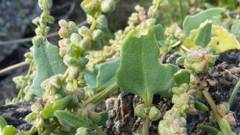
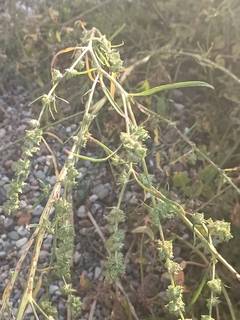
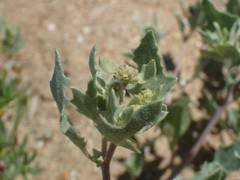
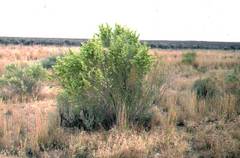
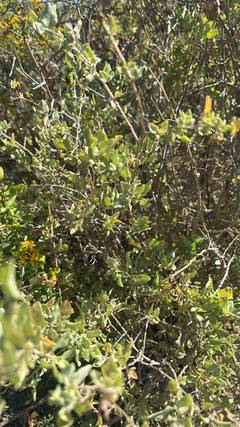
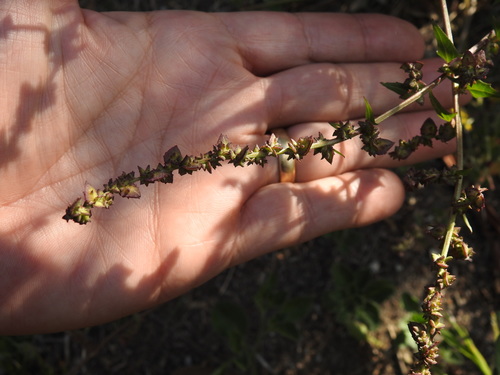
Atriplex prostrata is an annual in the family Amaranthaceae, with sprawling to ascending stems 8-36 inches (20-90 cm) long that often lie close to the ground before turning up at the tips. The lower leaves are triangular to spear-shaped with a pair of forward- or outward-pointing basal lobes, 1-4 inches (2.5-10 cm) long, dull green and sometimes mealy-white beneath. Tiny green, petalless flowers cluster in spikes among the upper leaves from July to October, the separate male and female flowers wind-pollinated. Female flowers are enclosed by two triangular bracts that enlarge and harden around the seed. The plant grows from seed each year and dies after setting seed in autumn. The species occurs on coastal saltmarshes, drift lines, and sea walls, and inland on disturbed, nutrient-rich, and saline ground such as roadsides and arable edges across Europe, western Asia, and North Africa. It tolerates salt and trampling but needs open ground and full sun, and is quickly shaded out where taller perennial vegetation closes over. The seeds feed finches and buntings into winter.
Native Range
Native to Europe, western Asia, and North Africa, and widespread as an introduction elsewhere. It grows on coastal saltmarshes, shingle, and sea walls, and inland on disturbed, fertile, or saline ground including roadside verges, field margins, and waste places.Suggested Uses
Grown occasionally as an edible leaf in coastal and wildlife gardens, or used to colonise bare, saline, or disturbed ground. The leaves are gathered as a spinach substitute, and the seeds feed birds in autumn and winter. It is more familiar as a wild colonist of saltmarsh and waste ground than as a planted crop.How to Identify
Appearance
Size & Dimensions
Height8" - 3'
Width/Spread1' - 2'
Bloom Information
The small green flowers appear from July to October, without petals and easily overlooked. Pollination is by wind, and male and female flowers are separate on the same plant. The seeds ripen within hardening triangular bracts and are shed from autumn into winter.
Detailed Descriptions
Foliage Description
dull greenGrowing Conditions
Sun Requirements
Requires 6-12 hours of direct sunlight daily
• Full Sun: 6+ hours of direct sunlight
• Partial Shade: 3-6 hours of direct sunlight
• Full Shade: Less than 3 hours of direct sunlight
Water & Climate
Water Needs
Drought Tolerance
Drought tolerant when established
Care & Maintenance
Care Guide
Atriplex prostrata grows in full sun on open, fertile, often saline or disturbed soils, tolerating a wide range from sand to heavy clay. As a fast-growing annual it is rarely cultivated and needs no special care, completing its cycle in a single season from seed sown or self-sown in spring. It withstands salt, drought, and trampling but cannot compete in dense, closed vegetation, so it favours bare or recently disturbed ground. No feeding is needed, as it grows most strongly on already-rich soils. The young leaves are edible cooked or raw, like those of related oraches. Plants pull up easily once they have set seed.Toxicity
Non-toxicPlanting Guide
Planting Methods & Timing
Planting Method
direct sow
Direct Sow Timing
Spring
Plant Spacing
12 inches