Armeria, Genus, maritima, Species, 'Victor Reiter', Cultivar,
- Genus & species
- Cultivar
victor reiter sea thrift
Garden selection; species {Armeria maritima} is native to coastal regions of Europe and North America
Overview
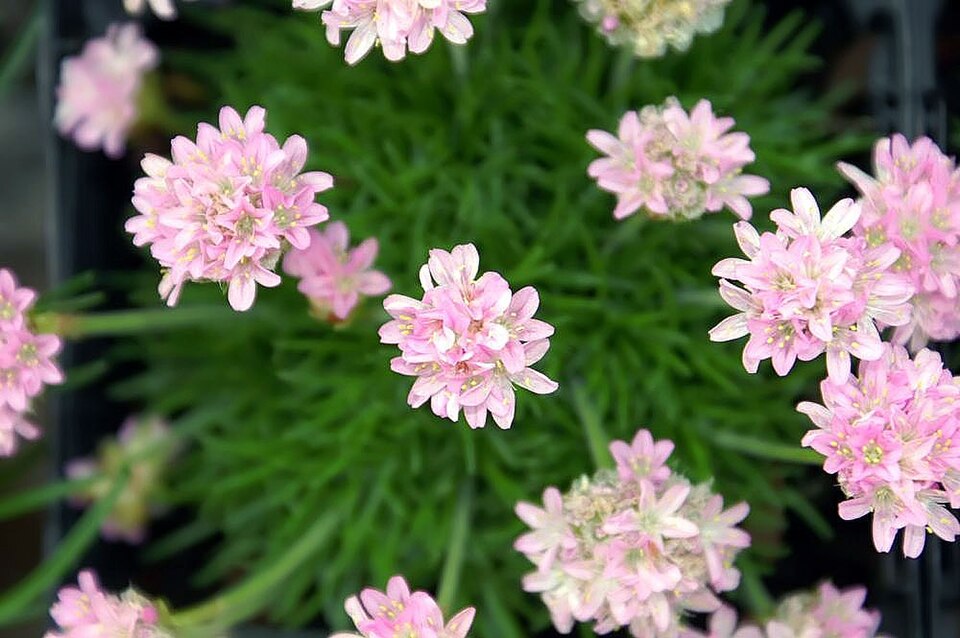
Armeria maritima 'Victor Reiter' is a compact sea thrift cultivar that grows 6–10 inches (15–25 cm) tall in flower and 8–12 inches (20–30 cm) wide, named for the noted San Francisco plantsman Victor Reiter Jr. Dense tufts of narrow, dark green grass-like leaves form a tight evergreen cushion. Spherical flower heads 0.75–1 inch (2–2.5 cm) in diameter are deep rose-pink, among the darkest in the A. maritima color range, borne on wiry leafless stems from May through July. The deep rose-pink tone holds its intensity throughout the bloom period without fading. Deadheading spent flower stems encourages sporadic additional flowering in late summer. Like all sea thrifts, this cultivar requires lean, well-drained soil; in rich, moist, or heavy ground, the foliage cushion opens at the center and becomes ragged. The coastal native habitat equips it for salt spray, sandy soil, and wind exposure. In hot, humid climates, summer die-back at the center is common. Division every 3–4 years rejuvenates thinning clumps. The plant is widely adaptable across USDA zones 3–9 when drainage is adequate.
Native Range
The species Armeria maritima is native to coastal regions of Europe and the Pacific coast of North America. 'Victor Reiter' is a garden selection named for Victor Reiter Jr. of San Francisco, chosen for deep rose-pink flower color.Suggested Uses
Used as edging, in rock gardens, coastal plantings, and between flagstones. The deep rose-pink color contrasts with silver-leaved and white-flowered companions. Container culture works in shallow pots of 1 gallon (3.8 liters) or more with gritty media. Tolerates coastal salt exposure and wind.How to Identify
Appearance
Size & Dimensions
Height6" - 10"
Width/Spread8" - 1'
Colors
Bloom Information
Flowering begins in May and continues through July. Spherical deep rose-pink flower heads appear on wiry stems above the foliage cushion. Removing spent heads encourages a lighter second flush in August–September. Individual flower heads remain colorful for 2–3 weeks.
Detailed Descriptions
Foliage Description
Dark green, grass-like, linearGrowing Conditions
Sun Requirements
Requires 6-10 hours of direct sunlight daily
• Full Sun: 6+ hours of direct sunlight
• Partial Shade: 3-6 hours of direct sunlight
• Full Shade: Less than 3 hours of direct sunlight
Care & Maintenance
Care Guide
Plant in full sun with at least 6 hours of direct light. Lean, well-drained sandy or gravelly soil is essential. Do not fertilize or amend with rich organic matter. Water sparingly once established. Deadhead spent flower stems at the base for extended bloom. Divide clumps every 3–4 years in spring if the center thins. Tolerates salt spray and coastal wind.Pruning
Remove spent flower stems at the base after each flush. Comb out dead or brown foliage from the cushion in early spring. Division rejuvenates aging clumps.Pruning Schedule
Prune: July
summer
Container Growing
Suitable for container growing
Minimum container size: 1 gallons