Argemone, Genus, polyanthemos, Species,
- Genus & species
thistle poppy
Central North America (Great Plains)
SunFull Sun
Overview
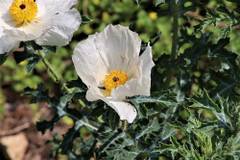
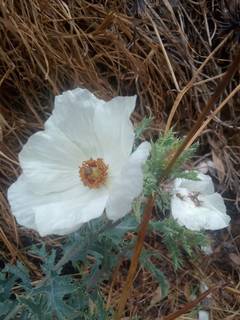
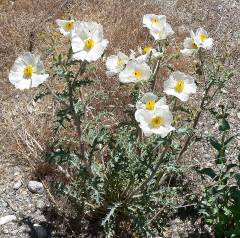
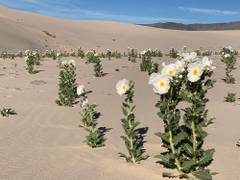
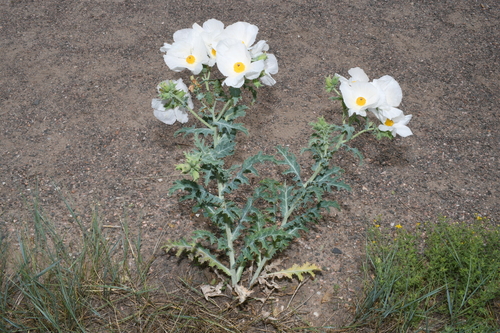
Argemone polyanthemos is an annual or short-lived biennial in the poppy family, forming an upright, branching plant 2-4 feet (60-120 cm) tall and 1-2 feet (30-60 cm) wide. The blue-green leaves are deeply lobed, prickly along the margins and veins, and clasp the stem, which bleeds a yellow to orange sap when cut. Flowers are white, 3-4 inches (7.5-10 cm) across, with four to six crinkled, tissue-paper-textured petals surrounding a dense cluster of yellow stamens. Blooms open at the stem tips from late spring into summer. The species grows on disturbed ground, roadsides, overgrazed rangeland, and sandy prairie soils across the Great Plains. Spiny seed capsules follow the flowers and split open to release numerous small dark seeds. All parts contain toxic alkaloids, and the prickles deter grazing animals, which allows it to spread on overused pasture. It is a pioneer of poor and disturbed soils, completing its life cycle in one or two seasons before dying. Plants self-sow and can colonize bare ground quickly. The prickly foliage and stems limit its use near paths and play areas.
Native Range
Native to the Great Plains of central North America, from the Dakotas and Montana south to Texas and New Mexico, growing on prairies, plains, roadsides, and disturbed sandy or rocky soils.Suggested Uses
Used in native prairie plantings, wildflower meadows, and restoration of disturbed dry sites, spaced about 18-24 inches (45-60 cm) apart. Its spiny habit suits naturalistic, low-maintenance areas set back from walkways. Self-sows to maintain a presence in informal plantings.How to Identify
Appearance
Size & Dimensions
Height2' - 4'
Width/Spread1' - 2'
Colors
Flower Colors
Foliage Colors
Bloom Information
Blooms from late spring through summer, roughly May to August, with flowers opening a few at a time at the branch tips. Each flower lasts one to two days, and a plant flowers over several weeks. Bloom is heaviest where spring moisture has been adequate.
Detailed Descriptions
Foliage Description
blue-greenGrowing Conditions
Sun Requirements
Requires 6-12 hours of direct sunlight daily
• Full Sun: 6+ hours of direct sunlight
• Partial Shade: 3-6 hours of direct sunlight
• Full Shade: Less than 3 hours of direct sunlight
Water & Climate
Water Needs
Drought Tolerance
Drought tolerant when established
Care & Maintenance
Care Guide
Grow in full sun in dry, sandy, gravelly, or rocky soil with sharp drainage, conditions matching the poor, disturbed ground where it grows naturally. Sow seed directly in the final position, as the long taproot resents transplanting. Water is seldom needed once seedlings are established, and rich or wet soil shortens the plant lifespan. All parts contain toxic alkaloids and the foliage is spiny, so it is kept clear of grazing livestock and high-traffic areas. Plants self-sow freely and rarely need replanting once established in a site. No serious pests trouble it.Pruning
No pruning is required for this short-lived plant. Spent, spiny stems can be cut and removed at the end of the season. Taking off seed pods before they open reduces unwanted self-seeding.Toxicity Warning
Toxic to pets and humansPlanting Guide
Planting Methods & Timing
Planting Method
direct sow
Direct Sow Timing
early spring or fall
Plant Spacing
18 inches