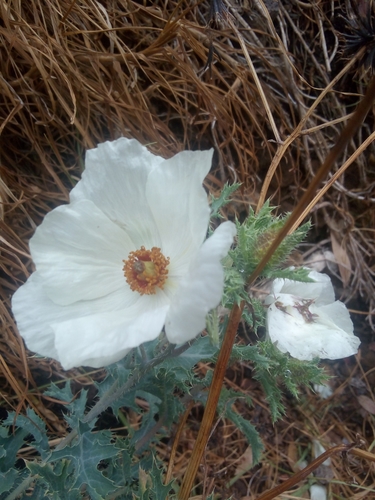
Argemone, Genus, platyceras, Species,
- Genus & species
crested pricklypoppy
Mexico and southwestern North America
SunFull Sun
Overview
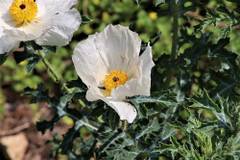
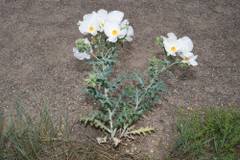
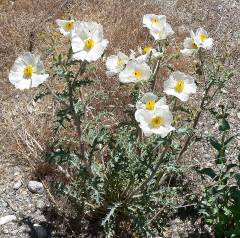
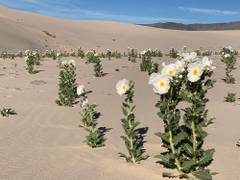
Argemone platyceras is a prickly, fast-growing annual or short-lived perennial in the poppy family, forming an upright, branched plant 24-48 inches (60-120 cm) tall. The stems and the deeply lobed, blue-grey leaves are covered in sharp yellow spines, and the clasping leaves are 4-8 inches (10-20 cm) long with white-marked veins. From late spring through summer, white poppy-like flowers 3-4 inches (8-10 cm) across open at the branch tips, each with four to six crinkled petals around a dense boss of yellow stamens. The flowers are followed by spiny, oblong seed capsules 1-1.5 inches (2.5-4 cm) long that split to release many small dark seeds. Cut stems exude a yellow latex. The plant tolerates heat and drought and grows in poor, dry soils. All parts contain toxic alkaloids, and the seeds and pressed seed oil cause digestive illness if eaten.
Native Range
Native to Mexico and the southwestern United States, extending into Central America. Grows on dry plains, roadsides, overgrazed rangeland, and disturbed ground in full sun, from low elevations to about 8,000 feet (2,400 m).Suggested Uses
Grown in dry gardens, gravel gardens, and naturalistic plantings on poor soils at 12-18 inch (30-45 cm) spacing. Self-seeds into open, sunny ground. Sharp spines make it difficult to handle and unsuited to planting beside paths or seating.How to Identify
Appearance
Size & Dimensions
Height2' - 4'
Width/Spread1' - 2'
Colors
Flower Colors
Foliage Colors
Bloom Information
Detailed Descriptions
Flower Description
White with yellow stamensFoliage Description
Blue-grey with white-marked veinsGrowing Conditions
Sun Requirements
Requires 6-12 hours of direct sunlight daily
• Full Sun: 6+ hours of direct sunlight
• Partial Shade: 3-6 hours of direct sunlight
• Full Shade: Less than 3 hours of direct sunlight
Water & Climate
Water Needs
Drought Tolerance
Drought tolerant when established
Care & Maintenance
Care Guide
Grows in full sun in poor, dry, well-drained soil and tolerates heat, drought, and rocky ground. Performs poorly in rich or wet soils, where growth is soft and plants are short-lived. Water sparingly, as established plants need little supplemental irrigation. Self-seeds freely and spreads into open ground from the spiny capsules. Spines on stems, leaves, and capsules catch on skin. All parts contain toxic alkaloids; the seeds and pressed seed oil cause digestive illness and have poisoned livestock.Pruning
Remove spent flowering stems to limit self-seeding from the spiny capsules. Cut plants at the end of the season once seed has set. No other pruning is needed.Pruning Schedule
Prune: October
fall
Container Growing
Suitable for container growing
Minimum container size: 3 gallons
Toxicity Warning
Toxic to pets and humansPlanting Guide
Planting Methods & Timing
Planting Method
direct sow
Direct Sow Timing
Sow in spring after the last frost where plants are to grow, since the taproot resists transplanting; seeds germinate in warm soil.
Days to Maturity
70–100 days
Plant Spacing
15 inches