Aquilegia, Genus, spp., Multiple species,
- Genus
- Multiple species
columbines
Overview
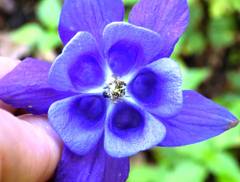
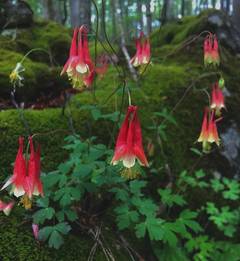
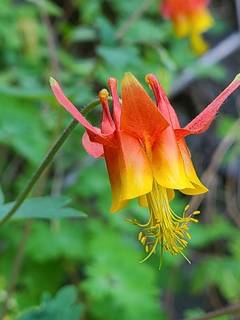
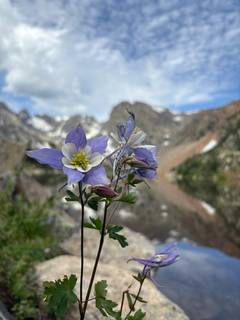
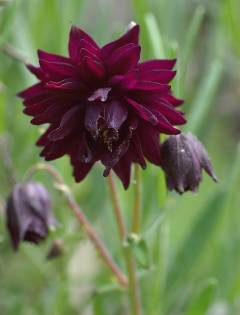
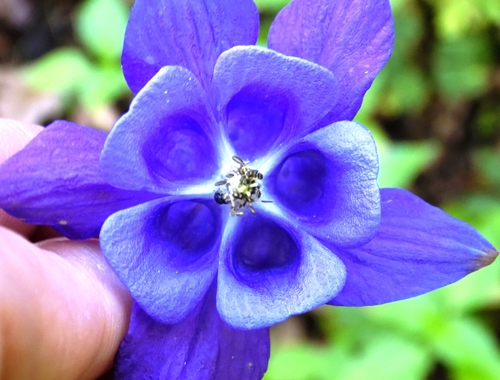
Aquilegia is a genus of about 60 to 70 species of perennial herbs in the buttercup family, Ranunculaceae, native to meadows, woodlands, and mountains across the temperate Northern Hemisphere. Plants form clumps of compound, blue-green leaves divided into rounded, lobed leaflets, above which slender branching stems 6–36 in (15–90 cm) tall carry nodding flowers. Each flower has five petal-like sepals and five true petals, the petals drawn backward into hollow spurs 0.4–3 in (1–7.5 cm) long that hold nectar. Flower color spans blue, violet, red, yellow, pink, and white, often in two-tone combinations of sepals and spurs. The long spurs are reached by long-tongued bees, hummingbirds, and hawk moths, and spur length across the genus tracks the tongue or bill length of local pollinators. The fruit is a cluster of dry follicles that split to release shiny black seeds. Columbines are short-lived, often persisting only a few years, but they self-seed freely and hybridize readily between species. The seeds and roots contain compounds that are toxic if eaten. The genus grows in open woods, rocky slopes, and alpine meadows.
Native Range
Aquilegia ranges across temperate Europe, Asia, and North America, with many species in mountain regions. North American native species include eastern red columbine A. canadensis, Colorado blue columbine A. caerulea, and western columbine A. formosa. The European columbine A. vulgaris is widely grown and naturalized.Suggested Uses
Aquilegia species are grown in cottage borders, woodland gardens, and rock gardens, and the long-stemmed species are used as cut flowers. Native species such as A. canadensis are planted in wildflower and pollinator gardens. The spurred flowers attract hummingbirds and long-tongued bees.How to Identify
Appearance
Size & Dimensions
Height6" - 3'
Width/Spread6" - 2'
Bloom Information
Most Aquilegia species flower in late spring to early summer, roughly April to June, for about 4 to 6 weeks. Individual plants bloom over several weeks as flowers open along the branching stems. Removing spent flowers can extend bloom and reduce self-seeding. Flower color and spur length vary widely across the genus and its many hybrids.
Detailed Descriptions
Flower Description
blue, violet, red, yellow, pink, or white, often two-toneFoliage Description
blue-greenGrowing Conditions
Sun Requirements
Requires 3-8 hours of direct sunlight daily
• Full Sun: 6+ hours of direct sunlight
• Partial Shade: 3-6 hours of direct sunlight
• Full Shade: Less than 3 hours of direct sunlight
Care & Maintenance
Care Guide
Aquilegia species grow in full sun to part shade in moist, fertile, well-drained soil with a pH around 6.0 to 7.5. Most prefer light shade and even moisture in hot regions and tolerate full sun where summers are cool. Plants are short-lived and are kept going by allowing some self-seeding, though seedlings of hybrids rarely match the parent. They are hardy in USDA zones 3 to 8 and need little feeding. Leaf miners tunnel the foliage and aphids cluster on new growth, and affected leaves are cut away to prompt fresh growth. Plants establish a deep taproot and are difficult to move once settled, so they are transplanted only when young.Pruning
Spent Aquilegia flower stems are cut back after bloom to limit self-seeding and tidy the plant, or left to ripen seed for naturalizing. Foliage damaged by leaf miners is cut to the base, and fresh leaves regrow. The whole plant is cut down in late autumn once growth dies back.Container Growing
Suitable for container growing
Minimum container size: 2 gallons