Image 1 of 6
1 / 6
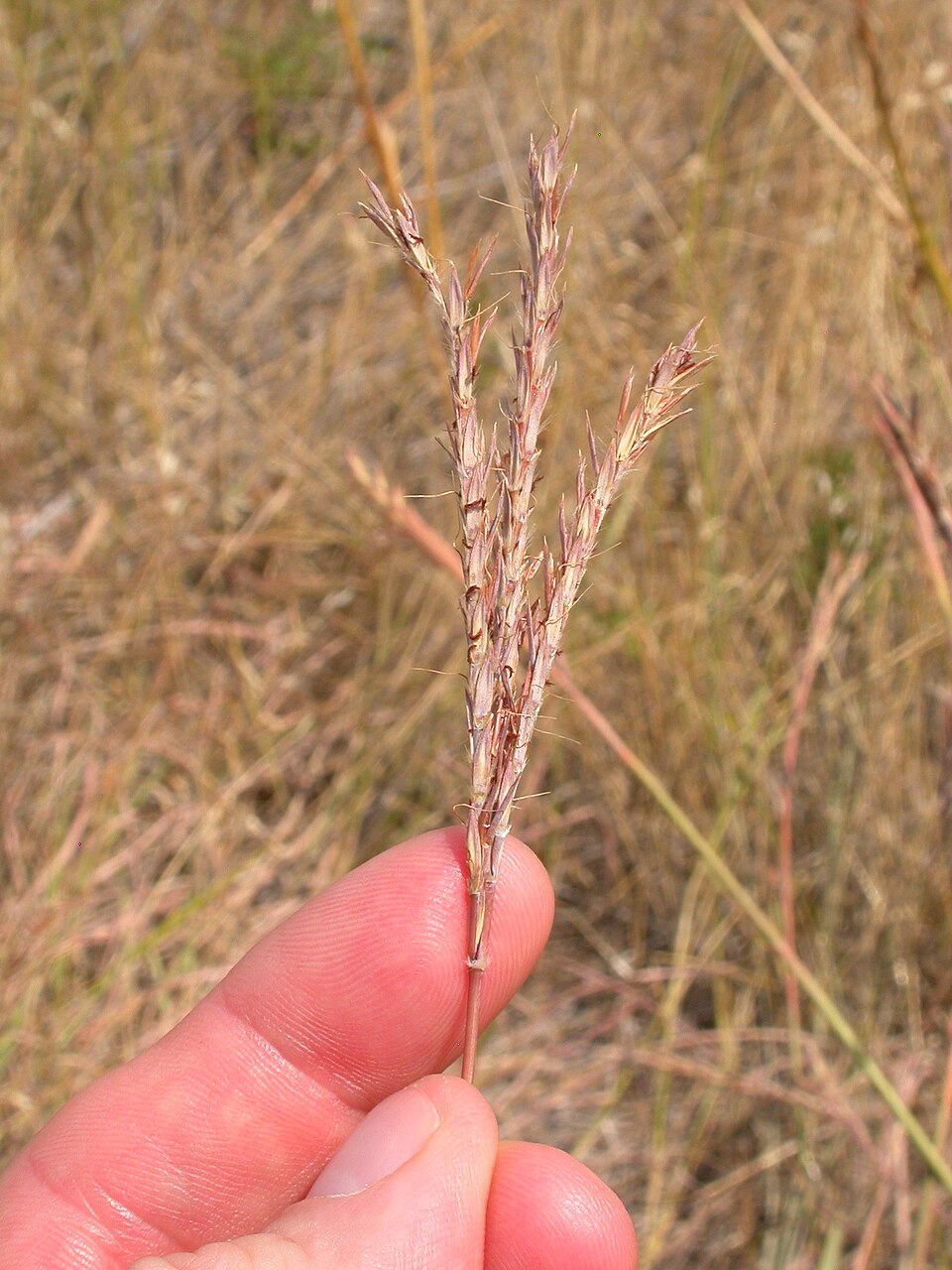
© Matt Lavin from Bozeman, Montana, USA, some rights reserved (CC-BY-SA) · Wikimedia Commons
Andropogon, Genus, spp., Multiple species,
- Genus
- Multiple species
bluestems
Warm regions of the Americas, Africa, and Asia
Overview
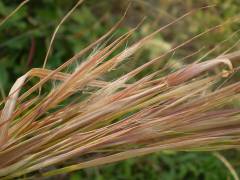
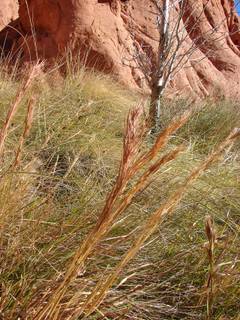
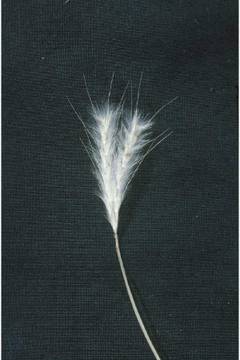
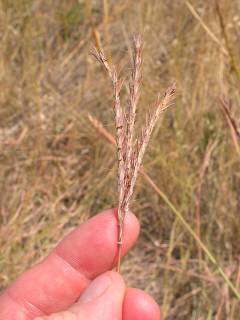
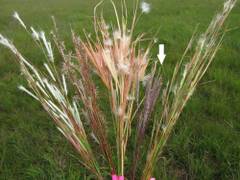
Andropogon is a genus of about 100 warm-season grasses in the family Poaceae, found in grasslands and savannas through the warmer parts of the Americas, Africa, and Asia. Most are clump-forming perennial bunchgrasses 2-8 ft (0.6-2.4 m) tall, with flattened or folded leaf blades that often take on blue-green tones in summer and bronze, copper, or russet colours in autumn. The flowering stalks carry paired or fingered racemes of small spikelets, many fringed with silky white hairs that catch the light, and the seed heads persist on the stems into winter. Big bluestem (A. gerardii) and broomsedge (A. virginicus) are widespread in North American prairies and old fields. As deep-rooted C4 grasses, members of the genus tolerate heat, drought, and poor soil, and they grow most strongly in the warm months. Plants flop or grow open in rich, moist, or shaded ground, and the warm-season habit means they stay dormant and brown well into spring before new growth appears.
Native Range
Native across the warm temperate and tropical Americas, Africa, and Asia, with several species central to the tallgrass prairies of North America. Big bluestem A. gerardii once dominated prairie from the Great Plains east to the Atlantic.Suggested Uses
Used in prairie and meadow plantings, native gardens, erosion control, and large naturalistic borders, with the autumn foliage and silky seed heads carrying interest into winter. The clumps give cover and seed for birds and serve as larval food for several skipper butterflies. Big bluestem and its relatives are also grown for forage and prairie restoration.How to Identify
Appearance
Size & Dimensions
Height2' - 8'
Width/Spread1'6" - 3'
Bloom Information
Flowering occurs in late summer and autumn (August-October), with the racemes opening above the foliage and drying to fluffy, pale seed heads. Wind carries the pollen, and the silky-haired seeds persist through autumn and winter. The genus draws few pollinators, as the flowers carry no nectar.
Detailed Descriptions
Flower Description
Silvery to purplishFoliage Description
Green to blue-greenGrowing Conditions
Sun Requirements
Requires 6-12 hours of direct sunlight daily
• Full Sun: 6+ hours of direct sunlight
• Partial Shade: 3-6 hours of direct sunlight
• Full Shade: Less than 3 hours of direct sunlight