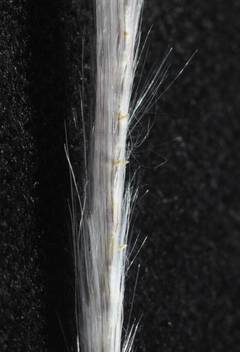
Image 1 of 5
© Matt Lavin from Bozeman, Montana, USA, some rights reserved (CC-BY-SA) · Wikimedia Commons
1 / 5
Andropogon, Genus, gerardii, Species,
- Genus & species
big bluestem
Native to North America from Quebec and southern Canada south to Florida and west to Montana, Arizona, and northern Mexico; the dominant grass of the tallgrass prairie biome historically covering approximately 240 million acres across the central continent before European settlement; less than 4 percent of the original tallgrass prairie remains today
Overview
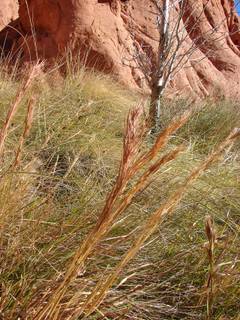
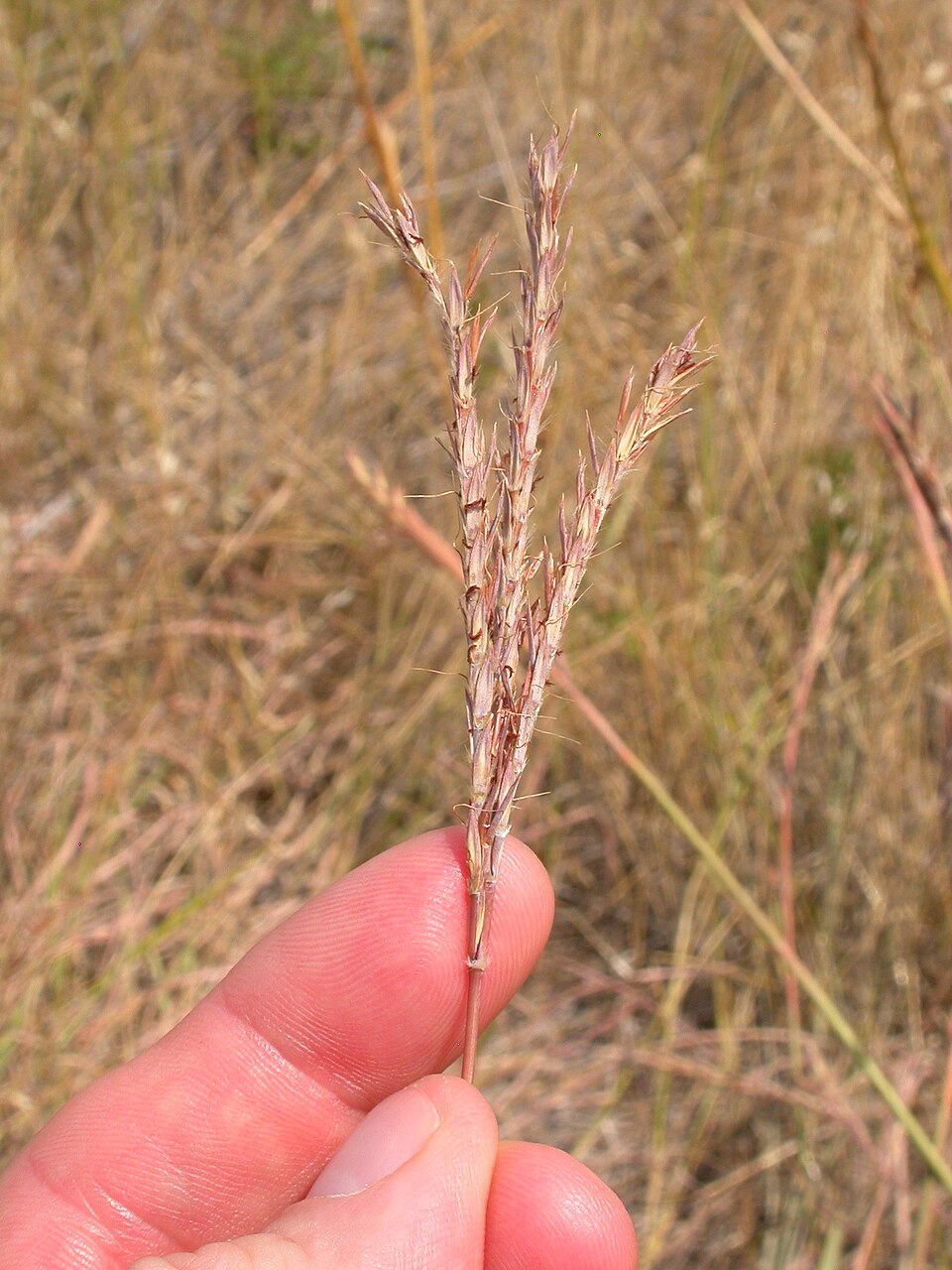
Andropogon gerardii is big bluestem — the dominant grass of the North American tallgrass prairie biome and an iconic species of the American heartland — growing 48–84 inches (120–210 cm) tall and 24–36 inches (60–90 cm) wide in an upright clumping habit. The species is named after Louis Gérard, the 18th-century French botanist who described many North American plants. Blue-green summer foliage transitions to copper-red and bronze tones in fall, giving a two-season foliage display. Three-parted seed heads — the source of the alternate common name 'turkey foot' — appear in late summer and persist through winter, with each seed head splitting into three radiating branches that resemble a turkey's foot or bird claw. The species once dominated approximately 240 million acres (97 million hectares) of tallgrass prairie from Texas north to Manitoba and from the eastern deciduous forest west to the short-grass plains before European agricultural settlement; less than 4 percent of the original tallgrass prairie remains today, making the species a key restoration plant for native prairie reconstruction projects. Blue-green stem bases visible when the foliage is parted at the base give the species its 'bluestem' common name. Warm-season grass with late spring emergence in May–June. The deep fibrous root system extends 6–10 feet (180–300 cm) into the soil, giving the species drought resistance during prairie dry spells and contributing to the soil-building processes that produced the dark fertile prairie soils. Hardy to USDA zone 3. The straight species runs variable in height and form; named cultivars ('Blackhawks', 'Red October', 'Dancing Wind') give more predictable garden performance for ornamental use. Deer and rabbits browse the foliage early in the season but generally leave mature plants alone. Not known to be toxic to pets or humans.
Native Range
Andropogon gerardii is native to North America, ranging from Quebec and southern Canada south to Florida and west to Montana, Arizona, and northern Mexico. The species is the dominant grass of the tallgrass prairie biome, historically covering an estimated 240 million acres across the central continent before European settlement.Suggested Uses
Used in tallgrass prairie restorations, native plant gardens, naturalized meadow plantings, large-scale landscape installations, and as a tall back-of-border specimen grass where the 4–7 foot summer height runs as visual anchor. The species is the keystone grass of the most threatened North American grassland ecosystem — less than 4 percent of the original tallgrass prairie remains, and A. gerardii runs as a foundation species for ecological restoration projects across the historic prairie range. The 6–10 foot root system contributes to soil-building processes and carbon sequestration that built the rich agricultural soils of the central United States. Named cultivars ('Blackhawks' near-black foliage, 'Red October' red fall color, 'Dancing Wind' compact form) suit ornamental garden use where the variable straight species form would run too unpredictable. Pairs with prairie wildflowers (Echinacea, Liatris, Asclepias) and other prairie grasses (Schizachyrium, Sporobolus) in naturalistic prairie-style plantings.How to Identify
Appearance
Size & Dimensions
Height4' - 7'
Width/Spread2' - 3'
Bloom Information
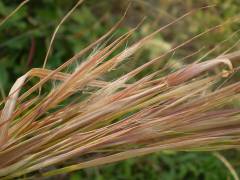
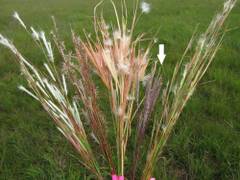
Three-parted turkey-foot seed heads from August through October across approximately 8 weeks. The inflorescence persists through winter, with the dried tan and bronze seed heads holding their structural shape across the cold months and giving year-round visual interest. Plants are wind-pollinated; the species runs as a key food and habitat resource for prairie birds (sparrows, juncos, ground-nesting species) and small mammals during fall and winter when the seeds and standing stems run available.
Detailed Descriptions
Flower Description
Purple-bronze; three-parted seed heads ('turkey foot') with each head splitting into three radiating branchesFoliage Description
Blue-green in summer transitioning to copper-red and bronze tones in fall; blue-green stem bases visible when foliage is parted at the baseGrowing Conditions
Sun Requirements
Requires 6-12 hours of direct sunlight daily
• Full Sun: 6+ hours of direct sunlight
• Partial Shade: 3-6 hours of direct sunlight
• Full Shade: Less than 3 hours of direct sunlight
Care & Maintenance
Care Guide
Plant in full sun with at least 6 hours of direct light. Any well-drained soil suits the species — sand, loam, clay, and rocky calcareous soils all run acceptable. The deep 6–10 foot root system gives the species drought resistance once established and tolerates extended dry periods that defeat shallower-rooted ornamental grasses. No fertilization is needed in average soils — the species runs adapted to the lean post-fire conditions of native prairie. Cut all foliage to 6 inches (15 cm) above ground in late February or March before new growth emerges; warm-season grasses emerge later in spring than cool-season grasses, and waiting for the new growth to start before cutting back avoids damage to the emerging shoots. Hardy to USDA zone 3 — extends across the entire continental United States and southern Canada. Named cultivars give more predictable garden performance than seed-grown straight species plants.Pruning
Leave standing through winter for the persistent turkey-foot seed heads and structural form. Cut all foliage to 6 inches (15 cm) above ground in late February or March before new growth emerges. No other seasonal pruning is needed.Pruning Schedule
Prune: February–March
winter