Anchusa, Genus, azurea, Species,
- Genus & species
Italian bugloss
Mediterranean basin, southern Europe, western Asia, and northern Africa.
Overview
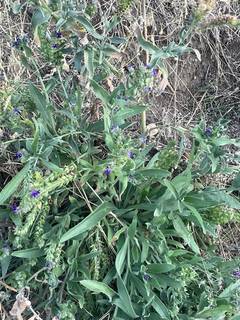
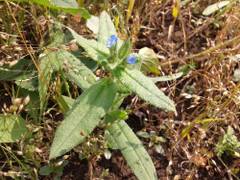
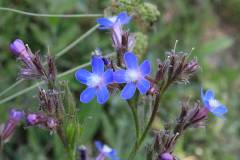
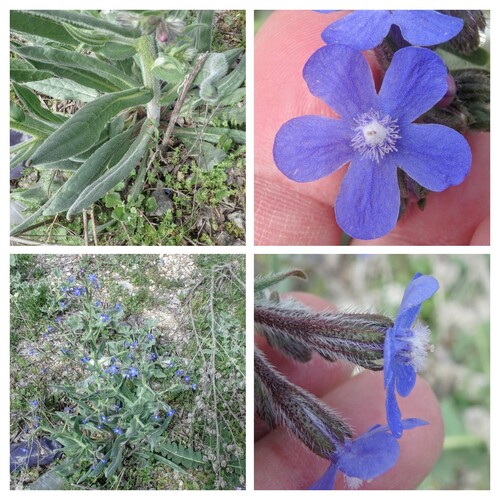
Anchusa azurea is a coarse-textured tap-rooted herbaceous perennial reaching 36-60 inches (90-150 cm) tall and 18-24 inches (45-60 cm) wide. Stems and leaves are covered in stiff bristly hairs; skin contact with the hairs can cause irritation in sensitive individuals. Basal leaves are lance-shaped, 6-16 inches (15-40 cm) long, rough-textured and hairy; upper stem leaves are smaller and sessile. Five-lobed flowers 0.5-0.75 inch (12-18 mm) across appear in scorpioid cymes that uncoil as they open, in bright blue with a white or pale yellow central eye, from May through July; individual flowers last 3-5 days and peak bloom lasts 3-4 weeks. Each flower produces four nutlets. Plants develop a deep fleshy taproot reaching 12-24 inches (30-60 cm) below soil; root fragments left in the ground after removal regenerate into new rosettes. Self-seeds freely in disturbed soils, and the species is listed as a noxious weed in parts of the western United States and Australia where it has naturalized. Stems become lax and floppy in rich or moist soils, with staking or adjacent plant support often required by midsummer. Hardy in USDA zones 3-8 (-40°F / -40°C). Short-lived at 3-4 years in cultivation.
Native Range
Anchusa azurea is native to the Mediterranean basin and adjacent regions, extending from southern Europe through western Asia to northern Africa. It grows in grasslands, on roadsides, and on rocky slopes on calcareous soils from sea level to approximately 5,500 feet (1,700 m).Suggested Uses
Planted in perennial borders and cottage-style gardens at 18-24 inch (45-60 cm) spacing, typically in mid- to rear positions due to height. The species is used in xeriscape and dry-slope plantings where the deep taproot tolerates low irrigation. The stiff bristly foliage can irritate skin on contact for some people, so positioning away from pathway edges reduces incidental contact. Classification as a noxious weed in parts of the western United States and Australia limits use near natural areas in those regions, where self-seeding into open habitat is documented. Not grown in heavy, poorly drained soils, where crown rot limits lifespan to 1-2 years.How to Identify
Appearance
Size & Dimensions
Height3' - 5'
Width/Spread1'6" - 2'
Bloom Information
Five-lobed bright blue flowers 0.5-0.75 inch (12-18 mm) across with a white or pale yellow central eye open in scorpioid cymes from May through July, with peak bloom running 3-4 weeks. Individual flowers last 3-5 days. Cutting spent flower stalks back to the basal rosette immediately after the first flush can produce a smaller second flush in late summer. Bees, including honeybees and bumblebees, work the flowers through the bloom period.
Detailed Descriptions
Flower Description
Bright blue five-lobed flowers 0.5-0.75 inch (12-18 mm) across with a white or pale yellow central eye; held in coiled (scorpioid) cymes that uncoil as flowers open; May through JulyFoliage Description
Dark green, lance-shaped, 6-16 inches (15-40 cm) long on the basal rosette, smaller and sessile on the upper stem; coarsely hairy with stiff bristles throughoutGrowing Conditions
Sun Requirements
Requires 6-10 hours of direct sunlight daily
• Full Sun: 6+ hours of direct sunlight
• Partial Shade: 3-6 hours of direct sunlight
• Full Shade: Less than 3 hours of direct sunlight
Care & Maintenance
Care Guide
Plants grow in full sun to light shade in average, well-drained soil with a pH of 6.0-8.0, including sand and chalk. Hardy in USDA zones 3-8 (-40°F / -40°C). In rich or consistently moist soils, stems become lax and fall over; leaner soils produce sturdier self-supporting stems. Plants tolerate drought once the taproot is established, typically by the second growing season. Self-seeds prolifically if spent flowers are not removed; seedlings appear within 6-12 inches (15-30 cm) of the parent plant and further afield on disturbed ground. The deep brittle taproot makes complete removal difficult, and root fragments left in soil regenerate. Crown rot develops in heavy, poorly drained soils during wet winters. The species is listed as a noxious weed in parts of the western United States and Australia, where naturalization into rangeland and open habitat is documented.Pruning
Cut flower stalks back to the basal rosette immediately after the first bloom flush to promote a second flush of flowering and reduce self-seeding. Cut remaining stems to ground level in late fall after the first hard frost blackens the foliage. Basal rosettes remain semi-evergreen in mild winter climates (USDA zones 7-8). Division is not practiced because the deep fleshy taproot does not transplant cleanly; propagation is from seed or from root cuttings.Pruning Schedule
Prune: July–August
summer