Anchusa, Genus, arvensis, Species,
- Genus & species
small bugloss
Europe, North Africa, and western Asia
SunFull Sun
Overview
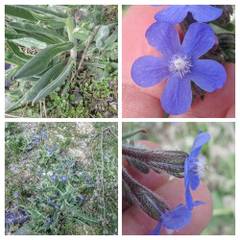
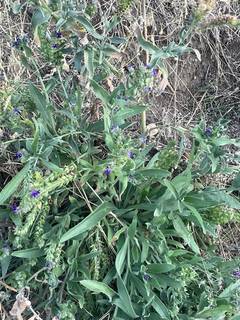
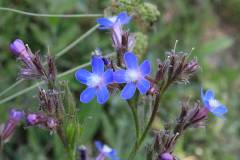
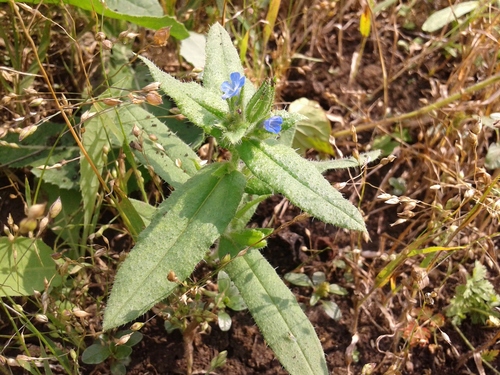
Anchusa arvensis is a bristly annual of light, sandy soils, growing 6-20 inches (15-50 cm) tall with stiff, spreading hairs covering the stems and leaves. The lance-shaped leaves have wavy, slightly toothed edges and clasp the stem above. From May to September the branch tips carry coiled clusters of small bright blue flowers, each 0.16-0.24 inches (4-6 mm) across. The flower is set apart by its corolla tube, which is bent or kinked partway along rather than straight, a feature shared with few related plants. The throat of the flower is closed by small white scales. After flowering, each bloom forms up to four small, rough, pitted nutlets. It grows as a weed of arable fields, sandy banks, dunes, tracksides, and other disturbed open ground on light, free-draining, often acid soils. A short-lived plant, it germinates in spring or autumn, flowers, sets seed, and dies within the year, building a persistent seed bank. The whole plant contains pyrrolizidine alkaloids, which are mildly toxic if eaten in quantity.
Native Range
Native to Europe, North Africa, and western Asia. It has spread with cultivation to North America and other temperate regions, where it grows as a naturalized weed of sandy fields and waste ground.Suggested Uses
Grown occasionally in wildflower and pollinator mixes on sandy soil and in conservation plots for arable wildflowers. It suits naturalistic plantings on poor, free-draining ground. It is short-lived, weedy, and not suited to borders, rich soils, or containers.How to Identify
Appearance
Size & Dimensions
Height6" - 1'8"
Width/Spread6" - 1'
Bloom Information
Bright blue flowers open from May to September in coiled sprays that straighten as the buds open. Bees and other insects work the flowers for nectar and pollen. Each flower leaves up to four small rough nutlets that ripen and fall through summer and autumn.
Detailed Descriptions
Foliage Description
greenGrowing Conditions
Sun Requirements
Requires 6-10 hours of direct sunlight daily
• Full Sun: 6+ hours of direct sunlight
• Partial Shade: 3-6 hours of direct sunlight
• Full Shade: Less than 3 hours of direct sunlight
Water & Climate
Water Needs
Drought Tolerance
Drought tolerant when established
Care & Maintenance
Care Guide
Anchusa arvensis grows in full sun on light, sandy, free-draining soil of low fertility, pH about 6.0-7.5, and tolerates dry, poor ground. As an annual it is sown directly where it is to grow, in spring or autumn, since it sets a taproot and does not move well. It needs little water once growing and self-seeds freely on open soil. It declines in rich, moist, or heavily shaded conditions where leafier plants overtop it. No feeding or staking is needed. It can become weedy on light cultivated land.Pruning
No pruning is needed. Plants can be pulled once seed has shed, or removed before seeding to limit spread on cultivated ground. The stiff bristly hairs can irritate skin during handling.Toxicity Warning
Toxic to pets and humansPlanting Guide
Planting Methods & Timing
Planting Method
direct sow
Direct Sow Timing
spring or autumn
Days to Maturity
60–90 days
Plant Spacing
6 inches