Anchusa, Genus, officinalis, Species,
- Genus & species
common bugloss
Overview
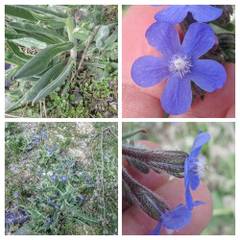
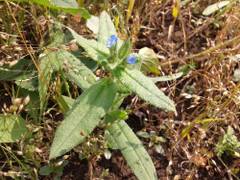
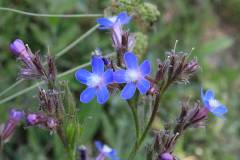
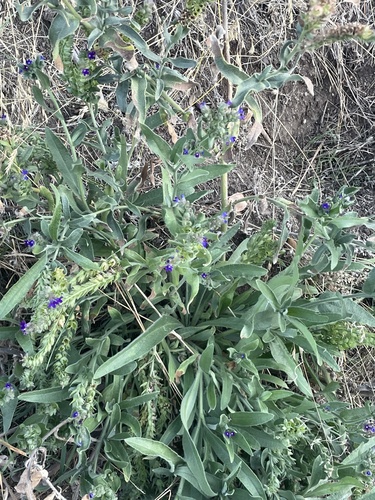
Anchusa officinalis is a bristly-hairy herbaceous perennial in the borage family (Boraginaceae) reaching 12–36 inches (30–90 cm) tall with a 12–18 inch (30–45 cm) spread. Stems are erect, branching, and densely covered in stiff, spreading hairs. Basal leaves are lance-shaped to oblong, 4–10 inches (10–25 cm) long, with entire or slightly wavy margins. Upper leaves are smaller, sessile, and partially clasping the stem. Flowers are 5-lobed, 0.3–0.4 inch (7–10 mm) across, initially reddish-purple in bud, opening blue to violet, borne in scorpioid cymes from May through August. Each flower produces four warty nutlets 0.15 inch (4 mm) long. Plants develop a deep, fleshy taproot. Listed as a Class B noxious weed in Washington State and regulated in several other western states. Self-seeds readily in disturbed ground, roadsides, and dry grasslands. The bristly hairs on stems and leaves cause skin irritation in some individuals on contact. Short-lived, typically persisting 3–5 years.
Native Range
Native to Europe and western Asia, occurring in grasslands, roadsides, waste places, and rocky slopes from sea level to approximately 6,500 feet (2,000 m) elevation. Naturalized widely across North America, particularly in the Pacific Northwest and intermountain West.Suggested Uses
Listed as a noxious weed in Washington, Oregon, and several other western states, where management focuses on control and eradication. Historically used in European herbal medicine. Included in weed identification courses for Pacific Northwest land managers, agricultural inspectors, and extension personnel. Flowers visited by honeybees and native bees.How to Identify
Appearance
Size & Dimensions
Height1' - 3'
Width/Spread1' - 1'6"
Bloom Information
Flowers from May through August in USDA zones 3–8. Individual flowers open for 3–5 days. Bloom period extends 8–10 weeks with both terminal and lateral cymes flowering sequentially. Flowers change color from reddish-purple in bud to blue or violet at maturity, a trait common in Boraginaceae related to pH changes in petal tissue. Pollinated by bees.
Detailed Descriptions
Flower Description
Blue to violet, occasionally white or pinkFoliage Description
Dark green, lance-shaped to oblong, densely covered in stiff bristly hairsGrowing Conditions
Sun Requirements
Requires 6-10 hours of direct sunlight daily
• Full Sun: 6+ hours of direct sunlight
• Partial Shade: 3-6 hours of direct sunlight
• Full Shade: Less than 3 hours of direct sunlight
Care & Maintenance
Care Guide
Classified as a noxious weed in several western U.S. states; management typically focuses on removal. Established plants tolerate drought once the taproot develops. The deep, fleshy taproot makes hand removal difficult; root fragments left in soil regenerate. Seedlings are most effectively controlled by cultivation or pulling in the rosette stage before the taproot thickens. Self-seeds prolifically if not managed before seed set. In areas where it is not regulated, plants persist with no supplemental care in well-drained soils. Crown rot occurs in wet, poorly drained winter conditions.Pruning
Cut flower stalks to the basal rosette after bloom to prevent seed dispersal. In management contexts, removing the entire plant including as much taproot as possible is the objective. Mowing reduces seed production but does not eliminate established plants, as basal rosettes resprout below the mowing height.Pruning Schedule
Prune: August–September
summerfall