Image 1 of 6
1 / 6
Robert H. Mohlenbrock. USDA SCS. 1989. Midwest wetland flora: Field office illustrated guide to plant species. Midwest National Technical Center, Lincoln, NE., no rights reserved (CC0) · Wikimedia Commons
Agrimonia, Genus, parviflora, Species,
- Genus & species
swamp agrimony
Overview
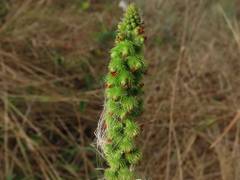
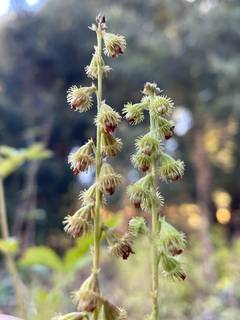
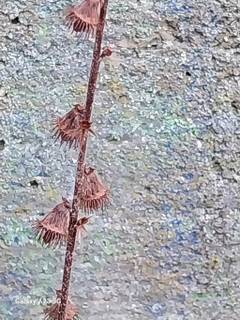
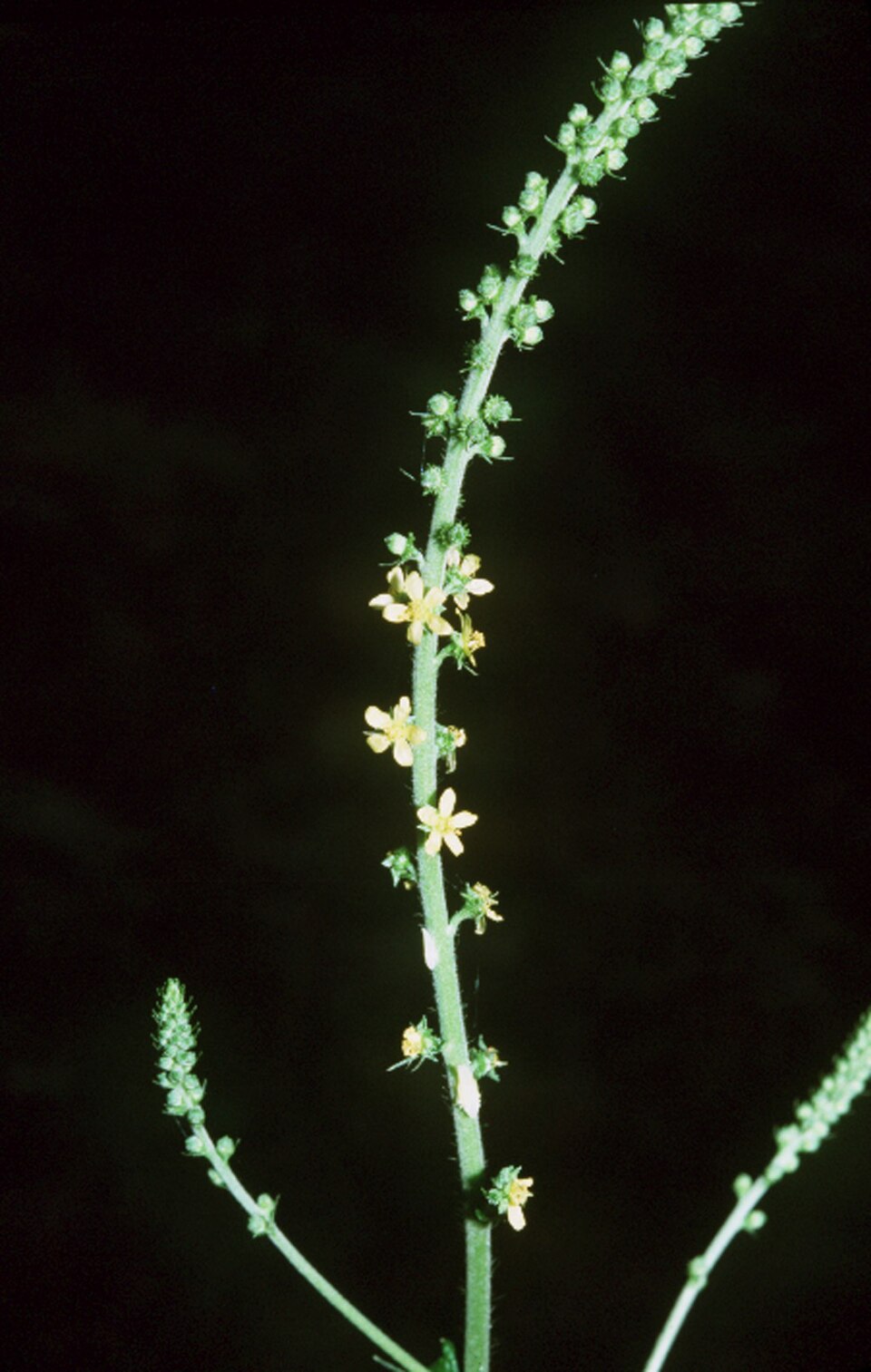
Agrimonia parviflora is an upright perennial in the rose family, native to wet meadows, stream banks, and moist thickets of eastern and central North America. Stems rise 24-60 inches (60-150 cm), clothed in soft hairs and lined with pinnately compound leaves. Each leaf carries 11-23 narrow, sharply toothed leaflets, with smaller leaflets set between the larger ones along the stalk. From July to September, the stems end in slender, tapering spikes of many small yellow flowers, each about 0.25 inch (6 mm) wide with five petals. As the flowers fade, they form small burr-like fruits ringed with hooked bristles that catch on fur and clothing. The species grows in full sun to partial shade on moist to wet soils and tolerates seasonal flooding, but it declines in dry ground. The dense, leafy stems can self-seed freely where the soil stays damp and open. Foliage dies back after frost. Swamp agrimony draws small bees and other pollinators to its summer spikes, and the hooked fruits disperse on passing animals.
Native Range
Native to eastern and central North America, from Quebec and Ontario south to Florida and Texas. It grows in wet meadows, marsh edges, low woods, and along streams and ditches.Suggested Uses
Grown in rain gardens, wet meadows, pond and stream edges, and native plantings on moist ground. Spaced 18-24 inches (45-60 cm) apart, plants form leafy vertical clumps. Used to stabilize damp soil and support pollinators in low, wet sites.How to Identify
Appearance
Size & Dimensions
Height2' - 5'
Width/Spread1'6" - 2'6"
Bloom Information
Flowers open from July to September, lasting about eight weeks. Blooms open from the base of each slender spike upward over several weeks. Hooked fruits follow and persist into autumn.
Detailed Descriptions
Flower Description
Small yellow five-petaled flowers on slender spikesFoliage Description
Green, pinnately compound, soft-hairyGrowing Conditions
Sun Requirements
Requires 4-8 hours of direct sunlight daily
• Full Sun: 6+ hours of direct sunlight
• Partial Shade: 3-6 hours of direct sunlight
• Full Shade: Less than 3 hours of direct sunlight
Care & Maintenance
Care Guide
Grows in full sun to partial shade in moist to wet soil, including loam, clay, and silt, and tolerates seasonal flooding. Water during dry spells, as the plant declines in soil that dries out for long periods. No fertilizer is needed in average ground. Self-seeding can be heavy in damp, open soil, so remove the hooked fruits before they ripen where spread is unwanted. Cut stems to the ground after frost. Crowded clumps can be divided in early spring.Pruning
Cut stems to the ground in late autumn after frost. Remove the bristly fruiting spikes before seed ripens to limit self-seeding. No other pruning is required.Pruning Schedule
Prune: November
fall
Container Growing
Suitable for container growing
Minimum container size: 3 gallons