Agrimonia, Genus, gryposepala, Species,
- Genus & species
tall hairy agrimony
Overview
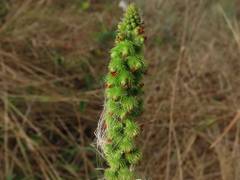
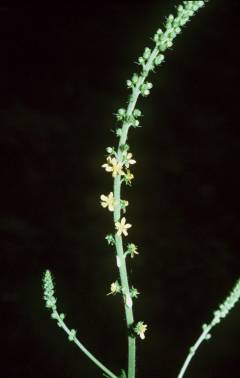
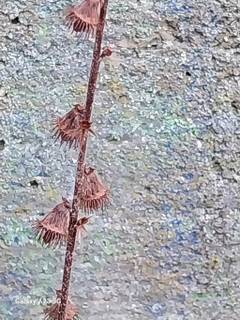
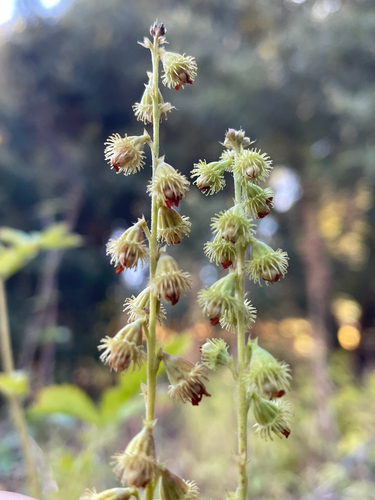
Agrimonia gryposepala is an upright herbaceous perennial in the rose family, growing 1.5-5 feet (45-150 cm) tall on hairy, often glandular stems from a stout rootstock. The pinnately compound leaves carry 5-9 large, coarsely toothed leaflets 1-3 inches (2.5-8 cm) long with smaller leaflets set between them along the stalk. Through summer a long, slender spike rises from the stem tip, lined with small five-petaled yellow flowers about 0.3 inch (8 mm) across that open from the bottom upward. As the flowers fade, the cup beneath each forms a top-shaped fruit ringed with hooked bristles that catch on fur and clothing, carrying the seed away. The plant grows in moist woods, thickets, woodland edges, and roadsides on rich soil and tolerates both sun and partial shade. It dies back to the rootstock each winter and returns in spring. The clinging burrs spread it widely and can be a nuisance on clothing. In dry or deeply shaded sites it grows shorter and flowers less.
Native Range
Agrimonia gryposepala is native across much of North America, from southern Canada through most of the United States. It grows in moist woods, thickets, woodland borders, fencerows, and roadsides on rich, damp soils.Suggested Uses
Tall hairy agrimony is used in native plant gardens, woodland edges, and naturalized moist plantings for its summer flower spikes. It suits informal or restoration settings rather than tidy borders, given its self-sowing burrs. Its flowers serve as a nectar source for bees and other small pollinators.How to Identify
Appearance
Size & Dimensions
Height1'6" - 5'
Width/Spread1' - 2'
Bloom Information
Flowering occurs in summer, generally June through August, on slender terminal spikes. The small yellow flowers open from the base of the spike upward over several weeks and draw bees and other small insects. Hooked fruits ripen afterward and cling to passing animals.
Detailed Descriptions
Foliage Description
greenGrowing Conditions
Sun Requirements
Requires 3-10 hours of direct sunlight daily
• Full Sun: 6+ hours of direct sunlight
• Partial Shade: 3-6 hours of direct sunlight
• Full Shade: Less than 3 hours of direct sunlight