Agalinis, Genus, heterophylla, Species,
- Genus & species
prairie false foxglove
Overview
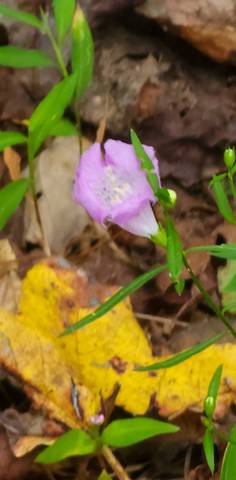
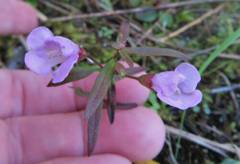
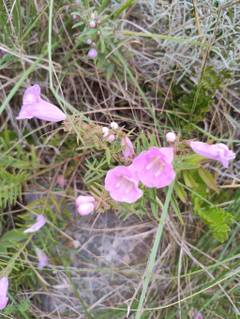
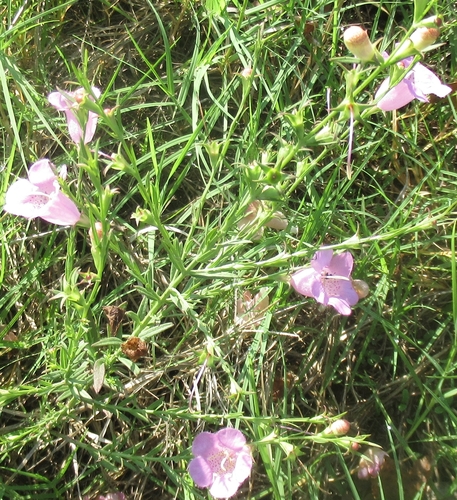
Agalinis heterophylla is an erect annual herb in the broomrape family (Orobanchaceae), reaching 8-32 inches (20-80 cm) tall on slender, often four-angled and narrowly winged stems. As a root hemiparasite, it produces green leaves and photosynthesizes but also taps the roots of nearby grasses and other plants for water and minerals. The narrow leaves are 0.4-1.6 inches (1-4 cm) long and vary in width along the stem, a trait reflected in the species name. Tubular, bell-shaped flowers 0.8-1.2 inches (2-3 cm) long open in loose, leafy racemes, the corolla pink to rose-purple with two yellow lines and dark spots marking the throat, and five flaring, rounded lobes. The fruit is a rounded capsule that splits to release numerous small seeds. Flowering stems branch toward the top, carrying several blooms that each last a single day. The plant completes its life cycle in one season and depends on host roots, which makes it difficult to transplant or cultivate apart from a grassland setting.
Native Range
Agalinis heterophylla is native to the south-central United States, occurring across Texas, Oklahoma, Louisiana, Arkansas, and neighboring states. It grows in tallgrass prairies, moist meadows, fields, and roadside ground.Suggested Uses
This species is used in prairie restorations, native meadow seed mixes, and conservation plantings where its grass hosts are present. Its tubular flowers draw bumblebees and other long-tongued bees. In a reference context it represents the hemiparasitic Agalinis group of the Orobanchaceae.How to Identify
Appearance
Size & Dimensions
Height8" - 2'8"
Width/Spread6" - 1'
Bloom Information
Flowering runs from late summer into fall, mainly September and October across much of its range. Each bell-shaped bloom lasts a single day, but plants open a long succession of flowers over several weeks. Capsules ripen quickly and shed seed before frost.
Detailed Descriptions
Flower Description
pink to rose-purpleFoliage Description
greenGrowing Conditions
Sun Requirements
Requires 6-12 hours of direct sunlight daily
• Full Sun: 6+ hours of direct sunlight
• Partial Shade: 3-6 hours of direct sunlight
• Full Shade: Less than 3 hours of direct sunlight
Water & Climate
Water Needs