Aconitum, Genus, hemsleyanum, Species,
- Genus & species
climbing monkshood
Central China; moist mountain forests at 5,000-10,000 feet (1,500-3,000 m)
Overview
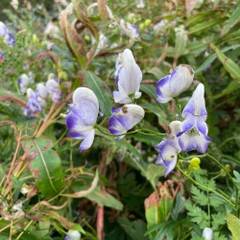
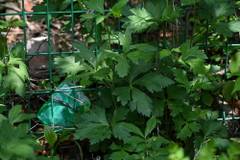
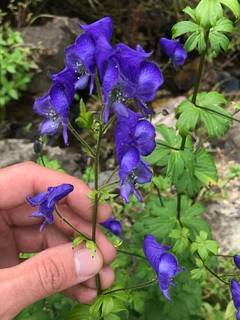
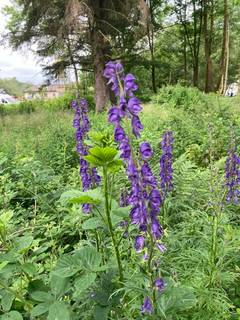
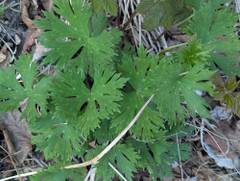
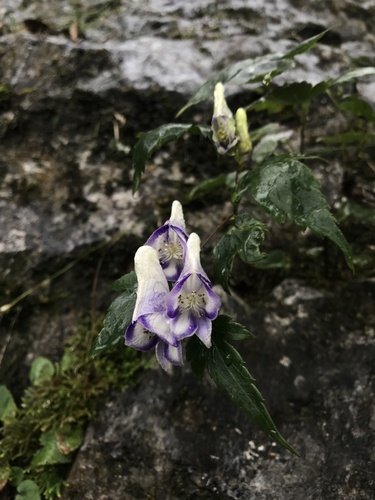
Aconitum hemsleyanum is an herbaceous perennial vine reaching 6–10 feet (1.8–3 m) in length, twining and scrambling through supporting shrubs, perennials, or structures. It is the only commonly cultivated climbing species of Aconitum; all other garden monkshoods are self-supporting upright perennials. Leaves are palmately divided, 3–5 inches (7.5–13 cm) wide, with five deeply lobed and sharply serrated segments, medium to dark green. Flowers are deep blue-violet to indigo with the characteristic arched hood (galea) of the genus, produced in open branched racemes at stem tips and leaf axils from August through September. Individual flowers are 1–1.25 inches (2.5–3 cm) long. The twining stems require support — other robust shrubs, perennial clumps, or a trellis; without support, stems sprawl and trail at ground level. Growth is from a tuberous rootstock; stems die back to the crown each winter and regrow from the base each spring. All parts contain aconitine alkaloids and are highly toxic to humans, pets, and livestock; skin contact with sap can cause numbness and irritation. The plant does not tolerate drying out and declines in hot, dry summer conditions.
Native Range
Aconitum hemsleyanum is native to central China, occurring in moist mountain forests and forest margins at elevations of 5,000–10,000 feet (1,500–3,000 m), where it climbs through surrounding vegetation in cool, humid conditions.Suggested Uses
Planted at the base of robust shrubs, large perennial clumps, or trellises at 18–24 inch (45–60 cm) spacing, where the scrambling stems can be supported. The deep blue-violet August–September flowers are produced at eye level when climbing through 4–6 foot (1.2–1.8 m) shrubs. Suited to woodland gardens and shaded mixed borders in zones 5–8. All parts are toxic to humans, pets, and livestock.How to Identify
Appearance
Size & Dimensions
Height6' - 10'
Width/Spread1'6" - 3'
Colors
Bloom Information
Deep blue-violet to indigo hooded flowers are produced in open branched racemes at stem tips and leaf axils from August through September, lasting 5–7 weeks. Individual flowers are 1–1.25 inches (2.5–3 cm) long. Racemes open progressively from base to tip.
Detailed Descriptions
Flower Description
deep blue-violet to indigoFoliage Description
medium to dark greenGrowing Conditions
Sun Requirements
Requires 2-6 hours of direct sunlight daily
• Full Sun: 6+ hours of direct sunlight
• Partial Shade: 3-6 hours of direct sunlight
• Full Shade: Less than 3 hours of direct sunlight
Care & Maintenance
Care Guide
Plant in moist, well-drained, humus-rich soil with a pH of 5.5–7.0 in partial shade. A support structure — robust shrubs, a trellis, or a perennial clump — is required, as stems cannot self-support. Water consistently, weekly during dry periods; the plant does not tolerate drying out. Afternoon shade is beneficial where summer temperatures exceed 75°F (24°C). Hardy in zones 5–8. Stems die back to the crown each winter and regrow from the base each spring. All parts contain aconitine alkaloids; skin contact with sap causes numbness and irritation in sensitive individuals.Pruning
Stems are cut to the ground in late fall after frost. Dead stems are removed and disentangled from support plants in early spring before new growth emerges. Division is rarely needed; established clumps persist for many years without division. All parts contain aconitine alkaloids; skin contact with cut stems or sap causes numbness.Pruning Schedule
Prune: October–November
fall