Zanthoxylum, Genus, bungeanum, Species,
- Genus & species
Sichuan pepper
Overview
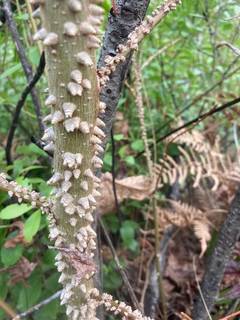
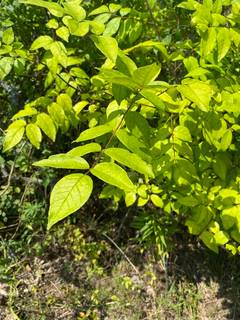
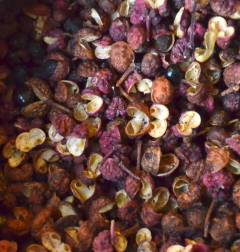
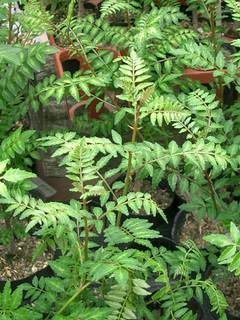
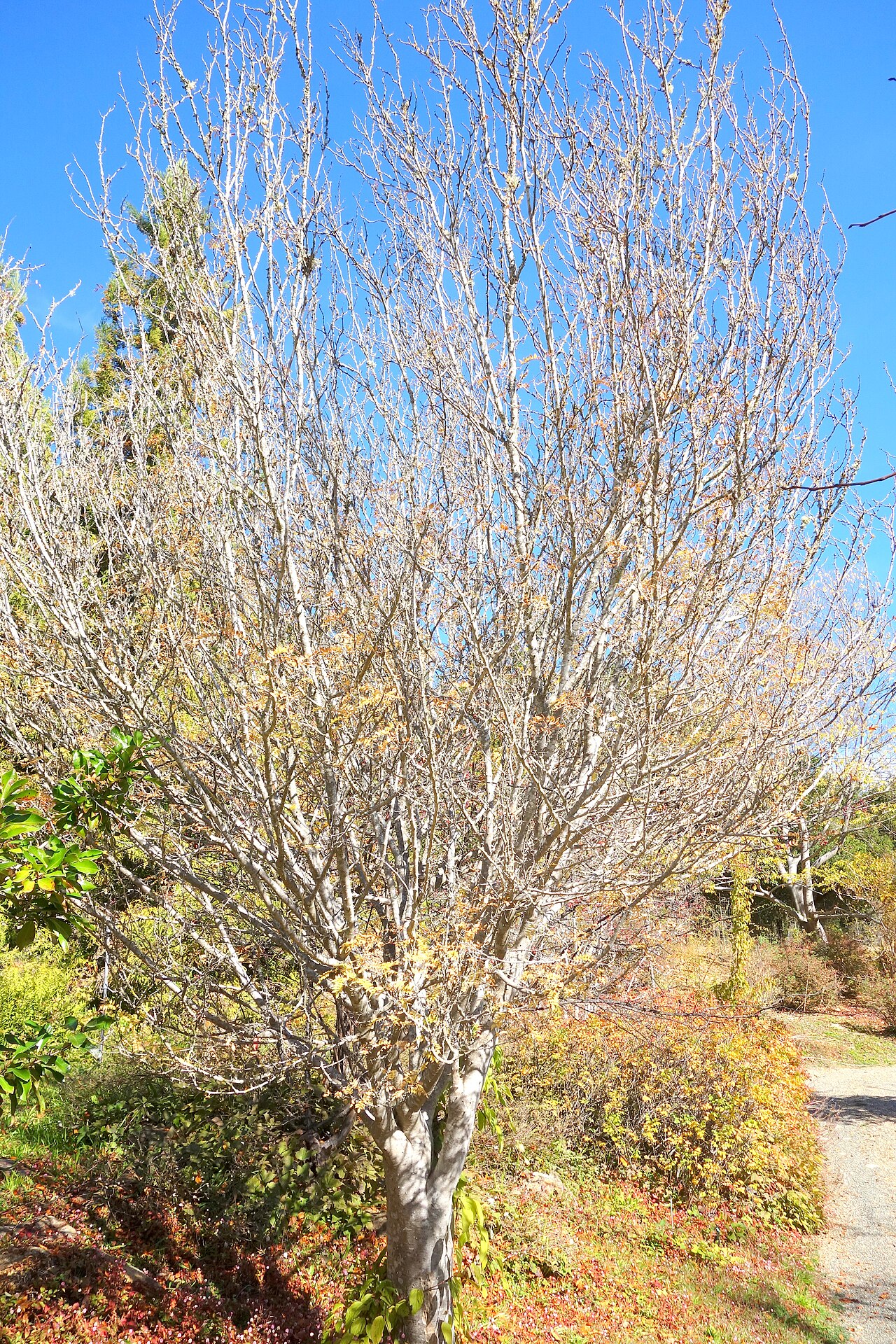
Zanthoxylum bungeanum is a deciduous shrub or small tree reaching 10-20 feet (3-6 m) tall and 8-15 feet (2.4-4.5 m) wide, with stout prickles on the trunk seated on raised corky bases 0.4-0.8 inch (1-2 cm) across and smaller paired prickles at the leaf nodes. Leaves are alternate and pinnate with 5-11 leaflets on a narrowly winged rachis; each leaflet is ovate, 0.6-2.8 inches (1.5-7 cm) long, with rounded teeth and translucent oil glands set in the notches. Crushed foliage carries a citrus and pepper scent. Flowers are 0.1 inch (2-3 mm) across, greenish-yellow, and grouped in terminal clusters in April and May; plants are functionally single-sexed, so fruit forms only on female plants with a male in pollen range. Fruit is a red to reddish-purple follicle 0.15-0.2 inch (4-5 mm) across, covered in raised oil glands, splitting at maturity from August to October to release a shiny black seed. The dried pericarp is the spice huajiao, and its hydroxy-alpha-sanshool produces the tingling numbness on the tongue; the seed is gritty and is separated out. Plants hold on calcareous soils and through 6-8 weeks of dry weather, though the prickles make harvest and pruning slow work.
Native Range
Zanthoxylum bungeanum is native to northern, central, and western China, from Shaanxi and Gansu south to Yunnan and east to Shandong, growing on dry hill slopes, terraces, and scrub margins between 1,000 and 8,200 feet (300-2,500 m). Shaanxi, Sichuan, and Gansu carry most of the cultivated area, with regional selections such as Dahongpao grown for the spice trade. The species is also grown in Nepal, Korea, and Japan, and in small numbers in Europe, North America, and Australia.Suggested Uses
Grown in orchards at 10-13 foot (3-4 m) spacing across northern and western China for the dried pericarp, which is ground into huajiao and used in five-spice powder and in dishes such as mapo tofu. Planted as a thorny boundary hedge, where the stems form a stock barrier within 4-5 years. In gardens outside China it is grown as a single specimen in USDA zones 6-9, with fruit picked in September and dried for 3-5 days before the seeds are separated.How to Identify
Appearance
Size & Dimensions
Height10' - 20'
Width/Spread8' - 15'
Bloom Information
Flowering runs 2-3 weeks in April and May, before or alongside the expanding leaves depending on spring temperatures. Flowers are 0.1 inch (2-3 mm) across and greenish-yellow, without petals in some forms, grouped in terminal clusters 1-2 inches (2.5-5 cm) wide. Bees and flies carry pollen between male and female plants, which stand 30-60 feet (9-18 m) apart in orchards at a ratio of about one male to eight females. Fruit ripens 14-18 weeks after flowering, from August through October.
Detailed Descriptions
Foliage Description
Mid green turning yellow in autumnGrowing Conditions
Sun Requirements
Requires 6-12 hours of direct sunlight daily
• Full Sun: 6+ hours of direct sunlight
• Partial Shade: 3-6 hours of direct sunlight
• Full Shade: Less than 3 hours of direct sunlight
Care & Maintenance
Care Guide
Full sun and free-draining soil at pH 6.0-8.0 carry the heaviest crops, and the species holds on thin, stony, and calcareous ground where many fruit crops fail. Established plants tolerate 6-8 weeks of dry weather, while waterlogging for more than a few days kills roots and brings on Phytophthora root rot. Water at 1 inch (25 mm) per week through the first two seasons and during fruit fill in summer. Nitrogen at 0.25 pound (110 g) per plant in early spring covers annual growth, and potassium raises oil content in the pericarp. Plants are damaged below -10F (-23C) and crop dependably in USDA zones 6-9. Rust caused by Coleosporium species spots the foliage in humid summers, and citrus canker regulations restrict movement of live Zanthoxylum plants and untreated dried fruit into several countries, including the United States.Pruning
Pruning is carried out in late winter while the plant is dormant, thinning the crown to 4-6 main stems and cutting out wood older than five years, which carries little fruit. Fruit forms on current-season shoots arising from one-year wood, so heading back by a third holds the plant at picking height without loss of the coming crop. Suckers rise from the root plate 3-6 feet (0.9-1.8 m) from the trunk and are cut below ground level. Prickles on the stems and leaf rachis make hand work slow, and long-handled tools are used in the upper crown.Pruning Schedule
Prune: February–March
early spring
Container Growing
Suitable for container growing
Minimum container size: 15 gallons