Image 1 of 4
1 / 4
Plant Reference
Zamioculcas, Genus, zamiifolia, Species, 'Raven', Cultivar,
- Genus & species
- Cultivar
Raven ZZ plant
Species native to eastern Africa from Kenya south through Tanzania, Zanzibar, and Mozambique to South Africa in seasonally dry rocky woodland and grassland habitats at low to moderate elevations; 'Raven' cultivar is a Costa Farms commercial introduction grown across global houseplant production sites
Overview
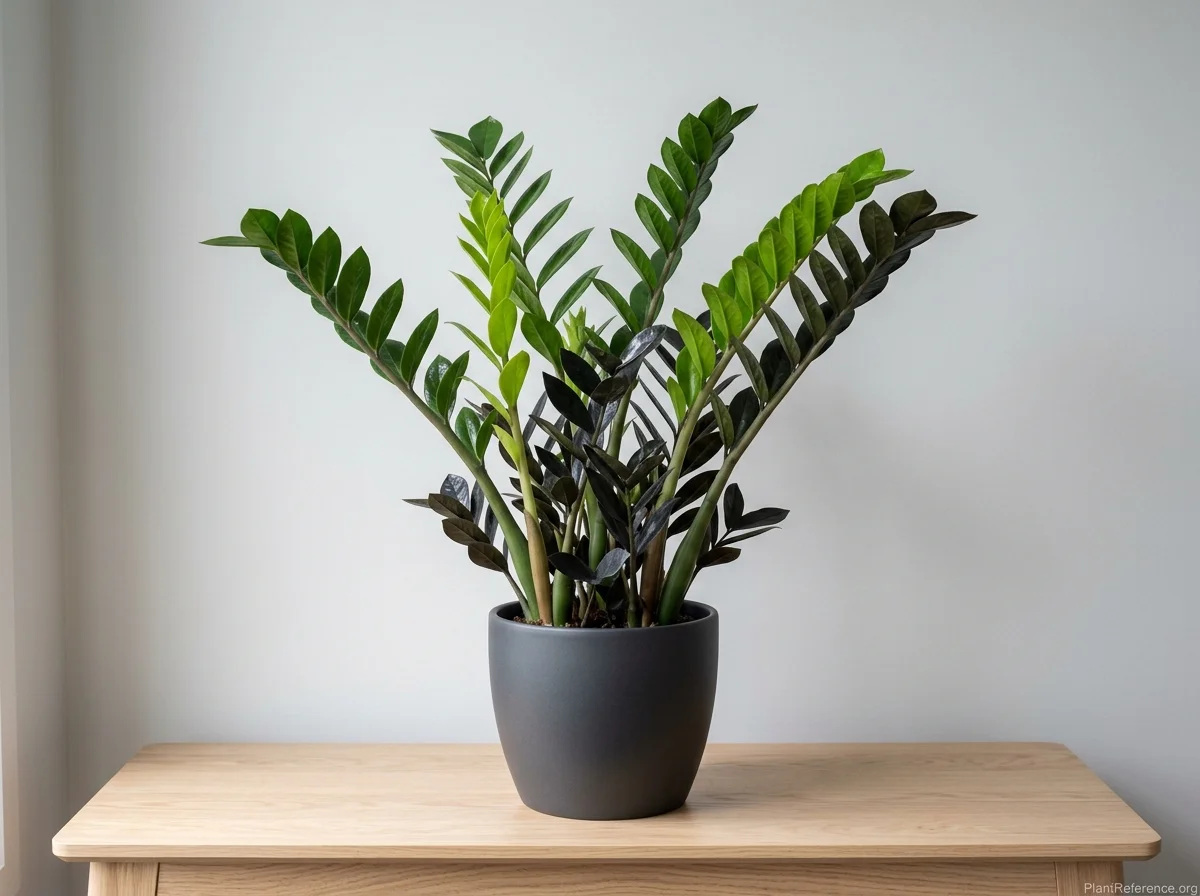
Zamioculcas zamiifolia 'Raven' is the black ZZ plant — the darkest-foliaged commonly available houseplant in the modern indoor-plant market, growing 18–36 inches (45–90 cm) tall and wide on upright glossy waxy pinnate fronds. The cultivar's defining color trait runs as a developmental color transition: new fronds emerge bright lime-green and progressively darken to deep near-black purple over several weeks of maturation, with both color phases present simultaneously on a mature plant and creating a vivid green-to-black gradient across the foliage display. The near-black mature foliage runs as the darkest leaf color across the widely available houseplant range — darker than burgundy Ficus elastica cultivars, dark-red Cordyline cultivars, and other modern dark-foliage tropical plants. The cultivar was introduced commercially by Costa Farms and reaches the typical houseplant retail channels across temperate North America and Europe. The 'Raven' name references the glossy black plumage of the corvid bird genus, an apt naming choice for the deep glossy near-black foliage. The cultivar carries the same low-maintenance toughness as the standard green ZZ plant: tolerates low light, irregular watering, drought (the underground rhizomes resemble potatoes and store water for months of dry conditions), neglect, and dry indoor air without significant decline. The only meaningful difference from the green ZZ is the foliage color — all cultural requirements run identical to the species form. The cultivar runs toxic to pets and humans through calcium oxalate crystals present in all plant tissues; ingestion causes oral irritation and gastrointestinal upset. The dark color expresses most strongly in brighter light; specimens grown in dim conditions retain more of the lime-green juvenile color and produce less of the mature near-black tone.
Native Range
The species Zamioculcas zamiifolia is native to eastern Africa, from Kenya south through Tanzania, Zanzibar, and Mozambique to South Africa, in seasonally dry rocky woodland and grassland habitats at low to moderate elevations. The 'Raven' cultivar is a Costa Farms commercial introduction grown across global houseplant production sites.Suggested Uses
Used as a dark-foliaged statement houseplant in modern, gothic, and dark-aesthetic interior design; in offices and commercial spaces where the atypical near-black foliage gives visual interest beyond standard houseplant green; and as a darker companion paired with the standard green ZZ plant for a two-tone Zamioculcas display. The cultivar's near-black mature foliage runs as the principal display feature and the cultivar's principal commercial draw — gardeners seeking the darkest-foliaged commonly available houseplant select 'Raven' over the alternatives. The cultivar inherits the species's strong low-maintenance toughness and runs as a low-care selection for households new to houseplants or for travelers who require plants that tolerate extended absences. The toxicity runs as the principal cultural caution — keep planting positions inaccessible to pets and young children.How to Identify
Appearance
Size & Dimensions
Height1'6" - 3'
Width/Spread1'6" - 3'
Bloom Information
Extremely rare indoors — the species and cultivar require greenhouse conditions or outdoor tropical cultivation to flower reliably. The green-to-black foliage color transition runs as the year-round display. When flowering does occur on mature outdoor specimens or well-grown greenhouse plants, a small green-white spadix-and-spathe inflorescence emerges at the rhizome base — the typical Araceae flower form — and runs as a minor secondary feature beyond the foliage display.
Detailed Descriptions
Flower Description
Green-white spadix-and-spathe (extremely rare indoors)Foliage Description
New fronds emerge bright lime-green then mature to deep near-black purple — the darkest commonly available houseplant foliage; both colors present simultaneously on a mature plantGrowing Conditions
Sun Requirements
Requires 1-8 hours of direct sunlight daily
• Full Sun: 6+ hours of direct sunlight
• Partial Shade: 3-6 hours of direct sunlight
• Full Shade: Less than 3 hours of direct sunlight
Care & Maintenance
Care Guide
Place in low to bright indirect light — the cultivar tolerates the same wide light range as the standard green ZZ. The dark mature foliage color expresses most strongly in brighter conditions; dim placements produce more of the lime-green juvenile color and less of the near-black mature tone. Water only when the potting mix dries completely — the rhizomes store water for months and the cultivar runs more reliably underwatered than overwatered. Overwatering and chronic wet conditions cause rhizome rot and run as the principal cause of indoor decline. Standard houseplant potting mix at pH 6.0–7.0 suits the cultivar; well-draining mixes with added perlite reduce overwatering risk. The cultivar runs toxic to pets and humans through calcium oxalate crystals in all plant tissues. Avoid placement in positions where pets or young children may chew the foliage. The cultivar runs slow-growing and repots every 2–3 years into slightly larger containers.Pruning
Remove yellowing or damaged fronds at the base by cutting the petiole flush with the rhizome at soil level. The cultivar does not require structural pruning beyond senescent-frond removal.Container Growing
Suitable for container growing
Minimum container size: 3 gallons