Wyethia, Genus, angustifolia, Species,
- Genus & species
narrow leaf mule ears
Pacific Coast and California Floristic Province
Overview
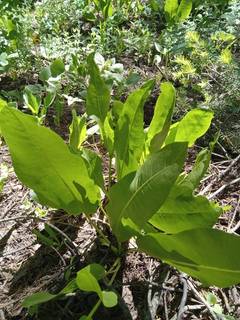
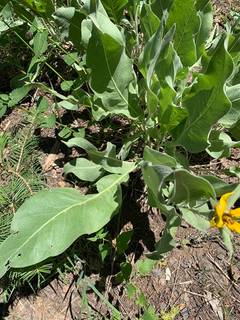
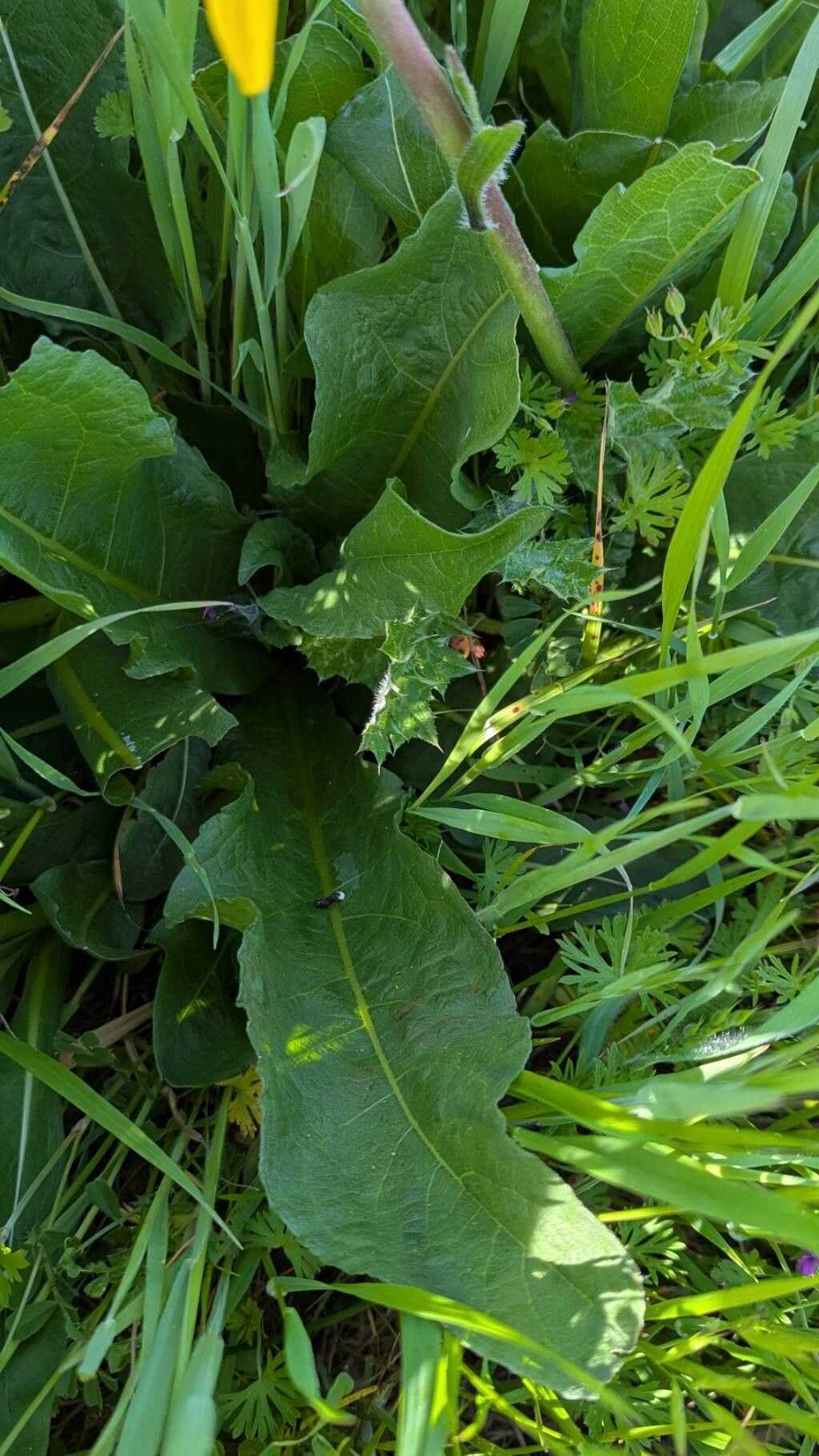
Wyethia angustifolia is a herbaceous perennial reaching 1-3 feet (30-90 cm) tall and 1-2 feet (30-60 cm) wide, growing as a single crown from a deep, woody taproot that can reach 6 feet (1.8 m) deep on mature plants. Leaves are lance-shaped, 6-16 inches (15-40 cm) long and 1-2 inches (2.5-5 cm) wide, narrowing toward both ends, with rough-hairy surfaces; basal leaves form an upright rosette while stem leaves are progressively smaller. Composite flower heads 2-4 inches (5-10 cm) across appear singly or in small clusters at the tips of stems from April through July, with peak bloom from May through mid-June. Each head has 13-21 yellow ray florets surrounding a yellow disc 0.75-1.25 inches (2-3 cm) wide. Each flower head lasts 5-10 days; total bloom on a single plant lasts 3-5 weeks. Achenes 0.25 inch (6 mm) long ripen July through August. Foliage dies back to the crown after the first dry spell in midsummer in lowland populations, and after fall frosts in higher-elevation populations. Lifespan 15-30 years for established crowns. Plants are highly intolerant of root disturbance; established crowns rarely survive transplanting.
Native Range
Native to grasslands, oak woodland openings, vernal pool margins, and serpentine outcrops from southern Washington south through western Oregon and California to the southern Sierra Nevada and central Coast Ranges. Found at elevations from sea level to 6,500 feet (2,000 m), most commonly below 3,000 feet (900 m).Suggested Uses
Used in California native plant gardens, dry meadow restorations, oak savanna plantings, and serpentine-soil gardens. Spaced 18-24 inches (45-60 cm) apart in groupings of 3-5 plants. Long-lived once established but slow to flower from seed; mature plantings persist for 15-30 years in unirrigated mediterranean-climate gardens.How to Identify
Appearance
Size & Dimensions
Height1' - 3'
Width/Spread1' - 2'
Bloom Information
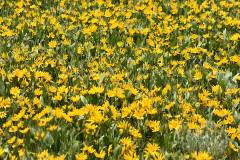
Flowers from April through July across the range, with peak bloom from May through mid-June in zones 7-9. In coastal California (zones 9-10), flowering may begin in late March; in higher-elevation Sierra Nevada populations, bloom occurs in June and July. Each flower head lasts 5-10 days; total bloom on a single plant lasts 3-5 weeks.
Detailed Descriptions
Foliage Description
medium green, rough-hairyGrowing Conditions
Sun Requirements
Requires 6-12 hours of direct sunlight daily
• Full Sun: 6+ hours of direct sunlight
• Partial Shade: 3-6 hours of direct sunlight
• Full Shade: Less than 3 hours of direct sunlight
Care & Maintenance
Care Guide
Plant the smallest size of container-grown stock in fall, before the taproot has filled the container, in well-drained loam, clay loam, or rocky soils with full sun. Water weekly during the first growing season; established plants tolerate severe summer drought once the taproot reaches subsoil moisture. Plants do not perform well in heavy summer-irrigated garden soils, where crown rot can develop. Direct-sown seed germinates with fall rains; seedlings reach flowering size in 3-5 years. Foliage dies back in midsummer to late summer in dry conditions, and the crown is dormant through fall and winter. Plants are highly intolerant of root disturbance; established crowns rarely survive transplanting.Pruning
No structural pruning is required. Cut spent flower stalks to the basal foliage in midsummer to limit self-seeding. Allow leaves to wither naturally in summer; the crown is dormant through fall and resprouts with the first rains in late winter or early spring.Pruning Schedule
Prune: July
summer