Verbena, Genus, hastata, Species,
- Genus & species
blue vervain
North America (from Nova Scotia south through the Atlantic and Gulf coastal plains to Florida and west through the Great Lakes region, the central plains, and the Rocky Mountain west to British Columbia, California, and Arizona); wet meadows, marsh edges, ditch banks, streambank positions, and disturbed open habitats with consistent moisture and full-to-partial sun exposure.
Overview
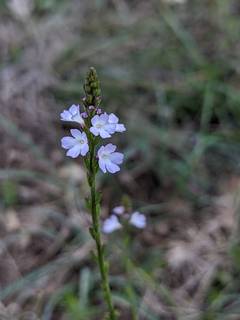
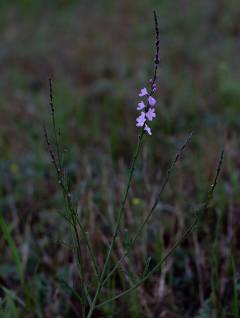
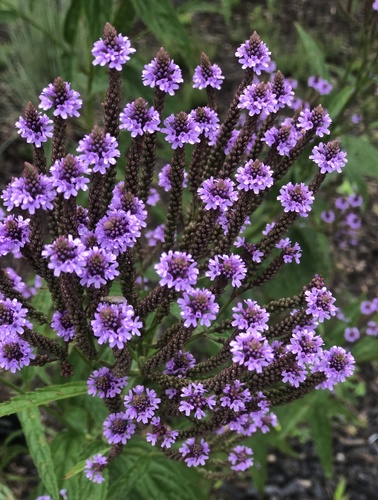
Verbena hastata is blue vervain (also called swamp verbena), a tall native North American wildflower in the verbena family (Verbenaceae) growing 36-60 inches (90-150 cm) tall and 18-24 inches (45-60 cm) wide. The species name 'hastata' is Latin for 'spear-shaped' or 'halberd-shaped' and references the narrow lance-shaped leaf form with the slightly broader base that distinguishes the species at the foliage level. The species' principal field-identification character is the floral display: tiny violet-blue to purple-blue tubular five-lobed flowers densely packed in slender upright candelabra-branching spikes 2-6 inches (5-15 cm) long carried at the apex of each stem, with the flowers opening progressively from the bottom of each spike upward across multiple weeks. The progressive bottom-up bloom pattern produces a recognizable 'ring of fire' effect on each spike: only a narrow ring of open flowers is visible on each spike at any given time, with the spent flower zone below the ring and the unopened bud zone above the ring, and the ring slowly migrates up each spike across the bloom period. The candelabra spike-branching form (multiple parallel spikes branching from each main stem) combined with the progressive ring-of-fire bloom on each spike together produce the species' signature ornamental display, and the architectural vertical structure of the candelabra spikes supplies a vertical accent to wet-meadow and rain-garden plantings. The bloom season runs from July through September across an 8-week active flowering window — the long bloom season makes the species a sustained late-summer pollinator-support native perennial, and the species is heavily visited by bees (Apis, Bombus, native solitary bees), butterflies (skippers, sulphurs, painted ladies, monarchs), and hummingbirds working the small accessible tubular flowers along each spike. The genus Verbena has historical sacred and medicinal significance in Western herbal traditions: the genus has been used in religious and medicinal contexts since Roman times (the Romans considered Verbena sacred and used it in altar dressings and ritual purifications), and Indigenous peoples and European settlers across the eastern North American native range used the species for herbal preparations treating fevers, digestive complaints, and other medicinal applications. The species is among the principal historical herbal-medicine native perennials of the eastern North American flora alongside Eupatorium perfoliatum (boneset). The family Verbenaceae is the verbena family, which carries several other ornamental garden genera including Lantana, Phyla, and the cultivated annual verbenas grown as bedding plants. Native to wet meadow, marsh-edge, and ditch-bank habitats across most of North America, the species' wet-substrate physiology means cultivation success depends on consistent moisture: the species performs reliably in moist-to-wet positions and struggles in dry exposed sites where the soil dries between waterings. Hardy to zone 3 with reliable performance across zones 3-8. The species self-sows in suitable wet-substrate habitats and supports colony persistence through seedling replacement; the self-sowing is generally welcome in naturalized wet-meadow plantings where the species fills its native ecological role. Deer avoid the foliage from the bitter Verbenaceae chemistry. The species is non-toxic to humans and pets.
Native Range
Verbena hastata is native to North America with a continuous native range from Nova Scotia south through New England, the Atlantic and Gulf coastal plains to Florida, and west across most of the temperate North American range to British Columbia, California, and Arizona. The species occurs in wet meadow positions, marsh edges, streambank habitats, ditch-bank positions, lowland prairie habitats, roadside ditches, and disturbance-exposed wet-substrate open habitats across the broad transcontinental native range. The species is a foundational native perennial for rain-garden plantings, wet-meadow plantings, prairie-restoration projects, pollinator-meadow plantings, and naturalized riparian plantings across most of the temperate United States and southern Canada, with the species' broad native range and the late-season pollinator-support role together placing the species at the top of native-perennial recommendations for wet-soil pollinator gardens.Suggested Uses
Used in rain gardens, wet meadow plantings, pollinator-meadow plantings, prairie-restoration projects, naturalized riparian plantings, butterfly gardens, and tall-perennial border positions where the candelabra spike-branching architecture supplies vertical structural interest. The species is among the principal late-summer pollinator-support native perennials in the broad transcontinental North American native flora, and the 8-week bloom season combined with the broad pollinator-attraction profile (bees, butterflies, hummingbirds, wasps) places the species at the top of native-perennial recommendations for late-season pollinator gardens. The candelabra spike-branching form supplies architectural vertical structure that few other wet-meadow native perennials match, and the progressive ring-of-fire bottom-up bloom pattern is itself a recognizable garden-design feature. The species pairs with companion late-season wet-soil native perennials including Eutrochium (Joe-Pye weed), Eupatorium perfoliatum (boneset), Conoclinium coelestinum (blue mistflower), Hibiscus moscheutos (rose mallow), Lobelia cardinalis (cardinal flower), and warm-season ornamental grasses (Panicum virgatum, Andropogon gerardii) for a multi-species wet-meadow native composition where the Verbena candelabra blue spikes contribute a vertical violet-blue accent against the magenta-purple, white, and warm-yellow companion bloom colors.How to Identify
Appearance
Size & Dimensions
Height3' - 5'
Width/Spread1'6" - 2'
Colors
Bloom Information
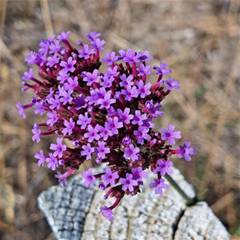
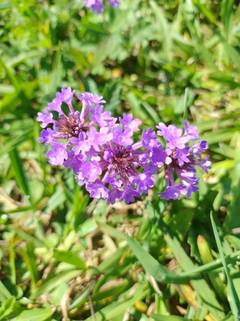
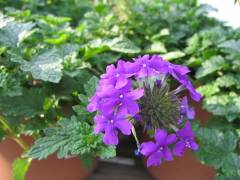
Tiny violet-blue to purple-blue tubular five-lobed flowers open in slender candelabra-branching upright spikes 2-6 inches (5-15 cm) long from July through September across an 8-week active flowering window. The flowers open progressively from the bottom of each spike upward across multiple weeks, with only a narrow ring of open flowers visible on each spike at any given time — the progressive bottom-up bloom produces the species' recognizable 'ring of fire' floral display pattern, and the candelabra spike-branching architecture (multiple parallel spikes from each main stem) supplies the species' signature vertical-structural display character. Pollination is by bees (Apis, Bombus, native solitary bees), butterflies (skippers, sulphurs, painted ladies, monarchs working the small accessible tubular flowers), hummingbirds, and beneficial wasps; the broad pollinator support across an 8-week season is one of the species' principal ecological contributions to native-plant gardens. The species produces self-sowing seed following bloom that supports colony persistence in suitable wet-substrate habitats.
Detailed Descriptions
Flower Description
Violet-blue to purple-blue; tiny (1/8 inch / 3 mm) tubular five-lobed flowers densely packed in slender candelabra-branching upright spikes 2-6 inches (5-15 cm) long carried at the apex of each stem; the flowers open progressively from the bottom of each spike upward across multiple weeks, with only a narrow ring of open flowers visible on each spike at any given time — the progressive bottom-up bloom across each spike combined with the simultaneous bloom of multiple branched spikes per stem produces the species' principal floral display characterFoliage Description
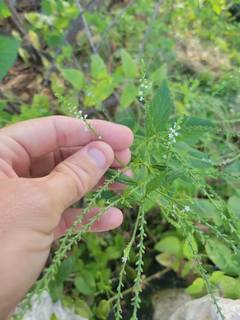
Dark green; lance-shaped to oblong leaves with toothed (serrate) margins arranged in opposite pairs along upright square-cross-section stems; the leaves are 3-6 inches (7-15 cm) long, with the species name 'hastata' (Latin for 'spear-shaped' or 'halberd-shaped') referencing the characteristic narrow lance-shaped leaf form with the slightly broader base typical of the speciesGrowing Conditions
Sun Requirements
Requires 5-10 hours of direct sunlight daily
• Full Sun: 6+ hours of direct sunlight
• Partial Shade: 3-6 hours of direct sunlight
• Full Shade: Less than 3 hours of direct sunlight
Care & Maintenance
Care Guide
Plant in full sun to partial shade with 5-10 hours of direct light. Moist to wet soil at pH 5.5-7.5 supports the species reliably; the species' wet-meadow and marsh-edge native habitat reflects a strong physiological preference for consistent moisture, and the species struggles in dry exposed positions where the soil dries between waterings. Watering is during establishment and through extended summer drought to maintain consistent moisture; the species is moderately drought-tolerant once the basal-clump root system develops but performs better with consistent moisture. Fertilization is generally not needed because the species is adapted to mineral-rich wet-meadow substrate. The species self-sows in suitable wet-substrate habitats and supports colony persistence through seedling replacement; the self-sowing is generally welcome in naturalized plantings, while gardeners who want strictly contained plantings can deadhead the spent spikes before seed shed to prevent the self-sowing. Annual maintenance is essentially limited to early-spring cleanup of standing dead stems before new spring growth emerges; most gardeners leave the seed spikes standing through fall and winter for bird-feeding value and continuing structural interest across the dormant season. Hardy to zone 3 with reliable performance across zones 3-8.Pruning
Cut all stems to ground level either after frost in fall (if the standing-spike winter habit is not desired) or in early spring (March) before new spring growth emerges. Most gardeners leave the seed spikes standing through fall and winter for bird-feeding value across the dormant season — finches, sparrows, and other small seed-eating birds work the dried flower spikes through the cold months. Allow the species to self-sow in naturalized plantings to maintain colony persistence, or deadhead the spent spikes before seed shed in strictly contained plantings.Pruning Schedule
Prune: March
early spring