Thunbergia, Genus, spp., Multiple species,
- Genus
- Multiple species
Clockvines
Tropical Africa, Madagascar, and southern Asia
Overview
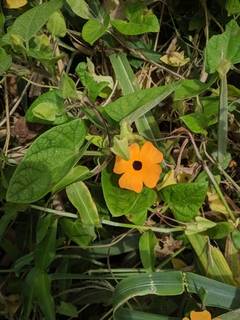
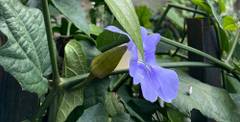
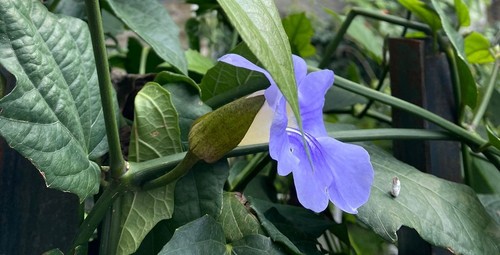
Thunbergia is a genus of about 100 species of twining vines, scrambling climbers, and a few shrubs in the family Acanthaceae, native to tropical Africa, Madagascar, and southern Asia. The climbing species twist their stems around supports and reach 1.5-12 m (5-40 ft) long depending on species and climate. The leaves are opposite, often arrow- or heart-shaped with toothed or angular margins. The flowers are trumpet- to saucer-shaped with five flaring lobes, 2.5-8 cm (1-3 in) across, in orange, yellow, white, blue, and purple, many with a dark throat; Thunbergia alata, the black-eyed Susan vine, has orange flowers with a near-black center. Flowering continues through the warm months and much of the year in the tropics. The fruit is a beaked capsule that splits to throw seed. Several species are grown as ornamentals, but T. grandiflora, the blue trumpet vine, is a fast, heavy climber that has become an invasive weed in parts of the tropics and subtropics, smothering trees and structures where it escapes.
Native Range
Thunbergia is native to the warm regions of Africa, Madagascar, and southern Asia, growing in forest edges, scrub, and clearings. Several species, especially T. alata and T. grandiflora, have spread far beyond their native range and naturalized in tropical and subtropical regions worldwide.Suggested Uses
Thunbergia species are grown on trellises, arches, fences, and in hanging baskets for their long display of trumpet-shaped flowers, with T. alata used as a quick summer climber in cool climates. Shrubby species are grown as informal hedges in warm regions. The vigorous T. grandiflora is restricted in areas where it has become invasive.How to Identify
Appearance
Size & Dimensions
Height5' - 40'
Width/Spread3' - 10'
Bloom Information
Flowering runs through the warm season, late spring to autumn in temperate cultivation and nearly year-round in frost-free climates. The five-lobed flowers open in succession along the stems and draw bees, butterflies, and sunbirds. Capsules ripen and split to scatter seed, which germinates readily in warm soil.
Detailed Descriptions
Flower Description
Orange, yellow, white, blue, purple, often with dark throatFoliage Description
GreenGrowing Conditions
Sun Requirements
Requires 4-8 hours of direct sunlight daily
• Full Sun: 6+ hours of direct sunlight
• Partial Shade: 3-6 hours of direct sunlight
• Full Shade: Less than 3 hours of direct sunlight
Care & Maintenance
Care Guide
Thunbergia grows in full sun to part shade on moist, fertile, well-drained soil with a support to climb. Plants need warmth and steady moisture and are frost-sensitive, grown as summer annuals in cold regions and as perennials only where frost is absent. T. alata is easily raised from seed each year, while T. grandiflora regrows from a large tuberous root and can become hard to remove. The vigorous species climb fast and can swamp nearby plants and structures if not cut back. Hardiness is limited to roughly USDA zones 9-11 for the perennial species. Plants flower less in deep shade.Pruning
Annual species are pulled out after frost, while perennial species are cut back hard in early spring to control size and renew flowering shoots. Stems are trimmed through the season to keep the vines within bounds. The roots of T. grandiflora are dug out where the plant is unwanted, as cut stems resprout.Pruning Schedule
Prune: March–April
early spring
Container Growing
Suitable for container growing
Minimum container size: 3 gallons