Thunbergia, Genus, grandiflora, Species,
- Genus & species
sky vine
Northern India, Bangladesh, Southeast Asia
Overview
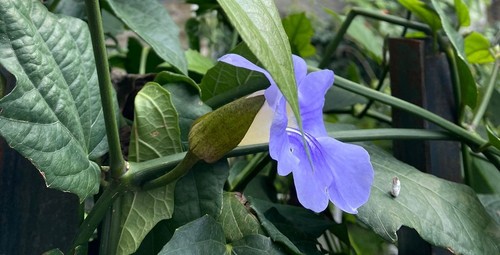
Thunbergia grandiflora is sky vine (Bengal clock vine), a vigorous tropical climber growing 240-720 inches (600-1,800 cm). Large soft blue to pale lavender-blue trumpet-shaped flowers 2.5-3 inches (6-8 cm) with a cream-yellow throat in dense pendant clusters from spring through fall (year-round in tropics). The species name 'grandiflora' means 'large-flowered.' Heart-shaped opposite leaves 4-6 inches (10-15 cm) with toothed margins. Twining stems wrap counterclockwise around supports. In the acanthus family (Acanthaceae). Native to northern India, Bangladesh, and Southeast Asia. Listed as a Category I invasive species in Florida and naturalized in Hawaii, the Caribbean, parts of Australia, and tropical Africa — the vine forms dense smothering canopies that displace native vegetation and the tuberous roots resprout aggressively from fragments. Tuberous root system: even small root pieces regenerate into new plants, making removal difficult once established. Full sun for heaviest flowering; tolerates partial shade. Frost-tender: foliage damage at 32°F (0°C); roots may resprout from zone 9. Containers of 10+ gallons (40+ liters) restrict the rampant growth in non-tropical climates. Non-toxic. Hummingbird-visited. Bumblebees pollinate the large flowers. Growth rate is fast — 60-120 inches (150-300 cm) per year in warm climates. Zones 9-11.
Native Range
Native to northern India, Bangladesh, and Southeast Asia. Listed as Category I invasive in Florida and naturalized in tropical regions worldwide.Suggested Uses
Grown on sturdy pergolas, arbors, fences, and large trellises in zones 9-11 (where not restricted by invasiveness regulations). Containers of 10+ gallons (40+ liters) for non-tropical climates. Full sun for heaviest bloom. Listed as invasive in Florida — local regulations vary by state. Non-toxic. Hummingbird-visited.How to Identify
Appearance
Size & Dimensions
Height20' - 60'
Width/Spread10' - 30'
Bloom Information
Detailed Descriptions
Flower Description
Soft blue to pale lavender-blue with cream-yellow throatFoliage Description
Medium green, heart-shaped, opposite, toothed marginsGrowing Conditions
Sun Requirements
Requires 5-10 hours of direct sunlight daily
• Full Sun: 6+ hours of direct sunlight
• Partial Shade: 3-6 hours of direct sunlight
• Full Shade: Less than 3 hours of direct sunlight
Care & Maintenance
Care Guide
Full sun for heaviest flowering; tolerates partial shade. Frost-tender at 32°F (0°C); roots may resprout from zone 9. Sturdy supports needed for the vigorous twining stems. Container culture restricts growth in non-tropical climates. Tuberous roots regrow from fragments — challenging to remove once established. Listed as invasive in Florida and other tropical regions. Non-toxic. Zones 9-11.Pruning
Hard pruning in late winter or early spring controls size. Cut back by half or more to keep within bounds. Spent flower clusters are removed if seed dispersal is a concern in invasive-prone areas. The vigorous regrowth tolerates aggressive pruning.Container Growing
Suitable for container growing
Minimum container size: 10 gallons