Tetraneuris, Genus, linearifolia, Species,
- Genus & species
fineleaf four-nerved daisy
South-central United States and northern Mexico
SunFull Sun
Overview
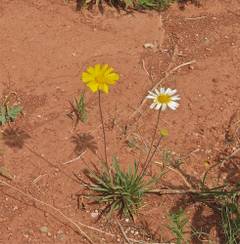
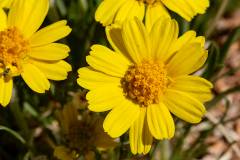
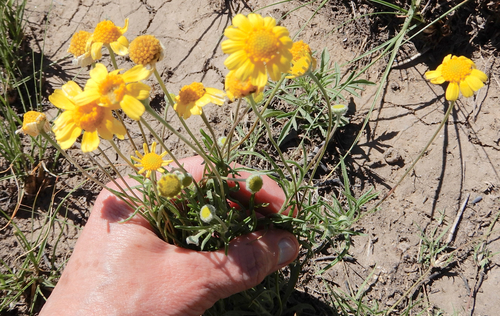
Tetraneuris linearifolia is a low annual to short-lived perennial in the Asteraceae, growing 4-16 in (10-40 cm) tall in a basal tuft of narrow, linear leaves. Slender, mostly leafless flowering stalks rise above the foliage, each bearing a single yellow flower head about 1 in (2.5 cm) across with toothed ray florets surrounding a yellow disk. In mild-winter regions the plant flowers over a long season from spring into fall, while in colder areas bloom concentrates in spring and early summer. It grows from a slender taproot in shallow, rocky, often calcareous soils and tolerates heat, drought, and reflected sun. Plants self-seed freely in open, disturbed ground and can colonize gravelly slopes and roadsides. Tetraneuris linearifolia is short-lived, and stands persist mainly through reseeding rather than long-lived crowns; in rich or moist soils it grows lank and is prone to crown rot. The narrow foliage and low stature keep it under 16 in (40 cm), so it reads as a low, narrow-leaved groundcover in dry sites. It is native to limestone prairies and rocky openings of the south-central United States and adjacent Mexico, where it occurs alongside other drought-adapted forbs and grasses. The flowers draw small native bees and butterflies through much of the growing season.
Native Range
Native to the south-central United States, including Texas, Oklahoma, Kansas, and New Mexico, and adjacent northern Mexico. It grows in limestone prairies, rocky outcrops, and disturbed calcareous soils.Suggested Uses
Used in rock gardens, gravel gardens, dry meadows, and the front of xeric borders. Suited to shallow, alkaline soils where many perennials struggle. Combines with low native grasses and other drought-tolerant forbs.How to Identify
Appearance
Size & Dimensions
Height4" - 1'4"
Width/Spread6" - 1'
Bloom Information
Flowers from March through October in mild-winter areas, with bloom concentrated in spring and early summer farther north. A long succession of single-headed stalks keeps color present over many weeks. Flowering slows in the hottest, driest part of summer and resumes after rain.
Detailed Descriptions
Foliage Description
greenGrowing Conditions
Sun Requirements
Requires 6-12 hours of direct sunlight daily
• Full Sun: 6+ hours of direct sunlight
• Partial Shade: 3-6 hours of direct sunlight
• Full Shade: Less than 3 hours of direct sunlight
Water & Climate
Water Needs
Drought Tolerance
Drought tolerant when established
Care & Maintenance
Care Guide
Grows in full sun and shallow, sharply drained rocky or calcareous soil. It tolerates drought, heat, and alkaline soils with pH from 7.0 to 8.5, and declines in rich, moist, or poorly drained ground. No supplemental fertilizer is needed. Because it is short-lived, stands are maintained by allowing some seed to ripen and drop. Excess water or shade produces lank growth and crown rot.Pruning
Pruning is minimal. Spent flower stalks can be sheared to tidy the clump and limit self-seeding, or left to drop seed and renew the stand. A light shearing after the first flush can prompt rebloom.Pruning Schedule
summer
Container Growing
Suitable for container growing
Minimum container size: 1 gallons
Toxicity
Non-toxicPlanting Guide
Planting Methods & Timing
Planting Method
direct sow
Direct Sow Timing
Sow in fall or early spring in mild-winter regions
Plant Spacing
8 inches