Tetraneuris, Genus, spp., Multiple species,
- Genus
- Multiple species
four-nerved daisies
Overview
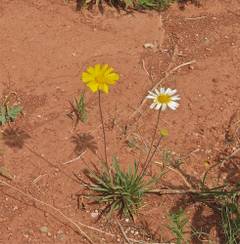
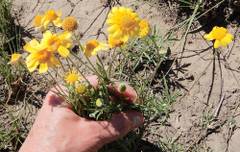
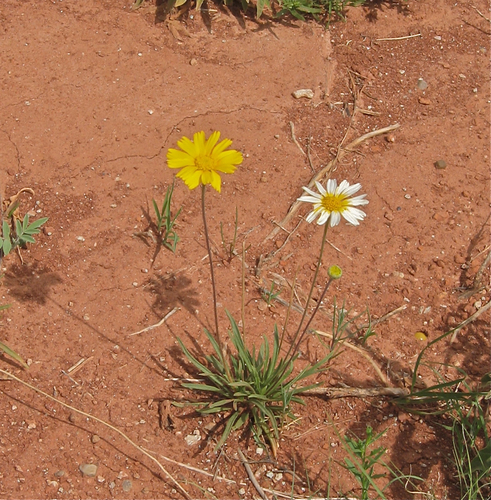
Tetraneuris is a genus of about nine species of annual and perennial herbs in the daisy family, Asteraceae, native to dry, open country of North America, from the western United States into Mexico. The common name four-nerved daisy refers to the parallel veins on each ray floret. Most species form low tufts or basal rosettes of narrow, often silvery-haired leaves, with leafless or near-leafless flowering stalks 4-12 inches (10-30 cm) tall. Each stalk carries a single yellow daisy head 1-1.5 inches (2.5-4 cm) across, with toothed yellow ray florets around a yellow disc. The angelita daisy, T. acaulis, blooms over a long season from spring into autumn in favorable sites. Plants grow on rocky, gravelly, and sandy ground in full sun and tolerate heat and drought. The genus is short-lived but self-seeds, and tap-rooted plants transplant poorly once established. Most perennial species are hardy in USDA zones 4 to 10 and decline in rich, wet, or shaded soil.
Native Range
Tetraneuris is native to North America, centered on the western and central United States and northern Mexico. Species grow on prairies, rocky outcrops, gravelly slopes, and desert grassland. T. acaulis and T. scaposa are widespread across the western plains and Southwest.Suggested Uses
Tetraneuris is planted in rock gardens, gravel gardens, and dry borders, and in containers. The long bloom suits xeriscape and pollinator plantings. The compact tufts are used for edging in sunny, well-drained sites.How to Identify
Appearance
Size & Dimensions
Height4" - 1'
Width/Spread6" - 1'
Bloom Information
Many Tetraneuris species flower over a long season from spring into autumn, with T. acaulis blooming nearly continuously in warm, dry climates. Each head lasts one to two weeks, and removing spent heads encourages more. Cool-climate plants bloom mainly in late spring and summer.
Detailed Descriptions
Foliage Description
green to silvery-greenGrowing Conditions
Sun Requirements
Requires 6-12 hours of direct sunlight daily
• Full Sun: 6+ hours of direct sunlight
• Partial Shade: 3-6 hours of direct sunlight
• Full Shade: Less than 3 hours of direct sunlight
Care & Maintenance
Care Guide
Tetraneuris species grow in full sun on lean, gritty, sharply drained soil and tolerate heat, drought, and poor ground. Most species accept a soil pH from about 6.0 to 8.0, including alkaline soils. Rich, moist, or shaded conditions cause weak growth and crown rot. Perennial species are hardy in USDA zones 4 to 10 and are short-lived but self-seed. The tap root makes established plants hard to move. Plants need little water or feeding once settled.Pruning
Shear off spent flower stalks to tidy the plant and prolong bloom. Leave some seed heads if self-sown seedlings are wanted. Cut back old growth in late winter before new leaves appear.Container Growing
Suitable for container growing
Minimum container size: 1 gallons