Telopea, Genus, truncata, Species,
- Genus & species
Tasmanian waratah
Overview
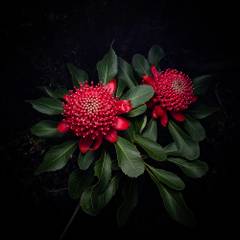
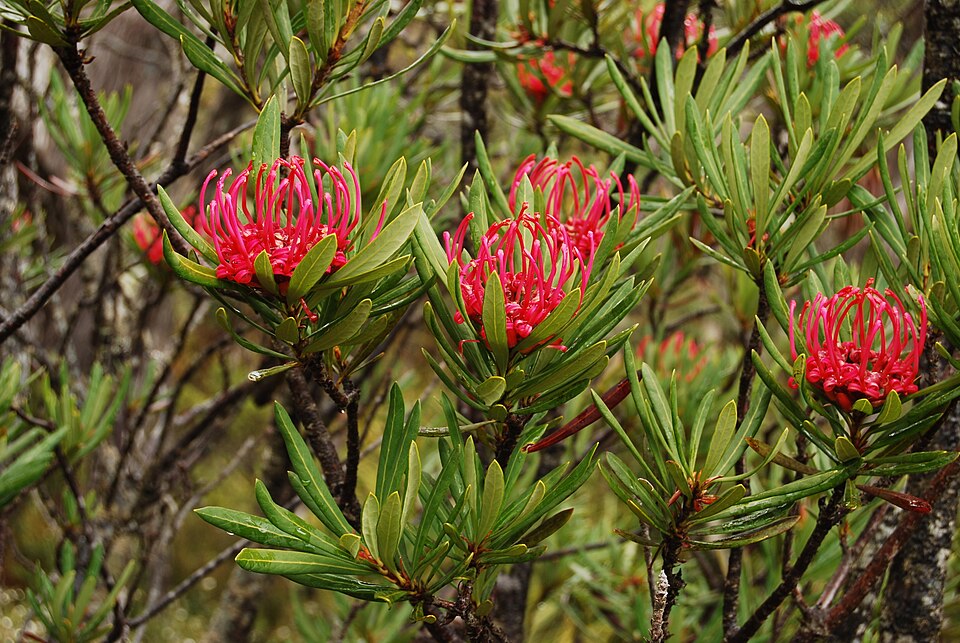
Telopea truncata is an evergreen shrub, sometimes a small tree, reaching 3-13 feet (1-4 m) tall, occasionally to 26 feet (8 m) in sheltered forest. Leaves are leathery, dark green, oblong to narrow, 1.5-6 inches (4-15 cm) long with smooth margins. Deep red flower heads 1.5-3 inches (4-8 cm) across are made up of many individual tubular flowers grouped into a rounded cluster, produced from late spring into summer; unlike the larger New South Wales waratah, the heads lack a ring of prominent red bracts. Woody, boat-shaped follicles follow, splitting to release winged seed. The species develops a lignotuber and resprouts after fire. Growth is slow, and plants take 4-6 years to flower from seed. It needs acidic, free-draining soil and cool, moist conditions, and is damaged by phosphorus fertilizer and by hot, dry exposure.
Native Range
Native to Tasmania, Australia, where it occurs in mountain and subalpine habitats. Grows in wet forest, montane scrub, and along streams on acidic, peaty or sandy soils, from near sea level to about 4,000 feet (1,200 m) elevation.Suggested Uses
Grown in cool-climate native and woodland gardens on acidic soils, spaced 5-10 feet (1.5-3 m) apart. The red heads draw nectar-feeding birds and are cut for fresh arrangements. It grows poorly in hot, dry, alkaline, or phosphorus-rich conditions.How to Identify
Appearance
Size & Dimensions
Height3' - 13'
Width/Spread5' - 10'
Bloom Information
Detailed Descriptions
Foliage Description
dark greenGrowing Conditions
Sun Requirements
Requires 4-8 hours of direct sunlight daily
• Full Sun: 6+ hours of direct sunlight
• Partial Shade: 3-6 hours of direct sunlight
• Full Shade: Less than 3 hours of direct sunlight
Care & Maintenance
Care Guide
Grows in full sun to part shade on acidic, free-draining, peaty or sandy soils kept cool and moist. Water through dry spells, especially while establishing; the roots are damaged by both drought and waterlogging. Phosphorus fertilizers harm the proteoid root system, so only low-phosphorus native feeding is used. Telopea truncata resprouts from its lignotuber after fire or hard pruning. Phytophthora root rot can develop in warm, poorly drained soils.Pruning
Cutting flower stems with some leafy growth after bloom encourages branching and more flowering wood. Plants resprout strongly from the lignotuber and tolerate hard pruning. Removing spent flower heads prevents seed set and directs energy into new growth.Pruning Schedule
Prune: January–February
summer
Container Growing
Suitable for container growing
Minimum container size: 10 gallons