Telopea, Genus, spp., Multiple species,
- Genus
- Multiple species
waratah
Overview
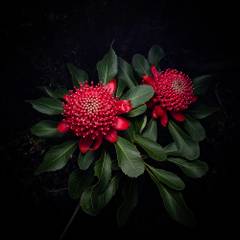
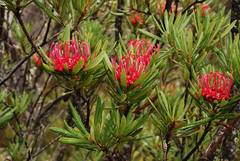
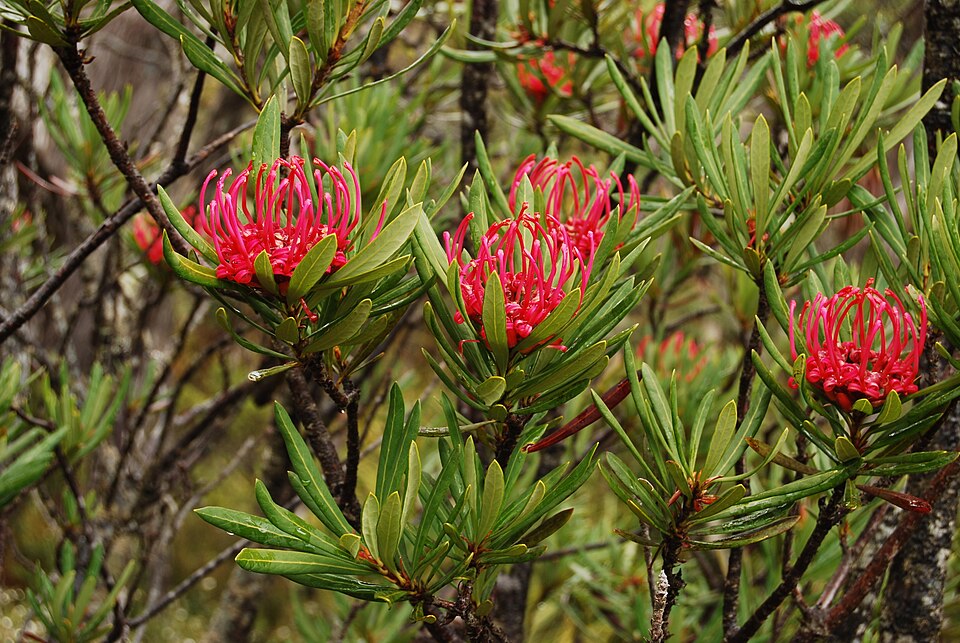
Telopea, the waratahs, is a genus of five evergreen shrubs and small trees in the family Proteaceae, native to southeastern Australia. Plants grow upright to 6-13 feet (2-4 m) tall with leathery, coarsely toothed leaves and a woody lignotuber that resprouts after fire. Each spring, stems are tipped with large, dome-shaped flower heads 3-6 inches (8-15 cm) across, made up of many small tubular flowers ringed by colored bracts. Flower color is typically crimson-red, as in T. speciosissima, the floral emblem of New South Wales, with pink, white, and cream forms in cultivation. The nectar-rich heads draw honeyeaters and other nectar-feeding birds, which pollinate the flowers. Like other Proteaceae, waratahs form specialized proteoid roots and are damaged by high soil phosphorus, so standard fertilizers can kill them. They require acidic, low-nutrient, sharply drained soil and decline in wet ground or humidity, which bring on root rot. Individual plants are relatively short-lived and produce the largest flower heads on younger wood, renewing from the lignotuber after hard pruning or fire.
Native Range
Telopea is native to southeastern Australia, in New South Wales, Victoria, and Tasmania. Species grow in open eucalypt forest, heath, and montane scrub on acidic sandstone and granite soils.Suggested Uses
Grown as an evergreen flowering shrub in native and low-water gardens, and widely cut for the long-lasting flower heads. Suited to acidic, well-drained banks and slopes in mild climates.How to Identify
Appearance
Size & Dimensions
Height6' - 13'
Width/Spread5' - 10'
Bloom Information
Large terminal flower heads open in spring, each lasting two to three weeks and made of many small nectar-rich flowers within a collar of bracts. Color is usually crimson-red, with pink, white, and cream in named selections. The heads draw nectar-feeding birds.
Detailed Descriptions
Flower Description
crimson-red, also pink, white, or creamFoliage Description
dark greenGrowing Conditions
Sun Requirements
Requires 5-10 hours of direct sunlight daily
• Full Sun: 6+ hours of direct sunlight
• Partial Shade: 3-6 hours of direct sunlight
• Full Shade: Less than 3 hours of direct sunlight
Care & Maintenance
Care Guide
Grow in full sun to light shade in acidic, low-phosphorus, sharply drained soil such as sandy or gravelly loam. Water moderately while establishing, then keep on the dry side, as the proteoid roots rot in wet ground. Use only low-phosphorus fertilizer, since standard feeds damage Proteaceae. Mulch lightly and keep the root zone cool. Prune hard after flowering to renew growth from the lignotuber. Frost tolerance is limited, with most species hardy only to about 25F (-4C).Pruning
Prune stems back hard after flowering, cutting spent heads with a length of stem to encourage strong new shoots from the lignotuber. Plants tolerate cutting back into old wood. This renewal pruning keeps growth compact and flowering productive.Container Growing
Suitable for container growing
Minimum container size: 7 gallons