Telopea, Genus, speciosissima, Species,
- Genus & species
waratah
Overview
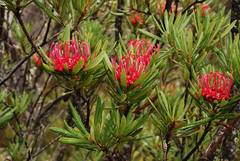
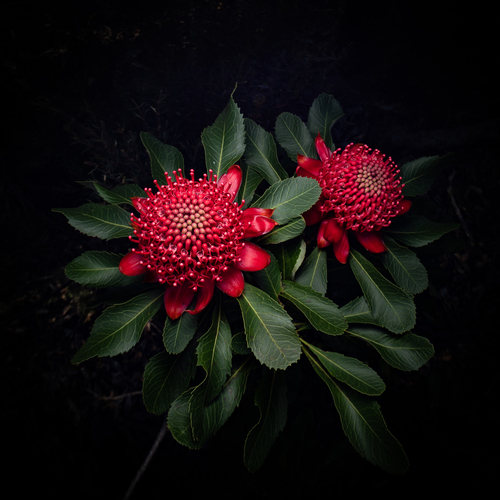
Telopea speciosissima is an erect, evergreen shrub 2-4 m (6.5-13 ft) tall with one to several stems arising from a woody lignotuber. The leathery, coarsely toothed leaves are 13-25 cm (5-10 in) long, dark green, and alternately arranged on stout stems. In spring it produces dome-shaped flower heads 7-15 cm (3-6 in) across, each made up of many small tubular red flowers surrounded by a ring of red bracts; white- and pink-flowered forms also occur. The flower heads hold abundant nectar and draw honeyeaters and other birds, and are followed by leathery boat-shaped seed pods 7-15 cm (3-6 in) long. It grows in open sandstone woodland and heath on sandy, acidic, well-drained soils in the ranges near the coast. It can be challenging to maintain in cultivation, requiring sharp drainage and low-phosphorus conditions, and the stems become woody and bare at the base with age unless pruned.
Native Range
Native to New South Wales, Australia, where it grows in the sandstone woodlands and heaths of the Central Coast and adjacent ranges. It is the state floral emblem of New South Wales.Suggested Uses
Used as a feature shrub in native gardens and as a cut flower, with long-lasting blooms grown commercially for floristry. Suited to sandy, well-drained native borders and habitat plantings for nectar-feeding birds. Also grown in large containers with a free-draining, low-phosphorus mix.How to Identify
Appearance
Size & Dimensions
Height6'6" - 13'
Width/Spread5' - 8'
Bloom Information
Large dome-shaped red flower heads open in spring, each composed of many small tubular flowers surrounded by coloured bracts. The nectar-rich heads draw honeyeaters and other nectar-feeding birds. Leathery seed pods develop through summer and release winged seeds when mature.
Detailed Descriptions
Foliage Description
dark greenGrowing Conditions
Sun Requirements
Requires 6-9 hours of direct sunlight daily
• Full Sun: 6+ hours of direct sunlight
• Partial Shade: 3-6 hours of direct sunlight
• Full Shade: Less than 3 hours of direct sunlight
Care & Maintenance
Care Guide
Grows in full sun to light shade on deep, free-draining sandy or gravelly soils with an acidic pH of about 5.0-6.5. As a member of the protea family it is sensitive to phosphorus, so low-phosphorus native fertilisers are used. Sharp drainage is essential, and heavy, wet, or rich soils lead to root rot and rapid decline. Light watering during dry spells supports flowering, though established plants tolerate short droughts. It withstands light to moderate frost. Mulching keeps the shallow roots cool and moist.Pruning
Cutting flower stems for the vase, or pruning back to within the leafy growth after flowering, encourages strong new shoots from the lignotuber and prevents the plant becoming leggy. Old woody stems can be cut to near the base to rejuvenate the shrub. The lignotuber resprouts reliably after hard pruning.Pruning Schedule
Prune: October–November
spring
Container Growing
Suitable for container growing
Minimum container size: 15 gallons