Taraxacum, Genus, erythrospermum, Species,
- Genus & species
red-seeded dandelion
Overview
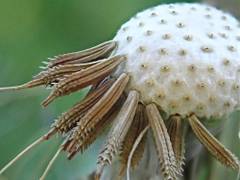
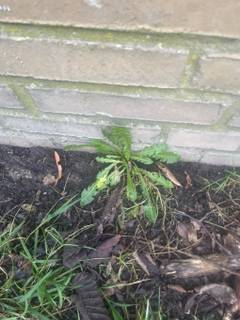
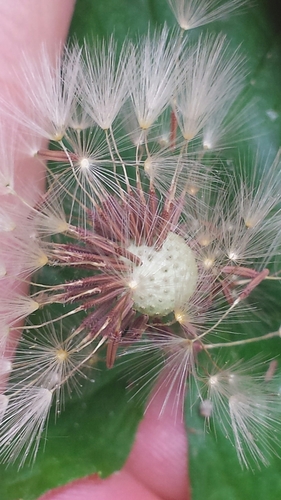
Taraxacum erythrospermum is a low perennial in the daisy family, growing 2-12 in (5-30 cm) tall from a thick taproot, forming a flat basal rosette of leaves. The leaves are 2-10 in (5-25 cm) long and deeply and narrowly cut into backward-pointing lobes, more finely dissected than those of the common dandelion. Each leafless, hollow stalk carries a single yellow flower head 0.5-1 in (1.5-2.5 cm) across, often with grayish or reddish undersides to the outer florets, opening in spring and again in fall. The heads close at night and in dull weather. After bloom the head becomes a round white puff of parachute-tipped seeds; the seeds are reddish-brown to brick-red, the trait that names the species and separates it from the olive-brown seeds of the common dandelion. All parts exude a milky white sap when broken. It grows in dry, sandy, and gravelly open ground, lawns, roadsides, and disturbed sites. The deep taproot resprouts if the top is removed, so plants persist once rooted. It is a widespread introduced weed of lawns and waste ground.
Native Range
Taraxacum erythrospermum is native to Europe and western Asia and is now naturalized across North America and other temperate regions. It grows in dry, open, and disturbed ground.Suggested Uses
Seldom planted by design, it occurs as a volunteer in lawns, paths, and open ground. The early flowers supply pollen and nectar for bees in spring, and the young leaves have been gathered as bitter salad greens. It is most often managed as a weed.How to Identify
Appearance
Size & Dimensions
Height2" - 1'
Width/Spread4" - 10"
Bloom Information
Single yellow flower heads open mainly in spring, from March to May, with a lighter rebloom in fall. The heads open by day and close at night or in overcast weather. Bees and other small insects visit the flowers, which can also set seed without pollination.
Detailed Descriptions
Foliage Description
greenGrowing Conditions
Sun Requirements
Requires 4-10 hours of direct sunlight daily
• Full Sun: 6+ hours of direct sunlight
• Partial Shade: 3-6 hours of direct sunlight
• Full Shade: Less than 3 hours of direct sunlight