Taraxacum, Genus, spp., Multiple species,
- Genus
- Multiple species
dandelions
Eurasia (center of diversity in Central Asia and Europe), with some species native to North and South America
Overview
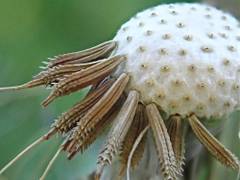
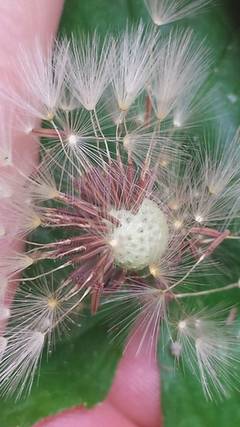
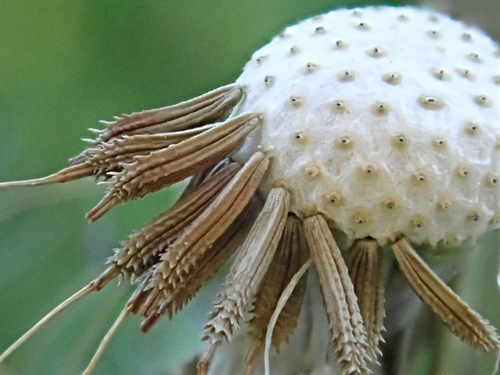
Taraxacum is a genus of perennial herbs in the Asteraceae family, comprising hundreds of microspecies distributed across the temperate Northern Hemisphere with naturalized populations worldwide. Plants form a basal rosette of leaves arising from a thick, fleshy taproot that reaches 4-10 inches (10-25 cm) deep. Leaves measure 2-16 inches (5-40 cm) long and oblanceolate in outline, deeply lobed with backward-pointing segments, though leaf division ranges among species from nearly entire to deeply cut. All parts contain a milky white latex that flows when tissue is broken. Flower heads sit singly atop hollow, leafless stalks 2-28 inches (5-70 cm) tall, each head 0.7-2 inches (18-50 mm) across and composed entirely of yellow ray florets. Many species reproduce by apomixis, setting viable seed without fertilization, which produces uniform populations and blurs species boundaries. After flowering, the head closes and reopens as a spherical seed cluster; each seed carries a parachute of slender, hairlike bristles that enables wind dispersal over long distances. The genus flowers from early spring through fall, with peak bloom in spring. Taraxacum officinale, the common dandelion, grows as a lawn and agricultural weed across six continents. Some species are cultivated for edible leaves and roots, though most spread quickly and resist removal once the taproot is established.
Native Range
Taraxacum is native to Eurasia, with the center of diversity in the mountains of Central Asia and Europe, and a smaller number of species native to North and South America. Several species, particularly T. officinale, have naturalized on every continent except Antarctica.Suggested Uses
Grown in some gardens as an edible crop for its leaves, roots, and flowers. Naturalized populations supply early-season nectar and pollen for bees and other insects. Most species colonize lawns, pastures, and disturbed ground where they are managed as weeds.How to Identify
Appearance
Size & Dimensions
Height2" - 2'4"
Width/Spread4" - 1'4"
Bloom Information
Flowering runs from early spring through late fall, with the heaviest flush in April and May and a secondary flush in autumn. Individual heads open in morning sun and close by afternoon or under overcast skies. In mild climates plants bloom intermittently year-round. Each head matures into a seed cluster within 9-15 days of opening.
Detailed Descriptions
Foliage Description
greenGrowing Conditions
Sun Requirements
Requires 4-12 hours of direct sunlight daily
• Full Sun: 6+ hours of direct sunlight
• Partial Shade: 3-6 hours of direct sunlight
• Full Shade: Less than 3 hours of direct sunlight