Symphytum, Genus,
- Genus
comfrey
Europe and western Asia — meadows, stream banks, and disturbed sites; {S. × uplandicum} (Russian comfrey) is a hybrid naturalized worldwide
Overview
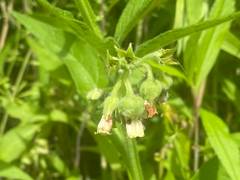
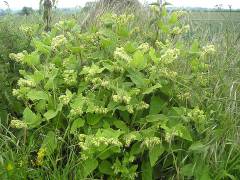
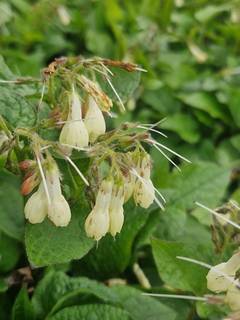
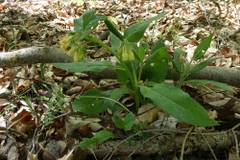
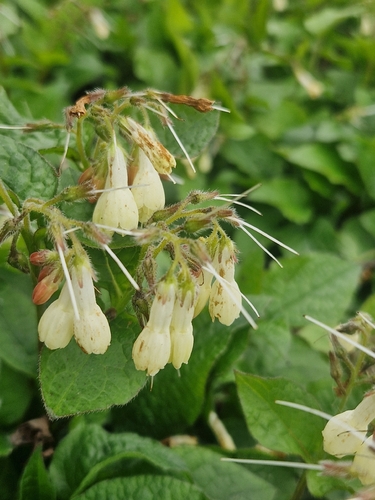
Symphytum spp. is comfrey, a clumping deciduous perennial growing 24-60 inches (60-150 cm) tall and 24-48 inches (60-120 cm) wide. Pendulous tubular bell-shaped flowers 0.5-0.75 inch (1.3-2 cm) in coiled one-sided cymes (scorpioid) in pink-red to blue-purple, white, or cream in April-June (6 weeks). Large coarsely hairy ovate-lanceolate leaves 8-16 inches (20-40 cm) with winged bases extending down the bristly stem. In Boraginaceae. About 35 species from Europe and western Asia. Regenerates from root fragments — any piece of root left in the soil produces a new plant. This extreme regenerative capacity is the primary limitation — once established, comfrey is nearly impossible to eradicate. S. × uplandicum 'Bocking 14' is a sterile hybrid used in permaculture as a dynamic accumulator (deep roots mine potassium, which concentrates in the leaves for composting). Contains pyrrolizidine alkaloids — hepatotoxic with prolonged internal use. Used historically as a topical poultice (external only). Cut to ground after first bloom for fresh regrowth. Deer-resistant. Zones 3-9. Part shade to full sun. Growth rate is fast.
Native Range
Native to Europe and western Asia. Found in meadows, stream banks, and disturbed sites. S. × uplandicum (Russian comfrey) is a hybrid naturalized worldwide.Suggested Uses
Grown in permaculture gardens (dynamic accumulator, compost activator), wild areas, and sites where aggressive spread is acceptable, spaced 24-48 inches (60-120 cm). Use 'Bocking 14' (sterile) to prevent self-sowing. Toxic internally. Zones 3-9.How to Identify
Appearance
Size & Dimensions
Height2' - 5'
Width/Spread2' - 4'
Bloom Information
Mid spring to early summer (April-June). Pendulous tubular bell-shaped flowers 0.5-0.75 inch (1.3-2 cm) in coiled scorpioid cymes. Pink-red to blue-purple, white, or cream. 6 weeks. Bee-visited. Cut back for rebloom.
Detailed Descriptions
Flower Description
Pendulous, tubular, bell-shaped, 0.5-0.75 inch (1.3-2 cm), in coiled one-sided cymes (scorpioid); pink-red in bud maturing to blue or purple in many species; also white, cream, sky-blue, or lavender depending on speciesFoliage Description
Large, coarsely hairy, ovate-lanceolate, mid-green, 8-16 inches (20-40 cm); winged leaf bases extend down the bristly stem (decurrent); rough bristly texture on all surfacesGrowing Conditions
Sun Requirements
Requires 1-8 hours of direct sunlight daily
• Full Sun: 6+ hours of direct sunlight
• Partial Shade: 3-6 hours of direct sunlight
• Full Shade: Less than 3 hours of direct sunlight
Care & Maintenance
Care Guide
Part shade to full sun or full shade (1-8 hours). Any soil pH 5.5-7.5 — tolerates clay, sand, and poor soil. Regenerates from root fragments — nearly impossible to eradicate. Cut to ground after first bloom for fresh flush. Contains pyrrolizidine alkaloids — toxic internally. 'Bocking 14' is sterile (no self-sowing). Deer-resistant. Zones 3-9.Pruning
Cut the entire plant to the ground after the first flush fades (June-July) for fresh foliage and possible rebloom. Cut dead foliage in fall (November). Do not rototill — root fragments regenerate.Pruning Schedule
Prune: June–July & November
summerfall