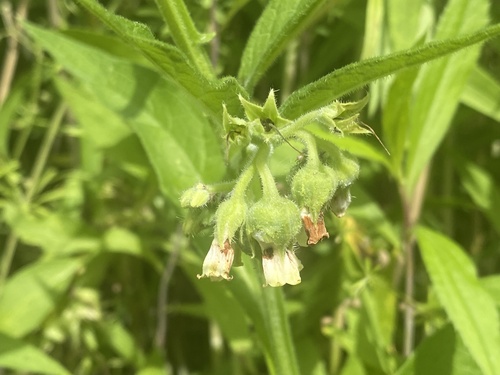
Symphytum, Genus, officinale, Species,
- Genus & species
common comfrey
Overview
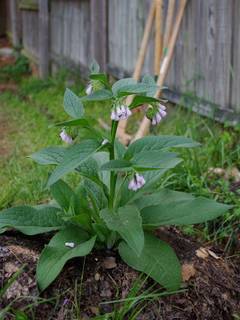
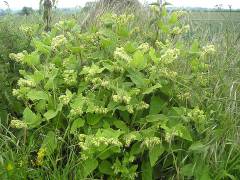
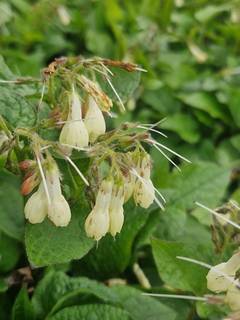
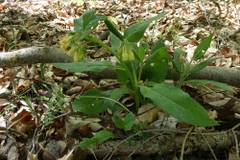
Symphytum officinale is a robust, clump-forming perennial growing 24-48 inches (60-120 cm) tall from a thick, deep black-skinned taproot. The large, coarse leaves are lance-shaped, 6-10 inches (15-25 cm) long at the base, rough and bristly on both surfaces, with the leaf bases running down onto winged stems. Nodding clusters of tubular bell-shaped flowers 0.5-0.7 inch (12-18 mm) long appear from May to July in cream, pink, or purple, coiled in one-sided sprays that uncurl as they open. The flowers draw long-tongued bees and bumblebees. Plants regrow strongly from the taproot and from root fragments, and self-seed, forming persistent clumps. The leaves and roots contain pyrrolizidine alkaloids that damage the liver if eaten in quantity. Cut foliage is high in nitrogen and potassium and is used to make liquid plant feed and compost activator. Foliage dies back in winter and regrows in spring. Established plants are hard to remove because root fragments resprout.
Native Range
Native to Europe and western Asia, in damp meadows, ditches, riverbanks, and other moist ground. Widely naturalized in North America and elsewhere, where it grows on roadsides, waste ground, and the edges of cultivated land.Suggested Uses
Grown in herb and kitchen gardens, orchard understories, and informal borders, spaced 24-36 inches (60-90 cm) apart, often as a cut-and-drop mulch or compost crop. The deep roots draw up nutrients, and the cut leaves are used to make liquid feed. Its spreading roots and self-seeding make it hard to contain in small or formal gardens.How to Identify
Appearance
Size & Dimensions
Height2' - 4'
Width/Spread2' - 3'
Bloom Information
Detailed Descriptions
Flower Description
cream, pink, or purpleFoliage Description
greenGrowing Conditions
Sun Requirements
Requires 4-8 hours of direct sunlight daily
• Full Sun: 6+ hours of direct sunlight
• Partial Shade: 3-6 hours of direct sunlight
• Full Shade: Less than 3 hours of direct sunlight