Symphoricarpos, Genus, occidentalis, Species,
- Genus & species
western snowberry
Overview
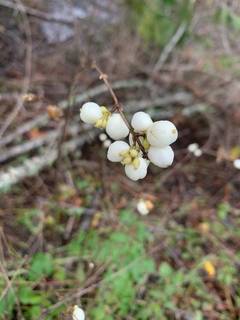
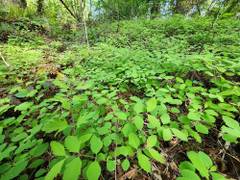
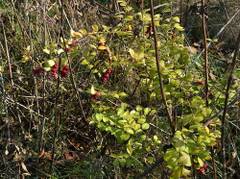
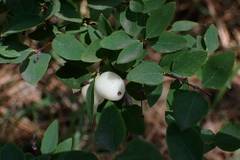
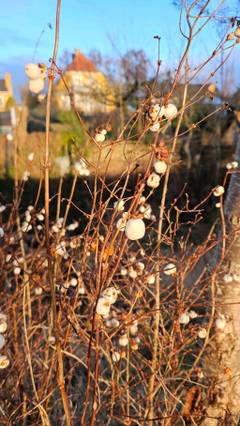
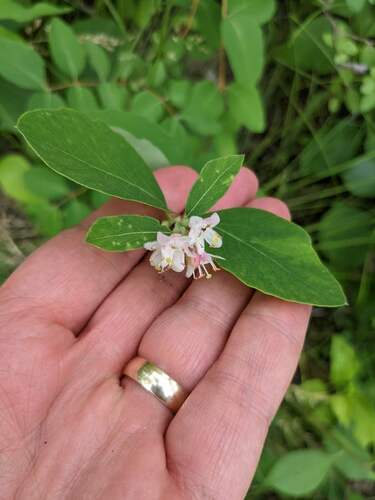
Symphoricarpos occidentalis is a low, deciduous, colony-forming shrub in the honeysuckle family (Caprifoliaceae), reaching 1-3 feet (30-90 cm) tall and spreading widely by rhizomes into dense thickets. The erect, slender stems carry opposite, oval to round leaves 1-2.5 inches (2.5-6 cm) long, gray-green and sometimes shallowly lobed on young growth. Small bell-shaped flowers, pink to white, appear in tight clusters at the stem tips and leaf axils in summer. They are followed by clusters of round, waxy white berries 0.3-0.5 inch (8-12 mm) wide that ripen in fall and persist on the bare stems well into winter. The plant spreads aggressively by underground runners, forming broad colonies that limit its use to areas where suckering is acceptable. The white berries contain saponins and are mildly toxic to people if eaten. S. occidentalis grows on prairies, slopes, streambanks, and open woods across central and western North America.
Native Range
Native to central and western North America, Symphoricarpos occidentalis ranges from British Columbia and the Northwest Territories south through the Great Plains to New Mexico and east to the Great Lakes. It grows on prairies, hillsides, streambanks, fencerows, and open woods, often forming colonies on disturbed or open ground.Suggested Uses
Used in native plant gardens, prairie and slope restoration, erosion control, and wildlife and shelterbelt plantings. The spreading habit suits informal screens, banks, and large naturalized areas rather than small beds. The flowers feed pollinators, and the persistent berries and thickets provide winter food and cover for birds and small mammals.How to Identify
Appearance
Size & Dimensions
Height1' - 3'
Width/Spread3' - 6'
Bloom Information
Flowers open in summer, generally June to August, in small clusters at the stem tips and leaf joints. The pink to white bells last several weeks and draw bees and other pollinators. White berries develop through late summer and ripen in fall.
Detailed Descriptions
Flower Description
pink to whiteFoliage Description
gray-greenGrowing Conditions
Sun Requirements
Requires 4-10 hours of direct sunlight daily
• Full Sun: 6+ hours of direct sunlight
• Partial Shade: 3-6 hours of direct sunlight
• Full Shade: Less than 3 hours of direct sunlight
Care & Maintenance
Care Guide
Grows in full sun to part shade on a wide range of soils, including clay, loam, and rocky ground, across a pH from about 6.0 to 8.0. It tolerates cold, heat, drought, and poor soil once established and spreads steadily by rhizomes. The suckering habit forms broad colonies, and unwanted shoots are removed at the base to limit spread. It resprouts readily from the roots after cutting, grazing, or fire. Fruiting is heaviest in full sun. Little water or feeding is needed in suitable ground.Pruning
Pruning needs are low. Stems can be cut back hard in late winter to renew a colony, since the plant resprouts strongly from the base. Suckers are removed through the season to keep thickets in bounds.Pruning Schedule
Prune: February–March
winterearly spring