Symphoricarpos, Genus, mollis, Species,
- Genus & species
creeping snowberry
Overview
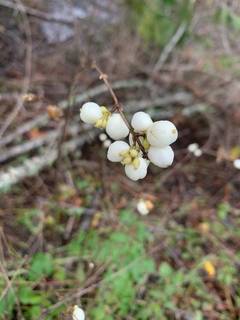
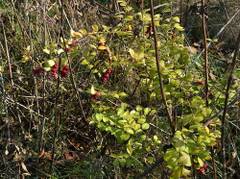
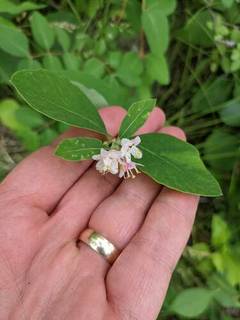
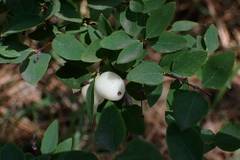
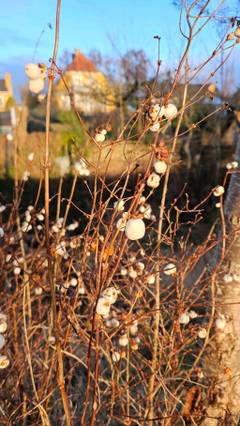
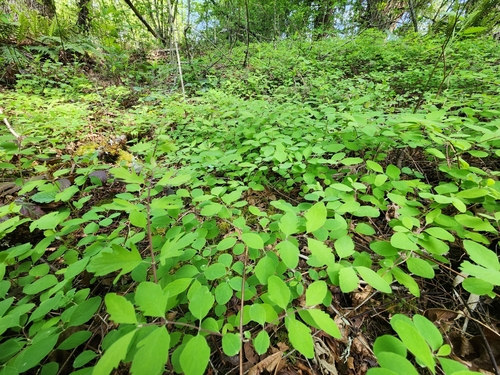
Symphoricarpos mollis is a low-growing deciduous shrub reaching 8-24 inches (20-60 cm) tall and spreading 3-6 feet (90-180 cm) wide by underground rhizomes. Stems are slender, gray-brown, and arch outward from a central crown, with the lower stems often lying on or rooting into the soil. Leaves are opposite, oval to elliptic, 0.5-1.5 inches (1.3-3.8 cm) long with smooth or slightly lobed margins. Foliage is dull green above and softly pubescent below, turning yellow before drop in October. Pink to white bell-shaped flowers 0.2-0.3 inches (5-8 mm) long appear in small clusters of 2-6 at branch tips from May through July. White spherical drupes 0.3-0.4 inches (8-10 mm) across persist on bare stems from October through February. Plants form low ground-covering colonies; an established colony spreads 6-12 inches (15-30 cm) per year by short rhizomes. Roots and rhizomes survive surface fire and the plant resprouts from the rhizome network after burning.
Native Range
Native to western North America from southern British Columbia south through Washington, Oregon, and California. Found in dry open woodlands, oak savannas, chaparral edges, and ponderosa pine understory at 500-6,000 feet (150-1,800 m) elevation. Most common on dry, well-drained slopes with seasonal summer drought.Suggested Uses
Used as a shade ground cover in woodland gardens, dry shade under conifers, and slope stabilization plantings in zones 5-8 at 24-36 inch (60-90 cm) spacing. Mass plantings on slopes hold soil with shallow rhizomes. White drupes are visible on bare stems from October through February.How to Identify
Appearance
Size & Dimensions
Height8" - 2'
Width/Spread3' - 6'
Bloom Information
Pink to white bell-shaped flowers appear in clusters of 2-6 at branch tips from mid-May through July in zones 5-8. Individual flowers last 4-6 days; total bloom period at a single site lasts 6-8 weeks as new clusters open in succession. Bumblebees and native solitary bees are the primary pollinators.
Detailed Descriptions
Flower Description
pink to whiteFoliage Description
dull green above, softly pubescent belowGrowing Conditions
Sun Requirements
Tolerates up to 6 hours of direct sunlight daily
• Full Sun: 6+ hours of direct sunlight
• Partial Shade: 3-6 hours of direct sunlight
• Full Shade: Less than 3 hours of direct sunlight
Care & Maintenance
Care Guide
Grows in part shade to full shade on well-drained loam to sandy loam at slightly acid to neutral pH. Tolerates dry shade under conifers in zones 6-8, a habitat where most ground covers fail. Water weekly during establishment; mature plants survive on natural rainfall in zones 6-8 and tolerate dry summers under tree canopy. Powdery mildew develops on foliage in shaded sites with poor air circulation; severity is cosmetic. Plants are browsed by deer and elk in winter when other forage is limited but recover from heavy browse within 2 seasons. Drupes persist on stems but are mildly toxic to humans if eaten in quantity (saponins cause gastric upset).Pruning
Cut all stems to within 4-6 inches (10-15 cm) of the ground every 4-6 years in late winter to maintain dense form; the colony resprouts from the rhizome network. Annual pruning is not required and reduces flower and fruit yield by 30-50%. Runners from the colony edge can be cut at ground level to limit spread into adjacent beds.Pruning Schedule
Prune: February–March
winterearly spring