Styphnolobium, Genus, affine, Species,
- Genus & species
Eve's Necklacepod
Overview
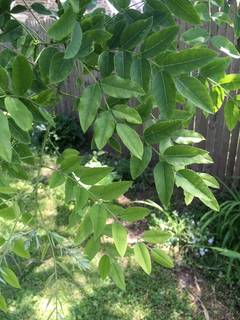
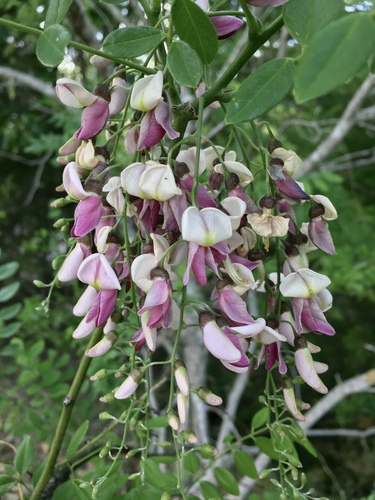
Styphnolobium affine is a small deciduous tree or large shrub reaching 15-25 feet (4.5-7.5 m) tall and 15-20 feet (4.5-6 m) wide, forming a rounded crown on a short trunk with gray, furrowed bark. Leaves are pinnately compound, 4-9 inches (10-23 cm) long, with 13 to 19 small oval leaflets that give a ferny texture. In late spring it produces drooping racemes 2-6 inches (5-15 cm) long of white to pale pink, pea-shaped flowers. The fruit is a slender black pod 1-4 inches (2.5-10 cm) long, conspicuously constricted between the seeds so that it resembles a string of beads, and it persists into winter. The seeds contain toxic alkaloids and are harmful if eaten by people or animals. It grows on limestone soils, dry slopes, and stream banks in the south-central United States and tolerates heat, drought, and alkaline ground. The tree casts light shade and is slow to establish, which limits its early garden impact.
Native Range
Styphnolobium affine is native to the south-central United States, including central and north Texas, Oklahoma, Arkansas, Louisiana, and adjacent areas. It grows on limestone soils, rocky slopes, woodland edges, and stream banks.Suggested Uses
Used as a small specimen or patio tree, in native and water-conserving landscapes, and along dry borders on alkaline soils. The beaded pods add winter interest. Spaced 15-20 feet (4.5-6 m) apart where grown in groups.How to Identify
Appearance
Size & Dimensions
Height15' - 25'
Width/Spread15' - 20'
Bloom Information
Flowering occurs in late spring, mainly May into June, after the leaves emerge. Pendent clusters of pea-shaped flowers open over about two to three weeks. Pods follow through summer and darken as they ripen, hanging on the tree into winter.
Detailed Descriptions
Flower Description
white to pinkFoliage Description
greenGrowing Conditions
Sun Requirements
Requires 6-8 hours of direct sunlight daily
• Full Sun: 6+ hours of direct sunlight
• Partial Shade: 3-6 hours of direct sunlight
• Full Shade: Less than 3 hours of direct sunlight
Care & Maintenance
Care Guide
Grow in full sun to light shade in well-drained soil, including dry, rocky, and alkaline limestone sites. This species tolerates heat and drought once established and needs little supplemental water in its native range. Poorly drained or constantly wet soils cause root decline. No routine fertilizer is needed in average soils. It is hardy in USDA zones 6-9 and withstands cold winters within that range. Growth is slow, and young trees take several years to develop a full crown.Pruning
Prune in winter while dormant to shape the young tree and to remove dead, crossing, or low branches. Early structural pruning builds a single leader and a balanced crown. Little pruning is needed once the framework is set.Pruning Schedule
Prune: January–February
winter