Styphnolobium, Genus, japonicum, Species,
- Genus & species
Japanese pagoda tree
China and Korea; despite the species name japonicum, the tree is not native to Japan and was introduced there from China centuries ago and widely planted near Buddhist temples (the source of the common name 'pagoda tree')
Overview
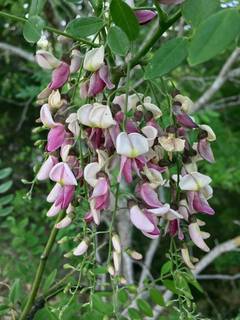
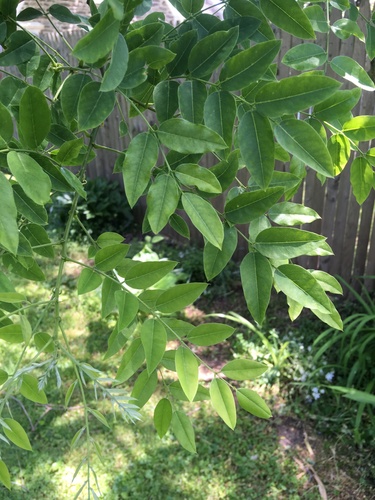
Styphnolobium japonicum is a large spreading deciduous tree in the family Fabaceae, reaching 40-60 feet (12-18 m) tall and 35-50 feet (10.5-15 m) wide with a broad rounded crown at maturity. The species was formerly classified as Sophora japonica and is still sold under that synonym in some nurseries. Despite the species name japonicum, the tree is native to China and Korea rather than Japan — the Japanese association comes from centuries of cultivation near Buddhist temples in Japan, which is the source of the common names Japanese pagoda tree and scholar tree. Leaves are dark green, alternate, and pinnately compound with 7-17 oval leaflets each 1-2 inches (2.5-5 cm) long, and the foliage emerges late in spring compared to most other deciduous trees in the same landscape. Creamy-white pea-shaped flowers 0.5 inch (1.3 cm) long open in large terminal panicles 6-12 inches (15-30 cm) long during July and August — the late-summer bloom window falls during a period when most other cultivated temperate trees have already finished flowering, and the summer flower display is the principal ornamental feature of the tree. Bead-like green seed pods 2-3 inches (5-7 cm) long develop after bloom with visible constrictions between the seeds and persist on the bare branches through winter, carrying a secondary seasonal interest into the dormant season. Trees do not flower until 10-15 years after planting, and this long juvenile period before first bloom is the principal establishment limitation — gardeners planting young nursery stock should plan for a decade of foliage interest before the late-summer flower display begins. Fallen flowers and seed pods create substantial litter beneath the canopy, and the combination is sticky when wet and can stain paved surfaces below. Unlike most members of the Fabaceae, Styphnolobium japonicum does not fix atmospheric nitrogen through root-nodule symbiosis — the genus lacks the necessary bacterial partnership. The species tolerates drought, urban air pollution, road salt, compacted soil, and alkaline chalk up to pH 8.0, and the combination of tolerances suits it to difficult street-tree and urban landscape positions. Foliage is non-toxic, but the seed pods and bark contain cytisine and related quinolizidine alkaloids and are toxic to humans, dogs, cats, and livestock on ingestion.
Native Range
Styphnolobium japonicum is native to China and Korea, where it grows in hillside forests, river valleys, and cultivated landscapes at low to mid elevations. The species has been cultivated across East Asia for at least a thousand years, and it was introduced into Japan centuries ago and planted widely near Buddhist temples — which gave rise to both the scientific name japonicum and the English common names of Japanese pagoda tree and scholar tree. The species was introduced to Europe in 1747 and to North America shortly thereafter, and it has been a standard large urban shade-tree choice in European and North American cities for over 250 years.Suggested Uses
Planted as a large shade tree and street tree in urban landscapes and park settings at 35-50 foot (10.5-15 m) spacing in zones 4-8. The late summer flower display (July-August) extends seasonal interest past the spring flowering window of most other cultivated trees, and the broad tolerance of urban conditions, drought, and alkaline soil suits the species to difficult street-tree positions. Combined with spring-flowering Cornus florida, Magnolia species, or early-summer Cladrastis kentukea in mixed large-landscape plantings to extend the flowering window across the growing season. Not suited to small residential lots where the 40-60 foot (12-18 m) mature size exceeds available space, positions over patios, decks, and outdoor seating where fallen flower and seed-pod litter creates a cleanup and staining problem, landscapes where a quick flower display is wanted (the 10-15 year juvenile period before first bloom is a genuine planning constraint), or pet-accessible sites where fallen seed pods pose an ingestion poisoning risk.How to Identify
Appearance
Size & Dimensions
Height40' - 60'
Width/Spread35' - 50'
Colors
Bloom Information
Creamy-white pea-shaped flowers 0.5 inch (1.3 cm) long open in large terminal panicles 6-12 inches (15-30 cm) long during July and August in zones 4-8, averaging 4 weeks of bloom on mature specimens. Flowers are bee-pollinated and are a source of late-summer nectar in urban landscapes where few other flowering trees are in bloom at the same time. Trees do not begin flowering until 10-15 years after planting, and young nursery stock produces no bloom for a decade or more after transplanting. Bead-like green seed pods 2-3 inches (5-7 cm) long with visible constrictions between seeds develop after bloom and persist on the bare branches through winter.
Detailed Descriptions
Flower Description
creamy-white; pea-shaped flowers 0.5 inch (1.3 cm) long borne in large terminal panicles 6-12 inches (15-30 cm) long in July and August; lightly fragrantFoliage Description
dark green, alternate, pinnately compound with 7-17 oval leaflets each 1-2 inches (2.5-5 cm) long; leaves emerge late in spring compared to most other deciduous trees; turns yellow in fall with limited ornamental interestGrowing Conditions
Sun Requirements
Requires 6-12 hours of direct sunlight daily
• Full Sun: 6+ hours of direct sunlight
• Partial Shade: 3-6 hours of direct sunlight
• Full Shade: Less than 3 hours of direct sunlight
Care & Maintenance
Care Guide
Plant in well-drained soil with a pH of 5.5-8.0 in full sun (6+ hours); tolerated soil types include loam, clay, sand, and chalk. The species tolerates drought, urban air pollution, road salt, and compacted urban ground, and these tolerances are the basis for its use as a street tree and large-landscape shade tree in European and North American cities. Water weekly through the first 2-3 growing seasons; established trees are drought-tolerant. Trees do not flower until 10-15 years after planting, and gardeners installing young nursery stock should plan for a long foliage-only period before the late-summer flower display develops. Fallen flowers and seed pods create substantial litter beneath the canopy during and after bloom, and the litter is sticky when wet and can stain pavement and outdoor furniture. Foliage is non-toxic, but the seed pods and bark contain cytisine and related quinolizidine alkaloids and are toxic to humans, dogs, cats, and livestock on ingestion; the tree is poorly suited to positions with unsupervised access by children or pets where fallen seed pods create an ingestion hazard. Pruning is done during the dormant season (January-February).Pruning
Pruning is done during the dormant season (January through February) while the tree is leafless. A single central leader with well-spaced scaffold branches is developed in young trees through corrective pruning over the first 5-10 years after planting. Dead, crossing, and poorly-attached branches are removed at the branch collar. The broad rounded crown is the natural mature form and minimal structural pruning is needed on healthy established trees beyond routine deadwood removal. Pruning cuts during the growing season are restricted because the late spring leaf-out and late summer flower formation leave a narrow window for clean dormant pruning.Pruning Schedule
Prune: January–February
winter