Styphelia, Genus, humifusa, Species,
- Genus & species
cranberry heath
Overview
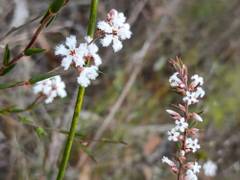
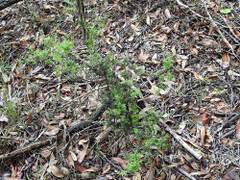
Styphelia humifusa, formerly known as Astroloma humifusum, is a prostrate to low-spreading heath shrub in the family Ericaceae, growing 2-6 inches (5-15 cm) high and spreading 12-36 inches (30-90 cm) across to form a dense mat. The small leaves are narrow, stiff, and crowded along the stems, 0.2-0.4 inch (5-10 mm) long, with a sharp point and a blue-green to grey-green colour. From autumn into winter it produces tubular red flowers about 0.4-0.6 inch (10-15 mm) long in the leaf axils, the petal tips sometimes greenish or yellow, with the corolla bearded inside. The flowers are followed by rounded green to greenish-yellow succulent fruit about 0.3 inch (8 mm) wide, which is edible and faintly sweet. It grows in heath, open forest, and grassland across south-eastern Australia, including Victoria, New South Wales, South Australia, and Tasmania, on sandy and gravelly soils. The plant tolerates drought, frost, and exposure once established. Like most members of its family, it depends on specific soil fungi and is intolerant of root disturbance, so it transplants poorly and establishes slowly. It needs sharp drainage, and heavy or wet soils cause rapid decline.
Native Range
Styphelia humifusa is native to south-eastern Australia, occurring in Victoria, New South Wales, South Australia, and Tasmania. It grows in heathland, open forest, and grassland on free-draining sandy and gravelly soils.Suggested Uses
Grown as a groundcover in native, heath, and rockery gardens, and over the edges of raised beds and dry stone walls. It suits sandy coastal and water-wise plantings where sharp drainage is present. The red flowers draw nectar-feeding birds in the cooler months.How to Identify
Appearance
Size & Dimensions
Height2" - 6"
Width/Spread1' - 3'
Bloom Information
Tubular red flowers appear from autumn into winter, roughly March to July in the native range, set among the foliage in the leaf axils. Flowering extends over many weeks. The succulent green fruit ripens through the following months.
Detailed Descriptions
Foliage Description
blue-green to grey-greenGrowing Conditions
Sun Requirements
Requires 4-9 hours of direct sunlight daily
• Full Sun: 6+ hours of direct sunlight
• Partial Shade: 3-6 hours of direct sunlight
• Full Shade: Less than 3 hours of direct sunlight
Care & Maintenance
Care Guide
Grow in full sun to light shade in sharply drained sandy or gravelly soil. Water lightly during establishment, then only in extended drought, as wet soils cause rapid decline. The species depends on native soil fungi and is sensitive to root disturbance, so container-grown plants are set out young and left undisturbed. Only low-phosphorus native fertiliser is used, if any, since the family is intolerant of high phosphorus. The plant withstands frost and coastal exposure once established. Growth is slow, particularly in the first seasons.Pruning
Pruning is seldom needed. A light tip trim after flowering keeps the mat dense and compact. Hard cutting into old bare wood is avoided, as the plant reshoots slowly and may not recover.Container Growing
Suitable for container growing