Styphelia, Genus, ericoides, Species,
- Genus & species
bearded heath
Overview
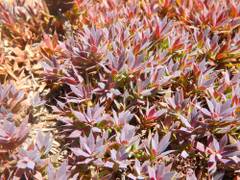
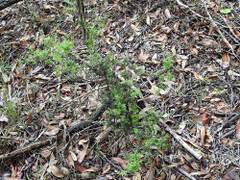
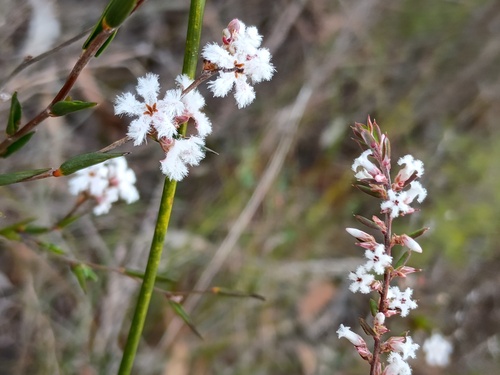
Styphelia ericoides is an evergreen heath shrub in the family Ericaceae reaching 1-4 feet (30-120 cm) tall, with a wiry, upright to spreading habit. The small leaves are narrow and heath-like, 0.2-0.5 inch (5-12 mm) long, stiff, crowded along the stems, and tipped with a sharp point. Tubular flowers 0.4-0.6 inch (10-15 mm) long, white to pale pink, hang from the leaf axils, their five petal lobes curling back to reveal a dense beard of white hairs inside the tube. Flowering occurs mainly from autumn through spring. Flowers are followed by small rounded fruits. Growth is slow to moderate. The plant needs sharply drained soil and is intolerant of root disturbance, which makes it slow to establish and short-lived in heavy or wet ground.
Native Range
Native to eastern and southeastern Australia, in coastal districts of Queensland, New South Wales, Victoria, and Tasmania. Grows in heathland, coastal scrub, and open sandy woodland on well-drained, low-nutrient sandy soils, often near the sea.Suggested Uses
Grown in coastal and native heath gardens, rockeries, and sandy banks, spaced 2-3 feet (0.6-0.9 m) apart, where the flowers feed nectar-feeding birds. The low, wiry habit suits container and seaside plantings. Its need for sharp drainage and dislike of disturbance limit its use in general garden beds.How to Identify
Appearance
Size & Dimensions
Height1' - 4'
Width/Spread1' - 3'
Bloom Information
Flowers over a long season, mainly from autumn through spring, between March and October in its native range. Scattered flowers can appear at other times. Each flush lasts several weeks, and the long season feeds nectar-eating birds in cooler months. Flowering is heavier in open, sunny positions.
Detailed Descriptions
Flower Description
white to pale pinkFoliage Description
dark greenGrowing Conditions
Sun Requirements
Requires 5-9 hours of direct sunlight daily
• Full Sun: 6+ hours of direct sunlight
• Partial Shade: 3-6 hours of direct sunlight
• Full Shade: Less than 3 hours of direct sunlight
Care & Maintenance
Care Guide
Grows in sharply drained sandy or gravelly soil in full sun to light shade; it fails in heavy, wet, or fertile soils. Water sparingly once established, as the roots are prone to rot in damp ground. The plant relies on low-nutrient soil and seldom needs fertiliser, with phosphorus-rich feeds damaging the roots. Root disturbance and transplanting are poorly tolerated, so plants are set out young and left in place. Few pests trouble it, but root-rot fungi cause sudden collapse in poorly drained sites.Pruning
Tip-prune lightly after flowering to keep a compact shape. Plants tolerate only light cutting and may not reshoot from bare old wood. Removing spent flower stems tidies the plant without affecting health. Heavy pruning is avoided because recovery is slow.Pruning Schedule
Prune: October–November
spring
Container Growing
Suitable for container growing
Minimum container size: 3 gallons