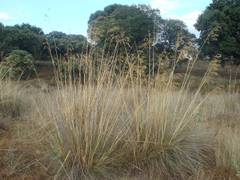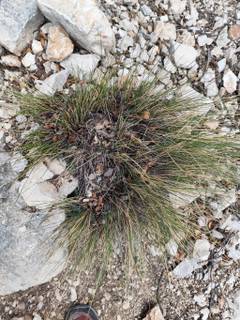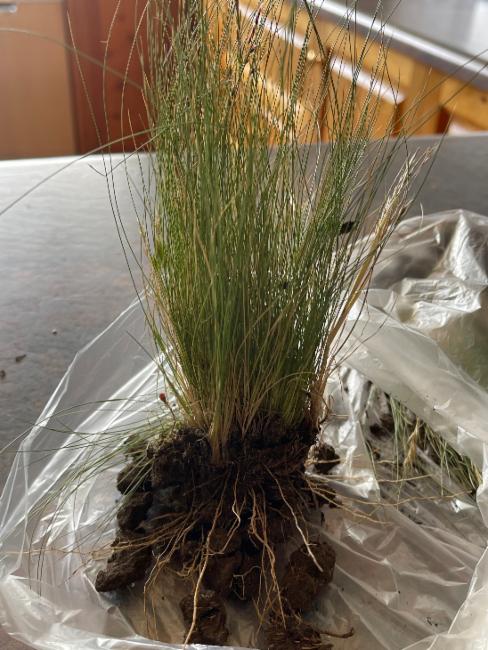
Stipa, Genus, tenuissima, Species,
- Genus & species
Mexican feather grass
Southwestern United States, Mexico, and Argentina
Overview
Stipa tenuissima forms a clumping grass 12-24 inches (30-60 cm) tall and 12-18 inches (30-45 cm) wide, with threadlike green blades about 0.02 inch (0.5 mm) wide that arch outward. Foliage emerges green in spring and fades to blond by late summer. Flowering panicles appear in early summer, rising 2-4 inches (5-10 cm) above the foliage as narrow, feathery clusters that turn golden as seed ripens. The blades move continuously in light wind, and the seed heads persist into autumn before shattering. Plants reach mature size within one to two growing seasons from division or seed. Stipa tenuissima self-seeds readily; in California, Australia, and parts of the Mediterranean it has naturalized and is regulated or discouraged in some jurisdictions. Without removal of spent seed heads, volunteer seedlings appear across surrounding beds and gravel. The clump declines in the center after three to four years and is lifted and divided to renew it. It tolerates heat, drought, and poor soils once established but rots in wet winter ground, and cold below USDA zone 7 kills the crown. The species is also listed under the name Nassella tenuissima.
Native Range
Stipa tenuissima is native to grasslands and rocky slopes of the southwestern United States, Mexico, and Argentina. It grows on dry, open ground at moderate elevations.Suggested Uses
Planted in gravel gardens, dry borders, and along paths in groups spaced 12-18 inches (30-45 cm) apart. Combined with other drought-tolerant perennials in full-sun plantings. In regions where it self-seeds aggressively, it is contained in pots or isolated beds.How to Identify
Appearance
Size & Dimensions
Height1' - 2'
Width/Spread1' - 1'6"
Bloom Information
Flowering panicles emerge in early summer, generally June in temperate gardens, and ripen to straw-gold over four to six weeks. Seed shatters by late summer, scattering into surrounding ground. A lighter second flush sometimes follows in early autumn in mild regions.
Detailed Descriptions
Flower Description
green to goldenFoliage Description
green aging to blondGrowing Conditions
Sun Requirements
Requires 6-12 hours of direct sunlight daily
• Full Sun: 6+ hours of direct sunlight
• Partial Shade: 3-6 hours of direct sunlight
• Full Shade: Less than 3 hours of direct sunlight
Care & Maintenance
Care Guide
Grow in full sun and sharply drained soil of any texture, including sand and gravel. Water during the first season to establish; afterward the roots draw on deep moisture and supplemental irrigation is rarely needed. Comb out dead blades in late winter before new growth begins. The clump declines in the center after three to four years and can be lifted and divided in spring. Waterlogged winter soil causes crown rot, so heavy clay shortens the plant's life. Removing spent flower heads before seed drop limits self-sown seedlings.Pruning
Comb or rake out dead blades and old flower stems once in late winter, before new green growth appears. Cutting the entire clump to the ground also works but removes the persistent winter form. No other pruning is needed.Pruning Schedule
Prune: February–March
winterearly spring
Container Growing
Suitable for container growing
Minimum container size: 3 gallons